Four Parts of Worship: Celebration

By Chuck Griffin
LifeTalk Editor

So, we’ve talked about what it means to gather ourselves in search of God, and we’ve talked about how God is consistently present through Scripture. What is an appropriate response to God’s presence?

A celebration! The third part of worship is like a thank-you, praise-you party thrown for God, where we declare the Creator, Redeemer and Sustainer to be worthy of honor.

Again, it’s one of those reasons I like to put the declaration of God’s word up front as much as possible in a worship service. I think a lot of people struggle with worship because we don’t spend enough time rejoicing, and it’s hard to celebrate until we’ve really heard from God. When we fail to celebrate in worship, we miss out on the joy of being Christian, a joy available to us regardless of our circumstances.

I know—we may not always feel like rejoicing. We may have entered worship thinking about being poor, sick or lonely. We may be broken by our sins or feeling victimized by the sins of others. Those aren’t ideal situations, but our current circumstances brighten considerably when we put them in the light of what God has done for us through Jesus Christ.

You see such celebratory worship in the Old Testament. One example would be the story in 1 Chronicles 16:1-6, when David returned the Ark of the Covenant to Jerusalem. And before these more formal acts, there were exuberant acts on the way to Jerusalem: sacrifices, singing, dancing and music.

Celebratory worship continues in the New Testament, particularly after the victorious nature of Christ’s work on the cross is made clear in the resurrection. We’re told in Colossians 3:16-17, “Let the word of Christ dwell in you richly; teach and admonish one another in all wisdom; and with gratitude in your hearts sing psalms, hymns and spiritual songs to God. And whatever you do, in word or deed, do everything in the name of the Lord Jesus, giving thanks to God the Father through him.”

God’s word begets gratitude, and with gratitude in our hearts, we sing and direct our celebration toward our audience, God. 

I know not everyone rejoices and celebrates in the same way, just as people will enjoy a party in different ways. I’ve always been more of a wallflower at a party. That doesn’t mean I don’t enjoy parties; it just means I’m not necessarily going to put a lampshade on my head.

You may be a fairly laid-back, reserved person in worship. A lot of people feel awkward jumping up and shouting “Amen!” while holding their hands up in the air. Thank God for the worshipers who do such things; they are a great help to worship in general.

If you’re reserved in nature, ask yourself this: Am I celebrating? Does that joy regarding Christ’s gift wash over my soul, at least as a quiet, tender experience?

Do I let the music take me back to the revelation of God I’ve just heard, connecting my emotions to my logic? Do I understand the prayers we lift up corporately are an open door to heaven? When I come to the table for communion, am I expecting to meet the one who will feed me for all eternity?

God calls you to such celebratory experiences whenever you stand before him in worship.

Lord, our loss of exuberant celebration is perhaps the greatest denial we suffer right now. Help us to better celebrate you in our private time and family time, and assure us of our return to a celebratory congregation soon. Amen.

Four Parts of Worship: Word

By Chuck Griffin
LifeTalk Editor

From an ancient church perspective, the sermon and all the Scripture-based events surrounding it come surprisingly late in American worship. In a fourfold worship structure, “Word” follows “Gathering.” I’m not suggesting we change the order of worship, but let’s be certain Scripture is fully present!

Hearing God’s word is the best way to encounter God routinely in a group setting. When a direct encounter with God occurs early in worship, the rest of worship happens in a highly focused manner.

Use of God’s written word to reveal God’s truth goes back to the earliest days of the Christian church, when the words we translate as “scripture” or “word of God” were references to the Jewish Bible, the writings we now group under the Old Testament.

Consider these references from letters that later became part of the New Testament:

2 Timothy 3:14-17: “But as for you, continue in what you have learned and firmly believed, knowing from whom you learned it, and how from childhood you have known the sacred writings that are able to instruct you for salvation through faith in Christ Jesus. All scripture is inspired by God and is useful for teaching, for reproof, for correction, and for training in righteousness, so that everyone who belongs to God may be proficient, equipped for every good work.”

Hebrews 4:12-13: “Indeed, the word of God is living and active, sharper than any two-edged sword, piercing until it divides soul from spirit, joints from marrow; it is able to judge the thoughts and intentions of the heart. And before him no creature is hidden, but all are naked and laid bare to the eyes of the one to whom we must render an account.”

James 1:21-22: “Therefore rid yourselves of all sordidness and rank growth of wickedness, and welcome with meekness the implanted word that has the power to save your souls. But be doers of the word, and not merely hearers who deceive themselves.”

In these verses, we see God’s word as living and powerful, something that flows through the pages of a Bible and into a reader. Open the Bible, use what is there, and you’ll find yourself equipped in new ways. God’s word will dissect you, exposing what is of God and not of God. It will even implant itself in your soul, bringing you face to face with salvation through Jesus Christ.

Root worship in Scripture, and we encounter the Holy Spirit as a group, an experience that should always strengthen us.

Fail to root worship in Scripture, and I think it is safe to say we have not worshiped at all.

Lord, as we find ourselves denied worship in the ways we most enjoy, help us to remain deep in your word, committing ourselves to it now and for the worship days to come. Amen.

Four Parts of Worship: Gathering

By Chuck Griffin
LifeTalk Editor

The pandemic has seriously impacted our ability to worship as we like, and there’s no telling when we will return to something resembling normal. Times like this offer an opportunity to get back to basics, however.

At a minimum, when Covid-19 is gone, we should be ready to worship in a powerful way, perhaps more powerfully than ever. With that in mind, I thought we could spend the rest of the week talking about worship’s four big “parts,” something I’ve done before in the form of a sermon series.

Worship experts use different terms for these four parts of worship, but I like these: Gathering, Word, Celebration, and Sending Forth. We’ll begin today with gathering, of course.

The gathering time is perhaps the most confusing of the four, simply because many Christians don’t consider it part of worship at all. Much of it happens before we’ve officially “started.” When we neglect it, however, we’re like a traveler who begins a journey by tripping in the first few steps and cracking a kneecap. The rest of the journey will be painful, and the traveler may never reach the destination.

At the latest, the gathering should begin somewhere near the church lawn, before we ever enter the building. It begins as we ready ourselves for why we have come to this place—to encounter God and join with others seeking to do the same.

If you’ll pause outside a church building for a moment and breathe, you’ll see there is so much designed to put you in the right frame of mind. The exterior design of most church buildings is intended to point you toward God, to say to you, “Lift up your eyes! Look up!” We’re granted a moment of perspective, remembering  where we stand in relation to God.

Where there are bells or carillons, the ringing is a call to the faithful and a reminder to the lost that something special is about to happen.

You may have noticed that I said the gathering begins near the church lawn “at the latest.” I’m probably stretching the concept of gathering a little, but I would argue it begins long before we cross the church property line. Are you preparing yourself for worship through encounters with God during the week? Was your Saturday night an appropriate prelude to an encounter with God, including plenty of rest?

Once inside the sanctuary, the gathering continues as the service formally begins. Our individual readiness becomes a group readiness, and when we gather correctly, great things begin to happen. We feel it in the recitations and the singing. The prayers bind us together.

And we should expect great things. Just look at Jesus’ words in Matthew 18:19-20, words given to us very clearly in the context of church life: “Again, truly I tell you, if two of you agree on earth about anything you ask, it will be done for you by my Father in heaven. For where two or three are gathered in my name, I am there among them.”

God is present when we gather. Not only that, the holy decisions we make as a church align us with events in heaven.

When worship is properly understood, the question regarding church attendance should never be, “Am I going today?” Instead, it should be, “How will I prepare, and how will I ever leave?”

Lord, as we find ourselves denied worship in the ways we most enjoy, help us to consider what it means to gather in your name. Amen.

God and Governance

By Chuck Griffin
LifeTalk Editor

1 Timothy 2:1-7 (NLT)

I urge you, first of all, to pray for all people. Ask God to help them; intercede on their behalf, and give thanks for them. Pray this way for kings and all who are in authority so that we can live peaceful and quiet lives marked by godliness and dignity. This is good and pleases God our Savior, who wants everyone to be saved and to understand the truth. For,

There is one God and one Mediator who can reconcile God and humanity—the man Christ Jesus. He gave his life to purchase freedom for everyone.

This is the message God gave to the world at just the right time. And I have been chosen as a preacher and apostle to teach the Gentiles this message about faith and truth. I’m not exaggerating—just telling the truth.


In these highly politicized times, Paul’s words to a young pastor will make some of us squirm.

Obviously, we are polarized as a nation. We’ve seen the left and right run toward their extreme edges, leaving a void in the middle. Far behind us are the days of Ronald Reagan and Tip O’Neill sitting down in a room and hashing out a way to govern despite their political differences.

So, let me ask you the tough questions the Apostle Paul has raised for us. For the last four years, have you been praying for our president? Regardless of what you may think of him?

Will you pray for our next president, regardless?

I suspect some of us are blanching at the idea. Me, pray for him? Me, lift that guy up to God for support and sustenance?

Our situation could be worse, much worse. Just in case you’re thinking, “How could Paul suggest we do such a thing,” let’s take a moment to consider the context of his words.

The worldly leader of leaders in Paul’s day was the Emperor Nero. Yes, that Nero. The Nero who persecuted the Christians, having them dipped in tar and turned into human torches, or letting them be torn apart by wild animals for sport. The insane Nero, the evil Nero, the guy likely assigned the code number “666” by the author of Revelation.

Paul was telling Timothy to pray for the worst leader you could imagine, and for all of his flunkies. And frankly, as strange as Paul’s request sounds, there is some incredibly powerful Christian logic here, a logic rooted in Old Testament teachings.

Proverbs 21:1 makes clear God can control the will of any leader. The prophet Jeremiah exhorted the Jews in exile to pray for their captors, knowing that if their captors were at peace and blessed, the Jews would be at peace and blessed, too.

We pray assuming God can change anyone so he or she is inclined to do God’s will. It is of course a good thing when our leaders follow God’s will, even if they have not done so in the past. Paul is essentially saying, “If they begin to listen to and follow God, things will be better for all of us.”

He goes on to emphasize there is but one path, one God and one mediator, Jesus, who is the Christ. Jesus died on the cross to save us from our sins, regardless of whether we sit in a palace or sift through a dung heap for a living.

In a way, Paul’s (and Timothy’s, we must presume) prayers do seem to have borne fruit, although not in time to save Paul from martyrdom. Nero’s empire eventually passed into the hands of other emperors, until one day it finally belonged to Constantine, who made Christianity the official religion.

Some people debate whether it was really a good thing for countercultural Christianity to suddenly be acceptable in the halls of power, but one thing is for sure—the alignment of the empire’s leaders with the faith sped the spread of Christianity.

So, if you’re one of the many folks who lie awake at night worrying about this nation’s future, quit worrying and start praying. Certainly, pray for the leaders you like. But also pray fervently and regularly for the leaders you feel are not aligned with God.

Pray for all the people who might lead us soon. God may do great things in their hearts, working through them to awaken this nation to its role in Christ’s kingdom.

Lord, bless all of our civic leaders with a deep sense of your presence and guidance. Amen.

Get Real

By Chuck Griffin
LifeTalk Editor

Matthew 22:23-33 (NLT)

That same day Jesus was approached by some Sadducees—religious leaders who say there is no resurrection from the dead. They posed this question: “Teacher, Moses said, ‘If a man dies without children, his brother should marry the widow and have a child who will carry on the brother’s name.’ Well, suppose there were seven brothers. The oldest one married and then died without children, so his brother married the widow. But the second brother also died, and the third brother married her. This continued with all seven of them. Last of all, the woman also died. So tell us, whose wife will she be in the resurrection? For all seven were married to her.”

Jesus replied, “Your mistake is that you don’t know the Scriptures, and you don’t know the power of God. For when the dead rise, they will neither marry nor be given in marriage. In this respect they will be like the angels in heaven.

“But now, as to whether there will be a resurrection of the dead—haven’t you ever read about this in the Scriptures? Long after Abraham, Isaac, and Jacob had died, God said, ‘I am the God of Abraham, the God of Isaac, and the God of Jacob.’ So he is the God of the living, not the dead.”

When the crowds heard him, they were astounded at his teaching.


If you’re a cynic, you have to be careful when you’re near Christ. You may find yourself confronted with the grittiness of your world view.

Just ask the Sadducees, a party within the Jewish religious-political structure in Jesus’ day. What made the Sadducees unique was their belief that there was no afterlife, and that in particular God would never raise people from the dead.

The Sadducees enjoyed publicly making fun of Jesus’ teachings about resurrection and an afterlife with God. They did so in what sounds like a riddle, one designed to expose what they considered the silliness of the resurrection.

The riddle also opened the door to some off-color humor at Jesus’ expense. It relied on the image of a pitiful woman passing from the arms of one brother to another. The riddle was rooted in the Jewish tradition that if a man were to die childless, his brother was to marry the widow and impregnate her so the dead brother would have an heir.

All seven brothers tried, and all seven brothers died, the riddle went. Finally, the woman died, too. “So tell us, whose wife will she be in the resurrection?” the Pharisees asked Jesus. “For all seven were married to her.”

When I imagine this ribald theological challenge, I see the Sadducees snickering, or at least suppressing a smirk. Any Jews standing nearby may have laughed out loud.

In modern terms, Jesus’ response can be boiled down to two words: “Get real.” He ignored the intricacies of the Sadducees’ earthy riddle. Instead, he affirmed the resurrection and tried to help them see that their theology was as coarse as their humor.

Jesus wanted them to see the glory and hope God offers us through Jesus Christ. “For when the dead rise, they will neither marry nor be given in marriage. In this respect they will be like the angels in heaven,” he said.

We are reminded that we are so much more than what day-to-day life reveals to us. Jesus went on to prove his assertions by dying on the cross for our sins and then rising from the dead transformed, demonstrating that the power of sin and death had been defeated.

God promises us the same resurrection experience if only we believe in the effectiveness of Jesus’ work on the cross to save us. In fact, all of creation will be reworked to fit God’s view of how things should be.

Such belief does more than give us a future. It gives us a present we can interpret with hope and optimism rather than cynicism.

Even where we see pain and death, we can say, “I know the ugliness of this world is temporary. I know God hates what I’m seeing even more than I do, and that he’s provided a way out.”

The world may remain gritty, but knowing the situation is temporary changes everything.

Lord, may today bring us a special experience of your very present, resurrection-rooted kingdom. Amen.

Dark Nights

By Chuck Griffin
LifeTalk Editor

Psalm 90:13-17 (NLT)

O Lord, come back to us!
    How long will you delay?
    Take pity on your servants!
Satisfy us each morning with your unfailing love,
    so we may sing for joy to the end of our lives.
Give us gladness in proportion to our former misery!
    Replace the evil years with good.
Let us, your servants, see you work again;
    let our children see your glory.
And may the Lord our God show us his approval
    and make our efforts successful.
    Yes, make our efforts successful!

If you’ve ever felt overwhelmed by doubt or abandoned by God, take heart. The best of Christ’s followers have such experiences.

The Israelites, including today’s psalmist, regularly expressed the sense that God was no longer with them. And God did sometimes abandon them for periods of time in response to their forgetting who is Creator and Rescuer.

Just before Moses’ death, God explained to Moses and his replacement, Joshua, the pattern the Israelites would find themselves experiencing over the centuries.

“After you are gone, these people will begin to worship foreign gods, the gods of the land where they are going. They will abandon me and break my covenant that I have made with them. Then my anger will blaze forth against them,” God told the two. “I will abandon them, hiding my face from them, and they will be devoured. Terrible trouble will come down on them, and on that day they will say, ‘These disasters have come down on us because God is no longer among us!’ At that time I will hide my face from them on account of all the evil they commit by worshiping other gods.” (Deuteronomy 31:16b-18)

God did give Moses and Joshua a song to teach the people for such times. While lengthy, its elements are obvious: Declare who God is, confess the sins of idolatry and forgetfulness, and recognize God’s goodness and desire to restore his people.

Sin obviously separates us from God, taking us to the dangerous point where we might question God’s love or even his existence. Christian mystics have also recognized through the centuries that Christ’s closest followers can experience similar feelings, what a 16th-century poet called St. John of the Cross described as the “dark night,” sometimes now referred to as “the dark night of the soul.”

The mystics see these moments as a time of spiritual purging. This includes a simultaneous acknowledgment that God is unknowable in full but also worth pursuing.

Regardless of the cause of why we may feel abandoned by God or filled with doubt, the appropriate response remains the same. Never stop acknowledging who God is. Root out sins, confess them to God, and take the necessary time to grow in understanding of what God is doing in the world through Christ’s sacrifice.

Fear not, the morning does come.

Dear Lord, pour out new grace on those who struggle with their dark nights. Return them to a sense of assurance and keep within them a deep desire to serve your kingdom. Amen.

Shout to the Lord

By Chuck Griffin
LifeTalk Editor

Psalm 98:4-9

Shout to the Lord, all the earth;
    break out in praise and sing for joy!
Sing your praise to the Lord with the harp,
    with the harp and melodious song,
with trumpets and the sound of the ram’s horn.
    Make a joyful symphony before the Lord, the King!

Let the sea and everything in it shout his praise!
    Let the earth and all living things join in.
Let the rivers clap their hands in glee!
    Let the hills sing out their songs of joy
before the Lord,
    for he is coming to judge the earth.
He will judge the world with justice,
    and the nations with fairness.

I am not a musical person. You don’t want me to lead the singing; my year of piano lessons was at best inauspicious. Whenever I was supposed to be practicing, the weather outside always seemed so nice.

But dear Lord, how I do love the music during worship. I particularly love the singing, as it is the one place I can comfortably join in, hiding my off-key efforts among the better voices near me. (It helps to be standing near the choir.)

And dear Lord, how I miss the singing in unison right now. I understand the science behind how Covid-19 spreads, and I know why we should not be projecting our voices on those Sundays we are able to gather. We so want to shout to you, though!

I’m reminded of a story a friend of mine in the Czech Republic told me. She was brought up secretly in a church considered illegal under Soviet rule. Throughout her childhood and into her early adult years, she and her fellow church members gathered in a room, shutters closed, and whispered their hymns.

What a glorious day it was when the Iron Curtain fell, and they were able to throw open the shutters and sing out loud!

We aren’t nearly as oppressed, but I expect we will experience a similar joy and sense of renewal when we can burst forth in the hymns, the Gloria Patri, and the Doxology.

We will shout to the Lord, and I promise, I’ll try not to throw those around me off key.

Lord, in this odd time when we have to choose our love for one another over shouting to you, may we continue to worship you well in our hearts. May our love for you be evident. May our quiet praise be enhanced by your Holy Spirit. Amen.

What We Desire

By Chuck Griffin
LifeTalk Editor

Psalm 63:1-8

A psalm of David, regarding a time 
when David was in the wilderness of Judah.

O God, you are my God;
    I earnestly search for you.
My soul thirsts for you;
    my whole body longs for you
in this parched and weary land
    where there is no water.
I have seen you in your sanctuary
    and gazed upon your power and glory.
Your unfailing love is better than life itself;
    how I praise you!
I will praise you as long as I live,
    lifting up my hands to you in prayer.
You satisfy me more than the richest feast.
    I will praise you with songs of joy.

I lie awake thinking of you,
    meditating on you through the night.
Because you are my helper,
    I sing for joy in the shadow of your wings.
I cling to you;
    your strong right hand holds me securely.

The word “desire” may evoke a powerful feeling in you, one likely tied to some important event in your life.

Maybe someone close to you had a strong desire for alcohol, ruining relationships. Or maybe it’s a positive association, your lifelong desire for someone else making you a better person.

It is easy to see that desire is neither good nor bad in and of itself. What matters is what we desire.

The psalmist here demonstrates a deep desire for God. From the psalm’s introductory heading, we know it is by or about David, the valiant shepherd and eventual king of Israel.

Despite the passion for God expressed here, we also know David had moments where he could forget about God and make terrible decisions, his baser desires overwhelming what should have been, on a rational level, easy choices.

David has been famous for thousands of years, but he’s also much like us, isn’t he? Where we choose to aim our desire can turn our lives in one direction or another very quickly. 

There is another danger where desire is concerned, too. If we suffer from a general lack of desire, we may find ourselves twirling aimlessly, like a sailboat with no wind.

It is good to be passionate in holy ways. Many Christians remember that initial passion for God and God’s word after coming to a belief in Jesus Christ. If desire has faded, it can be restored by a deliberate effort to spend time with God in his word and in prayer.

Desire propels us. We just need to be sure we are moving toward God.

Lord, where our desire is wrongly aimed, pull us back toward you, and where the flame for you has died down, fan it to new heights. Amen.

Taking Time for Daniel

By Chuck Griffin
LifeTalk Editor

Daniel

If you follow the daily lectionary readings, you’re about to hit a string of stories from the Book of Daniel. I want to encourage you to take time to read that wonderful Old Testament book from start to finish, with a simple big-picture message in mind.

Let me remind you of three stories from the first six chapters of Daniel. They make a very straightforward point about God. I also invite you to spend more time studying the other stories, which are mostly about Daniel’s interpretation of various kings’ dreams. And please don’t ignore the last six chapters, made up of unusual writings called “apocalyptic” literature.

First, there’s the story I call “The God Diet.” Daniel and three other Jewish captives are taken to the Babylonian court to be trained in the literature and language of the empire that has conquered the Holy Land.

While there, they are expected to eat the king’s food. It is rich and fattening, but for Jews it also is unclean, forbidden by God.

Daniel and his friends, known in Babylon as Shadrach, Meshach and Abednego, decline to eat the food, asking instead for vegetables and water. This worries the palace official in charge, who knows he will be blamed if the young men waste away.

Instead, after 10 days, they look “better and fatter” than the people eating the king’s food, and they find themselves stationed in the king’s court.

Some people hold this story up as an example of the power of a vegetarian lifestyle, but that interpretation misses the real point: Be faithful to God despite what the world says, and God will take care of you.

The second story has a similar message. The king builds a great statue made of gold and orders everyone to worship it. Again, because of their faith, Shadrach, Meshach and Abednego refuse to bow down.

The king orders them thrown into a fiery furnace, one so hot that the men charged with tossing Shadrach, Meshach and Abednego through the furnace door die from the heat.

When the king looks in, he sees not three but four figures in the furnace, one having “the appearance of a god.” He calls the three out and finds they’ve not lost so much as an eyebrow.

God took care of them.

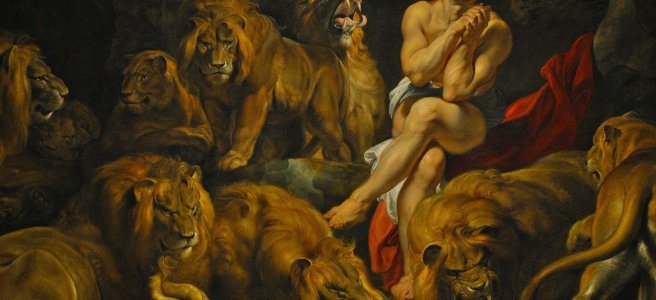
The third story shows that even political intrigue cannot overcome God’s love for a faithful follower. Daniel, a top adviser to the king, is so good at his job that the other advisers are jealous.

Knowing Daniel’s methodical religious life, the other advisers get a law passed that no one may pray to anyone except the king for 30 days. Daniel, of course, goes right on praying three times a day to God and is eventually caught. The punishment is to be tossed into a den of lions.

The next morning, the king finds Daniel unscratched. The king then tosses the conspirators and their families in. The lions decide to break their fast.

Again, the message is simple. Be faithful to God. God will take care of you.

Lord, we are so grateful for the way you watch over us. Even in sickness and death we know we have nothing to fear, for you will be with us through this life and into the next, thanks be to Jesus Christ. Amen.

A Joy to Behold

By Chuck Griffin
LifeTalk Editor

Psalm 96

Let’s close out the work week with a psalm, hoping its words will enhance our weekend worship. (The link above will take you to the full psalm.)

Followers of Christ have a basic, biblically inspired vision and mission for their lives and churches, and vision and mission interact in this psalm.

When we speak of “vision,” we’re talking about how we believe events in heaven and earth will play out one day. In short, we see a future where the world will conform to the happy truth that Jesus Christ is Lord and Savior.

In the words of Romans 14:11, which is quoting Isaiah 49:18, ” ‘As surely as I live,’ says the Lord, ‘every knee will bend to me, and every tongue will confess and give praise to God.’ “

The vision naturally inspires us as we go about our day-to-day mission. We let the Holy Spirit work through us so new disciples of Christ are made. Implicit in all of this is our need to grow as disciples so we can be more effective in our work.

Psalm 96 brings out one particular aspect of vision and mission. In living them out, there is great joy.

We worship a loving, glorious God, and he wants to put a new song in our hearts!

Lord, where our vision has grown dim and we have strayed from our mission, forgive us, please. Give us new light and understanding so we may better serve your kingdom. Amen.