Love in the Time of Corona

The Rev. Chuck Griffin is on vacation through Sept. 20, but LifeTalk goes on. Devotionals these next two weeks are repeats, items written in the early days of the pandemic while he was pastor of Luminary United Methodist Church.


By Chuck Griffin
LifeTalk Editor

John 13:35: “By this everyone will know that you are my disciples, if you have love for one another.”

We talk a lot about love in church, of course, and in a healthy church we will always experience love. Love is part and parcel of the experience of the Holy Spirit, the great benefit of having God’s presence among us as we gather in fellowship.

But what about when our togetherness is limited? What about times like now, when a microscopic virus with the numerically precise name of Covid-19 comes between us?

Well, I would suggest we start taking a common farewell we hear, “Stay in touch,” very seriously, even when we are too physically distant to touch one another. And we are blessed with more ways to stay in touch than civilization has ever known. We just have to be truly deliberate about our outreach to one another in church, and to the people around us who may desperately be needing community.

Setting pen to paper is old-fashioned, a form of retro caring, but you would be surprised at the difference a little note can make in another person’s life. I suspect it’s still often perceived as the most caring kind of communication—writing a letter takes time, concentration and thoughtfulness.

I’ll not get into the details of the elaborate 12th-century story of Abelard and Heloise. If you’re a romantic and stuck at home, you might want to read up on their love and their long-term separation, which resulted in a collection of letters sent one to the other.

Wrote Heloise: “If the portraits of our absent friends are pleasant to us, which renew our memory of them and relieve our regret for their absence by a false and empty consolation, how much more pleasant are letters which bring us the written characters of the absent friend.”

Most of us will be more likely to use our keyboards to send e-mails or texts, and of course, it’s wonderful to hear a friend’s voice on the phone when we are separated. With video chat, we can even see each other’s faces during times of separation.

Our choice of media doesn’t matter so much as the deliberate decision to reach out to one another. During these next few weeks, who is that going to be?

A church friend you’ve not seen in awhile?

Someone you know who struggles with illness?

Someone who always gives you joy, who uplifts your soul?

Someone with a listening ear? Someone you know who needs a listening ear?

A neighbor who may have become isolated?

A person with whom you’ve had a grievous misunderstanding?

Let’s commit ourselves to making good use of our time apart.

Lord, as we close our eyes to pray, show us the faces of the people you need us to write or call. Amen.

The James Series

By Chuck Griffin
LifeTalk Editor

With James 3:13-18 serving as today’s lectionary epistle reading, I feel inspired to launch into a series of devotionals based on this early New Testament letter.

Here’s the basic problem I hope to resolve today: We’re going to spend a lot of time hearing from James about how to behave. The danger is that you will process all of this as a lesson in what you have to do to get into heaven.

Please do not hear this series that way. In fact, this first devotional mostly is about how not to hear the other devotionals.

We are saved by grace and grace alone. In other words, when Jesus Christ went to the cross and died for our sins, he gave us a gift, the gift of eternity. All we have to do to gain eternity is believe and accept the gift.

When we begin talking about Christian behavior, we’re always talking about it as a proper response to grace. God acts first, loving us and saving us, and we respond joyously and thankfully. That response often is delivered in the form of righteous living and good works.

James talks about righteousness this way in what we number as Chapter 1, verses 19-24 of his letter:

Understand this, my dear brothers and sisters: You must all be quick to listen, slow to speak, and slow to get angry. Human anger does not produce the righteousness God desires. So get rid of all the filth and evil in your lives, and humbly accept the word God has planted in your hearts, for it has the power to save your souls.

But don’t just listen to God’s word. You must do what it says. Otherwise, you are only fooling yourselves. For if you listen to the word and don’t obey, it is like glancing at your face in a mirror. You see yourself, walk away, and forget what you look like.

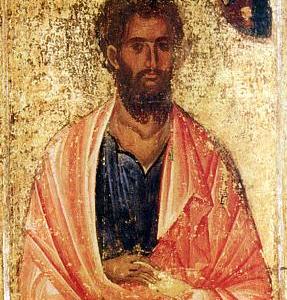
The author of James was the leader of the church in Jerusalem. He also likely was the brother of Jesus, coming to a belief in Jesus as the Christ after the resurrection.

His one letter that made it into the Christian canon has long been controversial. Some church leaders—the 16th century Protestant reformer Martin Luther, for example—wondered if it should be in the Bible at all, concerned that its emphasis on works caused too much confusion in a grace-based religion.

I personally don’t find James’ words as perplexing as Luther found them. I find them challenging, but they don’t trouble me. We simply have to keep events in their proper order.

Remember, the branches follow the vine’s lead and have a job to do. In John 15:5, Jesus said, “Yes, I am the vine; you are the branches. Those who remain in me, and I in them, will produce much fruit. For apart from me you can do nothing.”

Our faith in Christ makes us his branches, but there is no point to being his branches in this metaphor unless we bear fruit, the good works that demonstrate the presence of the kingdom.

Doesn’t a new life in Christ imply new ways of acting? James is telling us that if our new life in Christ doesn’t result in new ways of thinking and relating to others, then we may be mistaken about our relationship with Christ.

The next few days will be about seeing what change is possible, trusting that even miraculous healing of the body and soul can occur.

Lord, may this prove to be a week where we discover our beliefs and our actions to be better aligned. Amen.

Means of Grace, Day 3

By Chuck Griffin
Editor, LifeTalk

“And when you fast, don’t make it obvious, as the hypocrites do, for they try to look miserable and disheveled so people will admire them for their fasting. I tell you the truth, that is the only reward they will ever get. But when you fast, comb your hair and wash your face. Then no one will notice that you are fasting, except your Father, who knows what you do in private. And your Father, who sees everything, will reward you.”—Jesus, speaking in Matthew 6:16-8 (NLT).

I mentioned yesterday that Scripture and prayer work together in the life of the serious Christian. The same can be said of fasting. From a spiritual perspective, fasting is meaningless if not combined with Scripture and prayer.

Think of fasting as a catalyst. Spiritual disciplines performed while fasting should be more focused and effective.

Fasting is not a popular topic in a culture where Taco Bell once advertised, “Welcome to Fourth Meal.” As Americans, we tend to have easy access to what we want when we want it, be it food or other needs and wants. When we discover people among us going hungry, particularly children, we rightly see their plight as a travesty in a nation of relative abundance.

It perhaps is a little easier to talk about fasting now because so many people fast for nonspiritual reasons, to lose weight or improve blood work. Variations on the “intermittent fast” abound. At least the idea is now less-foreign in what can be a gluttonous culture.

The spiritual idea behind such self-denial is to remind ourselves of our fragility, and therefore, our dependence on God. As a Christian, it is important to be sure those hungry moments are filled with something other than food. In the right frame of mind, Scripture should leap to life and the prayer experience should become more vivid as we fast.

As Jesus said, “I have a kind of food you know nothing about. … My nourishment comes from doing the will of God, who sent me, and from finishing his work.” (John 4:32-24.) As followers of Christ, we similarly should focus during our fasting on aligning ourselves with the will of God and doing the work of the kingdom.

Fasting for spiritual reasons looks externally like fasting for physical reasons. The only real difference is intent. The first time I read about one version of intermittent fasting, where a person doesn’t eat after dinner until about mid-afternoon the next day, I thought to myself, “That’s just John Wesley’s 18th-century way of fasting.”

Some people have physical reasons they cannot fast from food. In such cases, it’s perfectly appropriate to abstain from other activities so as to spend more time in prayer or the Bible. Deliberately leaving the television off for an extended time would be one example.

What’s important is that we learn to put aside distractions and live in the Kingdom of God. As we fast or abstain, the contrast between this hungering world and the eternal abundance of where we are headed can be remarkable.

Lord, give us the courage to try spiritual practices that may be new to us, and please speak to us clearly as we attempt them. Amen.