Division

This Sunday’s sermon at Holston View UMC in Weber City, Va., will be “A Straightforward Declaration.” It will be based on Mark 8:27-38. If you want to view the sermon but cannot be present, the entire worship service will be available through Holston View UMC’s web page.

Today’s preparatory text:

Luke 12:49-56

“Do you think that I have come to bring peace to the earth? No, I tell you, but rather division!”


By Chuck Griffin

Yesterday, we considered the very exclusive claim Jesus made regarding who he is. That exclusive claim obviously can cause division, something Jesus made clear in our reading from Luke today.

After a reading like that, I suppose I should begin with some comforting words.

Yes, God is love. Yes, grace is freely given. Our God is a patient God, doing all he can to draw lost people to him. Forgiveness and the gift of eternal life are being poured out on us in buckets, despite so many people standing under umbrellas of cynicism.

That said, at this point in Luke, Jesus has clearly gone apocalyptic on us. He uses language designed to remind us of the terrible suffering and sacrifice necessary to make all that grace and love possible. And ultimately, we are reminded that we are called to choose sides in a great cosmic battle, with no regard to what our choice may cost us in this life.

Jesus’ apocalyptic language forces Christians to consider our core beliefs. Fire and baptism are purification words. Jesus was saying that despite his lack of sin, he would go through the purifying fire of crucifixion for us, and that ultimately all of creation will be purified through this act. Humans can actually choose where to stand in all of this—with what is pure and what will remain forever, or with the dross to be burned away.

The great gift of the cross is that we now have a choice. Before, we were all just dross, lacking the purity to be in God’s presence.

I think even Christians struggle with some of this tough language because we confuse adherence to the truth with being judgmental. Clearly, it is God’s business to judge, not ours. My own personal approach to this is to be as laissez-faire (libertarian) in my approach to the secular world as possible, while at the same recognizing that the church in which I choose to live establishes higher standards based on Christ’s teachings. Included in those teachings is a demand that we clearly tell others who Jesus is.

This approach doesn’t satisfy everyone who claims membership in a church. As we discussed yesterday, some would like to dilute or explain away Christ’s very exclusive claims in Scripture regarding his identity, along with related concepts like the importance of a literal resurrection.

This approach does, however, let us focus on messages that have helped Christianity spread cross-culturally for nearly two millennia. Let’s consider those messages:

Christ is the answer. By that, we mean Christ stands at the apex of a sweeping story that answers all the big questions in life, questions like “Is there meaning to life,” “Why do we suffer,” and “Is there more than just this life?”

Being Christian makes you different. Welcome to a great countercultural movement, the one that challenged the most powerful empire on earth and continues to challenge worldly thinking today. It is a movement that truly changed the world, declaring early on that people are the same under Christ regardless of gender, color or social status. Yes, the body of believers can behave like clusters of big institutions, and yes, Christians often fail to act like Christ, but this differentiating truth remains.

There is clear guidance from God available to us. People are craving something to help them steer their lives.  They want something they can trust, something not likely to blow about in the ever-changing social wind. The Bible is God’s long-standing revelation to humanity. Even the newest material in it is nearly 2,000 years old. Its truths about God and how God wants to relate to humanity have served people well in a wide variety of eras and cultures.

Not everyone will agree with these basic messages. Some people, maybe people in your own homes, will become angry upon hearing them, turning on you or at least turning their backs on you.

That’s okay. Jesus said it would happen. He also said he would make it all right in the end. Look it up.

Lord, help us to establish peace wherever we go, unless that peace would force a denial of who you are and what you are doing in this world. Amen.
No Longer Worthy

Luke 15:17-24 (NRSV)

“But when he came to himself he said, ‘How many of my father’s hired hands have bread enough and to spare, but here I am dying of hunger! I will get up and go to my father, and I will say to him, “Father, I have sinned against heaven and before you; I am no longer worthy to be called your son; treat me like one of your hired hands.”’ So he set off and went to his father. But while he was still far off, his father saw him and was filled with compassion; he ran and put his arms around him and kissed him. Then the son said to him, ‘Father, I have sinned against heaven and before you; I am no longer worthy to be called your son.’ But the father said to his slaves, ‘Quickly, bring out a robe—the best one—and put it on him; put a ring on his finger and sandals on his feet. And get the fatted calf and kill it, and let us eat and celebrate; for this son of mine was dead and is alive again; he was lost and is found!’ And they began to celebrate.”


By ‘Debo Onabanjo

Growing up as a kid, it was always very important to me to please my parents, but I sometimes let them down by doing stuff that went against their expectations. While my strict Christian parents always held me accountable, there was never a time that they stopped loving me or told me that I was no longer worthy to be their son.

As a parent of three young boys, my wife and I take our responsibility to train and nurture our children in the ways of the Lord very seriously. When they drop the ball or fail to meet the expectations set for them, they are held accountable. But there is absolutely nothing they can do to no longer be worthy to be called our sons!

In the Parable of the Prodigal or Lost Son in Luke 15, Jesus opens a beautiful window into the heart of a loving father who will never stop loving us. After squandering his inheritance on wild living, the younger of two sons in the story became desperate. After weighing all his options, the remorseful younger son decided to go back home to his father with a prepared apology and request: “I will get up and go to my father, and I will say to him, ‘Father, I have sinned against heaven and before you; I am no longer worthy to be called your son; treat me like one of your hired hands.’”’ (Luke 15:18-19.) Some folks argue that it was presumptuous on the part of this rebellious son to think that the father would even consider taking him back as a hired servant. 

But as he made his way back home, the father shocked him by not only welcoming him back but also throwing a party to celebrate his safe return. The prodigal son never expected to be received by his father with so much love and fanfare. Even though the decision of the father to celebrate the return of the younger son infuriated the older son, the father encouraged the older son to join in the celebration because of his wayward brother’s repentance.

The father in the story truly represents the Father in heaven. We should always rejoice when sinners come back home. 

Truth be told, there are times church folks believe that those who have no relationship with Jesus are unworthy and should not be welcomed back into the fold. Like the older son, as believers, we can sometimes fail to recognize that when it comes to the gift of salvation and eternal life, no one has the right to boast or brag because our salvation from beginning to end is all a work of grace (Ephesians 2:8-9). The stench of sin can make us all feel unworthy, but the good news is that we can all come to the throne of grace just as we are. Our Father in heaven does not see us the way the world sees us.

Like the younger son, none of us is worthy to be called a son (or a daughter) of our heavenly Father based on what we have done. As Paul tells us, “God proves his love for us in that while we were still sinners Christ died for us.” (Romans 5:8.) Because of the sacrifice of the Lamb of God that takes away the sin of the world, all those who feel unworthy because of sin have been made right because of the one who is worthy. 

Since Jesus the Lamb has prevailed and opened the scroll that no one in heaven or earth or under the earth was able to open, we do not have to be ashamed of our unworthiness (Revelation 5:1-5). Jesus through his atoning work has turned unworthy prodigals into co-heirs, sons and daughters of our heavenly Father.

The fattened calf is waiting to be slaughtered. Why are we slow going home? 

Loving God, thank you for sending your son Jesus to die to make unworthy prodigals worthy sons and daughters. Help us to share this good news of redemption with others still outside the fold. It is in the name of Jesus that we do pray. Amen. 

What Miracles Accomplish

This Sunday’s sermon at Holston View UMC in Weber City, Va., will be “Demons and Deafness.” It will be based on Mark 7:24-37. If you want to view the sermon but cannot be present, the entire worship service will be available through Holston View UMC’s web page.

Today’s preparatory text: Luke 18:27

[Jesus] replied, “What is impossible for mortals is possible for God.”


By Chuck Griffin

Why might we seek a miracle?

We do pray for miracles, particularly when lives seem to be in jeopardy. As we move toward Sunday, however, we need to consider the purpose of miracles.

If we seek miracles strictly to bypass suffering or impending grief, we likely are missing their larger point. Certainly, when we are praying over an immediate, very personal crisis, our minds might not be processing broad theological concepts. But that is simply an argument for thinking about such matters in calmer moments, so we can better understand what it is we are seeking when times of crisis come.

An important fact to remember: As far as we know, every person Jesus healed from illness, brought out of a tomb or raised from a deathbed or funeral bier died later. If we look at these miracles simply as stories of what these people escaped, then Jesus’ work had temporary effects.

Miracles do so much more, however. First, they are evidence of God’s presence in a world where we otherwise see things as if “in a mirror, dimly,” to quote Paul. (1 Corinthians 13:12.) For just a moment, divine possibilities shine through, and the presence of the dawning Kingdom of God is easily, if briefly, seen.

Miracles were signs of God’s presence in Jesus. Miracles are signs of God’s presence in the church, by way of the indwelling Holy Spirit.

We also should understand that miracles come with responsibilities, both for their recipients and their witnesses. Someone needs to testify as to what has happened!

Belief also should naturally spread in the wake of miracles. It is a response we see throughout the Bible. God is seen, and therefore, people change their lives dramatically as they begin to believe.

Lord, we are not afraid to pray for miracles, and we pledge to testify to what we have seen as we receive them. May lives be changed! Amen.

The Wise and Foolish Builders, Pt. 2

Luke 6:46-49 (HCSB)

46 “Why do you call Me ‘Lord, Lord,’ and don’t do the things I say? 47 I will show you what someone is like who comes to Me, hears My words, and acts on them: 48 He is like a man building a house, who dug deep and laid the foundation on the rock. When the flood came, the river crashed against that house and couldn’t shake it, because it was well built. 49 But the one who hears and does not act is like a man who built a house on the ground without a foundation. The river crashed against it, and immediately it collapsed. And the destruction of that house was great!”


By ‘Debo Onabanjo

In last Tuesday’s devotional, we learned that the difference between the wise and foolish builders is not what they know, but how they act based on what they know. The wise builder builds on a solid foundation, which represents the teaching of Jesus. The foolish builder serves as a metaphor for ignoring the teaching of Jesus, building his house on sand.

In our focus text for today, we find a slight variation on this teaching of Jesus, although he once again underscores the importance of people coming to him, listening to his teaching and then following through on the instruction they receive.

I have a hard time believing someone would build a house without a foundation, but we do have many people around us who have either chosen to build their lives with no foundation or at best a sandy foundation. Some people have built their lives on their personal careers, their wealth, their position in society, their kids or their fame.  Such lives are in constant danger of collapsing.   

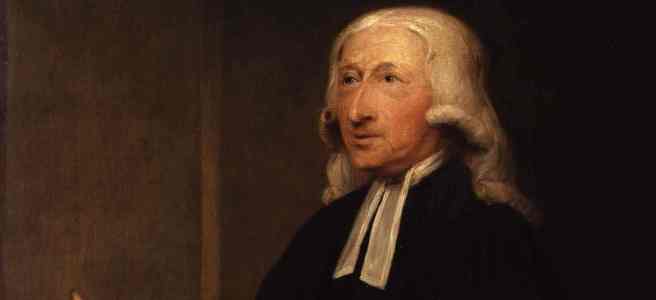
As John Wesley, the founder of Methodism, was prone to remind us, not all who profess to be followers of Jesus Christ are doing the will of God.

We can deceive others about our faith journey, but we cannot deceive Jesus.  Christ makes it clear that just as a tree is known by its fruit, people will be known by their actions. (Matthew 7:15-23.) Christ warns us that he will shock people when he tells them he never knew them.  People who talk about heaven or appear pious don’t necessarily belong to the Kingdom of God.  Other humans see what we display outwardly, but God sees every heart, and nothing is hidden from God’s all-seeing eyes. 

While there may not be immediate noticeable differences in our lives when we follow Christ, if we are truly building on the right foundation, the genuineness of our faith will be revealed with time.  

Help us heavenly Father to build on Jesus Christ the Solid Rock. Holy Spirit, teach us to build on Jesus the foundation of our faith with the right materials that will withstand the test of time and the challenges that will come along our journey. May we be fruitful and faithful to the end so that when our time here on earth comes to an end, we can hear you say to us, well done good and faithful servant, enter into the joy of your Master. We pray with confident assurance in the name of Jesus the Christ. Amen. 

A Shocking Assertion

This Sunday’s sermon at Holston View UMC in Weber City, Va., will be “Investing In the Future.” It will be based on Jeremiah 32:6-9. If you want to view the sermon but cannot be present, the entire worship service will be available through Holston View UMC’s web page.

Today’s preparatory text: 1 Timothy 6:9 (NRSV)

But those who want to be rich fall into temptation and are trapped by many senseless and harmful desires that plunge people into ruin and destruction.


By Chuck Griffin

A couple of times before on Methodist Life, I have referenced a John Wesley sermon, “The Danger of Riches.” As we look toward Sunday’s Jeremiah text and consider how to live boldly, I thought it would be useful to consider what the sermon has to say.

Bold behavior for the kingdom doesn’t have to involve money, of course. But let’s be realistic. Money does make the modern world go around. When we are bold for the kingdom, we likely run into one of two scenarios. We either give from our abundance or we make life decisions that reduce our opportunity for abundance.

As we make these choices, we need to fix in our minds a question, one along the lines of what I wrote for Wednesday. Do we live as if this life is the only one that counts? Or do we live as people who believe something greater is happening—that God’s kingdom is truly arriving, and that the kingdom is where we store our true treasures and live out eternity!

Once we choose the latter option, we’re ready to hear what Wesley said as he expanded on 1 Timothy 6:9.

In the sermon, Wesley asserted that God provides for the roof over our heads, food, and other basic needs, allowing us to ensure the well-being of our families and even businesses we may own. What we own beyond those basic provisions count as riches, and they have been given to us to use “to the glory of God.”

Often, this means using our riches to help those who are less blessed materially, playing a role in God’s provision for people’s basic needs.

Wesley offered us an interpretation that might even surprise a tither. I have no doubt someone accused the founder of Methodism of having “gone to meddling.”

His very correct interpretation of Scripture should force a reassessment of every decision we make regarding how we handle our income and possessions. When we learn to make such decisions in the light of God’s dawning kingdom, we not only trust God daily, we begin to participate actively in the kingdom’s growth.

In other words, we become quite bold.

Lord, the world needs people who look to you as the source of all that matters and then act accordingly. Raise up a bold generation so that your Holy Spirit may rush through them, making your Kingdom work complete. Amen.

When the Bottom Falls Out, Part 1

Job 1:20-22 (NLT)

Job stood up and tore his robe in grief. Then he shaved his head and fell to the ground to worship. He said, “I came naked from my mother’s womb, and I will be naked when I leave. The Lord gave me what I had, and the Lord has taken it away. Praise the name of the Lord!”  In all of this, Job did not sin by blaming God.


By ‘Debo Onabanjo

People have always asked the questions, “Why do bad things happen to good people?” and “Where is God?” when it appears our world is spiraling out of control. Even though it is no longer breaking news, some reading this can still recall the tragic Surfside, Fla., high-rise building collapse that occurred on June 24, with a final death toll of 98.

In last Saturday’s early hours, another devastating earthquake struck Haiti, with about 1,300 reported dead thus far and thousands more injured. Search and rescue teams continue their search for survivors with distraught and grief-stricken family members of the missing hoping somehow for a miracle. The clock continues to tick. 

Theodicy is the part of theology that attempts to provide an explanation for the problem of evil in our world. If you have been a Christian or believer for some time, there is no doubt you have heard people utter the phrase, “God is good, all the time, and all the time God is good.” But how can a good God allow evil things to happen? 

The simple answer is that the Bible assures us that our God is a good God and while some things occur in our world as a result of pervasive sin and human brokenness. Regardless of what we face, we can trust in the unfailing steadfastness and goodness of God. The idea that God would offer his innocent Son Jesus as propitiation for the sin of the world is a mystery that defies human logic.

No story in the Bible speaks more than Job to the challenges evil poses. The opening chapter tells us, “One day the members of the heavenly court came to present themselves before the Lord, and the Accuser, Satan, came with them. ‘Where have you come from?’ The Lord asked Satan. Satan answered the Lord, ‘I have been patrolling the earth, watching everything that goes on.’” (Job 1:6-7.) 

Peter, who was specifically targeted by Satan (Luke 22:31-32), later wrote to warn other believers, “Stay alert! Watch out for your great enemy, the devil. He prowls around like a roaring lion, looking for someone to devour. Stand firm against him, and be strong in your faith. Remember that your Christian brothers and sisters all over the world are going through the same kind of suffering you are.” (1 Peter 5:8-9.)

Originally an angel of the Lord, Satan became corrupt and rebelled against God because of his pride, leading to his expulsion from God’s presence. Satan continues to stand against anything good and will always oppose anything good.

The fact that Satan came to present himself before God tells us that God is superior to Satan. God created all things and no one created God. Then in a strange twist, we read from the story that the Lord asked Satan, “Have you noticed my servant Job? He is the finest man in all the earth. He is blameless–a man of complete integrity. He fears God and stays away from evil.” (Job 1:8.)

Satan responded that Job had good reason to fear God because he enjoyed the Lord’s protection and everything seemed to be going well for him. Satan then suggested that if all the good things in the life of Job were taken from him, he would surely curse God. (Job 1:9-11.) It is true that some folks serve God when things are going well for them and turn away from God when the bottom falls out of their world. 

But the Lord had strong confidence in Job and gave permission for him to be tested by Satan. The Lord told Satan, “Do whatever you want with everything he possesses, but don’t harm him physically.” (Job 1:12.) Satan left the Lord’s presence and in a series of cataclysmic events, Job lost everything. (Job 1:2-3, 13-19.)

As we would expect, Job was hit very hard by the unexpected turn of events and stood up and tore his robe in grief. He shaved his head and fell to the ground in worship, speaking these poignant words: “I came naked from my mother’s womb, and I will be naked when I leave. The Lord gave me what I had, and the Lord has taken it away. Praise the name of the Lord!”

How will you react when the bottom falls out of your world? Will your character come shining through or will you walk away from the Lord? May God grant us grace to persevere like Job. 

Merciful God, your Son warned us that we would face trials and tribulations in this world. Like Job, help us to be of good cheer even in the face of situations we cannot understand. Let us always trust in your goodness. We pray in the name of Jesus. Amen.

The Tree I Hope to Be

Luke 6:43-45 (NLT)

“A good tree can’t produce bad fruit, and a bad tree can’t produce good fruit. A tree is identified by its fruit. Figs are never gathered from thornbushes, and grapes are not picked from bramble bushes. A good person produces good things from the treasury of a good heart, and an evil person produces evil things from the treasury of an evil heart. What you say flows from what is in your heart.”


By Chuck Griffin

I suspect that James, brother of Jesus and leader of the early church at Jerusalem, had the above words in mind when he wrote, “Does a spring of water bubble out with both fresh water and bitter water? Does a fig tree produce olives, or a grapevine produce figs? No, and you can’t draw fresh water from a salty spring.” (James 3:11-12.)

The way we are on the inside, deep in our souls, will eventually show on the outside through our behaviors. Our inner nature, whatever it may be, cannot remain hidden or pretend to be something else for long.

Few of us would dare claim that what is within us is perfectly pure, and fewer still would be telling the truth. But remember, there are no perfect trees, except those found in Paradise. A tree we would call “good” is one that fulfills its mission year after year, providing abundant, attractive fruit despite the occasional blemish on its trunk or scar within its roots.

Not far from a church building where I once served, there was a rough-looking little apple tree at the edge of a yard, its branches overhanging the road. You wouldn’t think much of it in the winter, but in the late summer and fall, it produced apples galore. When I went for a walk, it practically waved its branches and said to me whenever I passed under it, “Here, have an apple! Please!”

I would take one and eat it as I walked along, and the apple was always very good. It was a faithful little tree, doing its best in a less-than-perfect location, bordered on one side by asphalt and exhaust. I suppose the tree persistently kept reaching for the water and nutrients it needed all those years.

Jesus, James and a particular apple tree I know offer us a straightforward way to measure our Christian lives.

Lord, in our brokenness and infirmities, we can still bear fruit for you. Keep us mindful of where we find sustenance: in prayer, in Scripture, in worship, in fellowship and communion, and in so many other places where you have promised to meet us. Amen.

For, Against and Undecided

Mark 9:40 (NRSV): “Whoever is not against us is for us.”

Luke 11:23 and Matthew 12:30 (NRSV): “Whoever is not with me is against me, and whoever does not gather with me scatters.”


By Chuck Griffin

Compare these two statements from Jesus and you may find yourself a little puzzled. They seem to be in conflict.

Those who work against Jesus clearly are his enemy; those who actively declare him Lord and Savior, seeking his will, obviously are his supporters. But what about the status of those who have yet to make a decision regarding whether Jesus is the promised Messiah?

Mark’s verse seems to indicate that those who do not actively oppose Jesus are for all practical purposes with him. The words found in both Luke and Matthew, on the other hand, seem to equate indecision with opposition.

Each statement has its own context, of course. In Mark, the disciples have complained to Jesus about a man casting out demons in Jesus’ name, even though “he was not following us.” Jesus says what he says as part of an admonition to leave the man alone.

In Luke, Jesus has been doing the casting out of demons himself, and stands accused by some onlookers of working on behalf of Satan. This leads to a somewhat cryptic lecture from the divine exorcist about how that would make Satan a kingdom divided, doomed to fall. There also is talk of how even a strong man can be overcome and plundered by one who is stronger, a reference to the power Christ has over the evil, temporary ruler of this world.

The story found in Luke also is in the 12th chapter of Matthew. There, Jesus is recorded as going a little further after saying, “Whoever is not with me is against me.”

“Therefore I tell you, people will be forgiven for every sin and blasphemy, but blasphemy against the Spirit will not be forgiven. Whoever speaks a word against the Son of Man will be forgiven, but whoever speaks against the Holy Spirit will not be forgiven, either in this age or in the age to come.” (Matthew 12:31-32.)

Here’s one way (my favorite way) to look at these passages. Jesus is patient with the undecided—to a point. Where people are seeking to understand salvation, doing good in the process, he wants to give them much leeway as they explore what it means to follow him.

Simultaneously, Jesus expects people to be respectful when the Holy Spirit is at work driving back evil, healing, and lovingly providing what should be convincing evidence to the undecided about God’s grace. Flippant or sarcastic remarks from anyone in the presence of holy moments are unwise, amounting to active opposition to Christ’s mission.

To the undecided, I would say this: God is lovingly patient, but if you genuinely seek God, do so humbly and reverently. Take your search seriously. After all, what you seek would be by definition holy and eternal.

Lord, we thank you for the tremendous patience and love you show all of us. Grant continuing grace to those who wrestle with their unbelief, helping them toward salvation before the final chance to decide passes. Amen.

Up (Ascension Day 2021)

Acts 1:1-11 (NRSV)

In the first book, Theophilus, I wrote about all that Jesus did and taught from the beginning until the day when he was taken up to heaven, after giving instructions through the Holy Spirit to the apostles whom he had chosen. After his suffering he presented himself alive to them by many convincing proofs, appearing to them during forty days and speaking about the kingdom of God. While staying with them, he ordered them not to leave Jerusalem, but to wait there for the promise of the Father. “This,” he said, “is what you have heard from me; for John baptized with water, but you will be baptized with the Holy Spirit not many days from now.”

So when they had come together, they asked him, “Lord, is this the time when you will restore the kingdom to Israel?” He replied, “It is not for you to know the times or periods that the Father has set by his own authority. But you will receive power when the Holy Spirit has come upon you; and you will be my witnesses in Jerusalem, in all Judea and Samaria, and to the ends of the earth.” When he had said this, as they were watching, he was lifted up, and a cloud took him out of their sight. While he was going and they were gazing up toward heaven, suddenly two men in white robes stood by them. They said, “Men of Galilee, why do you stand looking up toward heaven? This Jesus, who has been taken up from you into heaven, will come in the same way as you saw him go into heaven.”


By Chuck Griffin

Today is Ascension Day, an important moment in the Christian year.

When we think of what Jesus accomplished for our benefit, the concept of his ascension into heaven often vanishes behind the darkness of his crucifixion or the brilliant life-giving light of his resurrection.

The ascension is a critically important part of God’s plan of salvation, however. In many ways, it completes the work done by God in the crucifixion and resurrection.

The key to understanding the ascension is to comprehend what is carried up.

Luke, a companion of the Apostle Paul, gives us accounts of the ascension in the end of the gospel of Luke and the beginning of the book of Acts. After appearing repeatedly to his followers in his resurrected form, Jesus led them about two miles outside Jerusalem to Bethany.

He then did several important things: He opened their minds to understand the Jewish Scriptures, in particular how they predicted Jesus’ life, death and resurrection. He told his followers they would spread throughout the world the good news that salvation is available. He promised them the Holy Spirit would come to empower and support them.

And then the ascension happened. It’s described a bit mysteriously; in Luke, Jesus “withdrew from them and was carried up into heaven.” In Acts, we get a little more detail, where we learn “he was lifted up, and a cloud took him out of their sight.”

The point is that Jesus physically left this world and entered the realm of the holy, God’s abode, the place where only things unstained by sin can go.

So, why does it matter that Jesus went up? Well, it matters because of what Jesus took with him—his resurrected human body. Human flesh now exists as part of God’s trinitarian nature, a strange change in the nature of heaven. What was unacceptable anywhere near the throne is now on the throne.

And that is why salvation is now so easy for us, if we will only believe that Jesus died to free us from punishment for our sins. When we appeal to God, we look up and appeal to the one who loves us so much that he made himself like us in order to save us.

Lord, on this special day, we again are grateful for the tremendous measures you have taken to restore us to you despite our sins. Amen.

What They Saw

Acts 2:14-24 (NRSV)

But Peter, standing with the eleven, raised his voice and addressed them, “Men of Judea and all who live in Jerusalem, let this be known to you, and listen to what I say. Indeed, these are not drunk, as you suppose, for it is only nine o’clock in the morning. No, this is what was spoken through the prophet Joel:

"In the last days it will be, God declares,
that I will pour out my Spirit upon all flesh,
    and your sons and your daughters shall prophesy,
and your young men shall see visions,
    and your old men shall dream dreams.
Even upon my slaves, both men and women,
    in those days I will pour out my Spirit;
        and they shall prophesy.
And I will show portents in the heaven above
    and signs on the earth below,
        blood, and fire, and smoky mist.
The sun shall be turned to darkness
    and the moon to blood,
        before the coming of the Lord’s great and glorious day.
Then everyone who calls on the name of the Lord shall be saved."

The above passage is the beginning of Peter’s sermon at Pentecost, delivered shortly after the Holy Spirit had fallen upon the disciples.

Peter referenced a prophecy from Joel, found in Joel 2:28-32, to explain what was happening in the moment, the enthusiastic declaration of the gospel by disciples in languages they should not have known. Peter also continued to quote from Joel about the sun being darkened and the moon turning to blood.

I am fascinated by that second part. There is no record of anyone in the crowd asking, “And exactly when did these signs in the sky occur?” It appears there was no need for such a question because these events had been witnessed and discussed widely for more than a month.

In regard to the sun darkening, all we have to do is look at Luke’s account of the crucifixion, focusing on the actual moment of Jesus’ death. According to the NRSV translation, Luke tells us “the sun’s light failed.” 

We can be certain this was not the result of a natural solar eclipse, for reasons rooted in moon phases and how they relate to the Passover, the religious festival that was the backdrop for Jesus’ death. I consider the unknown cause either directly miraculous or a miracle of timing, incorporating a sandstorm or some other strange environmental phenomena.

The moon turning to blood is easier to explain. Again, because of the moon phase during Passover, it is quite possible the moon rose with a deep red tint on the Saturday while Jesus was in the grave, a disturbing reminder of the blood spilled the day before.

Regardless of how these events in the sky happened, they were very much on people’s minds, and Peter was able to reference them without explanation.

The crowd was troubled by all they had seen, just as we sometimes are troubled, and they became even more troubled as Peter offered them their share of blame for Jesus’ crucifixion. Blessedly, his sermon went on to deliver good news.

“Repent, and be baptized every one of you in the name of Jesus Christ so that your sins may be forgiven; and you will receive the gift of the Holy Spirit. For the promise is for you, for your children, and for all who are far away, everyone whom the Lord our God calls to him.”

Lord, thank you for the signs of love and reconciliation we receive from you now, preparing us for the glorious day of your return. Amen.