Psalm 30 People

This is the last LifeTalk devotional for January, so I thought I would be forward-thinking and mention a couple of opportunities we have to focus on the power of love in February.

The first is obvious. Feb. 14 is, of course, Valentine’s Day. It falls on a Sunday this year, so don’t let it creep up on you. Guys, we never want to be part of that sad sight at the pharmacy on a Feb. 13 evening, desperately picking through the cards and candy no one else wanted.

The second opportunity comes three days later. Feb. 17 may not bring immediate images of love to mind, but this year, it is the date for Ash Wednesday, the beginning of the season of Lent, which prepares us for the Good News of Easter April 4.

Ash Wednesday is somber, of course, a time for remembering how we have sinned, failing our creator. We traditionally have ashes smeared on our foreheads in the shape of a cross as a sign of our sorrow.

In remembering our brokenness and mortality, however, we also are encouraged to repent, and repentance from sin and restoration to God are possible only because of the most dramatic expression of love the world has ever seen. God loves us first, and through Jesus Christ, God has saved us from the eternal death we deserve.

Christ’s death on the cross makes it possible for us to be Psalm 30 people:

I cried out to you, O Lord.
    I begged the Lord for mercy, saying,
“What will you gain if I die,
    if I sink into the grave?
Can my dust praise you?
    Can it tell of your faithfulness?
Hear me, Lord, and have mercy on me.
    Help me, O Lord.”

You have turned my mourning into joyful dancing.
    You have taken away my clothes of mourning and clothed me with joy,
that I might sing praises to you and not be silent.
    O Lord my God, I will give you thanks forever!

We can repent of sin and turn back toward God at any time, accepting the love continually offered. We’re approaching a special time, though, a season when the liturgies and Scripture readings will call us repeatedly to put sin behind us and embrace what lies ahead.

Lord, search us and show us what is not of you. Help us to be aligned with your will, revealed powerfully and clearly in Scripture. In the coming Lent, may we experience an awakening that changes everything. Amen.

Faith in Jesus

Romans 9:6-18 (NRSV)

It is not as though the word of God had failed. For not all Israelites truly belong to Israel, and not all of Abraham’s children are his true descendants; but “It is through Isaac that descendants shall be named for you.” This means that it is not the children of the flesh who are the children of God, but the children of the promise are counted as descendants.

For this is what the promise said, “About this time I will return and Sarah shall have a son.” Nor is that all; something similar happened to Rebecca when she had conceived children by one husband, our ancestor Isaac. Even before they had been born or had done anything good or bad (so that God’s purpose of election might continue, not by works but by his call) she was told, “The elder shall serve the younger.” As it is written,


“I have loved Jacob,
but I have hated Esau.”


What then are we to say? Is there injustice on God’s part? By no means! For he says to Moses,


“I will have mercy on whom I have mercy,
and I will have compassion on whom I have compassion.”


So it depends not on human will or exertion, but on God who shows mercy. For the scripture says to Pharaoh, “I have raised you up for the very purpose of showing my power in you, so that my name may be proclaimed in all the earth.” So then he has mercy on whomever he chooses, and he hardens the heart of whomever he chooses.


God has mercy. God has compassion.

God has called all of us to himself. That is mercy.

Some of us have believed the Lord. We live in the promises that God has for those who have faith. We live like Abraham, and like Rebecca. This life of having faith is how we receive God’s compassion.

When we refuse the mercy of God, then we do not receive his compassion. We harden our hearts when we refuse God’s mercy. It behooves us to believe in Jesus Christ so we can not only know mercy, but so we may know and receive compassion from God.


Lord, sometimes we hear people say that you are mean. Yet, because we believe in Jesus, we know that you have mercy and compassion for us. May our lives be filled with your compassion as our faith in Jesus grows deeper and stronger. We lift people to you who have refused your mercy. Use our lives to show your mercy to this world. May our friends and family accept your promises in Jesus Christ. It is in the name of Jesus that we pray, amen.

The Chosen Ones

Mark 3:13-19 (NLT)

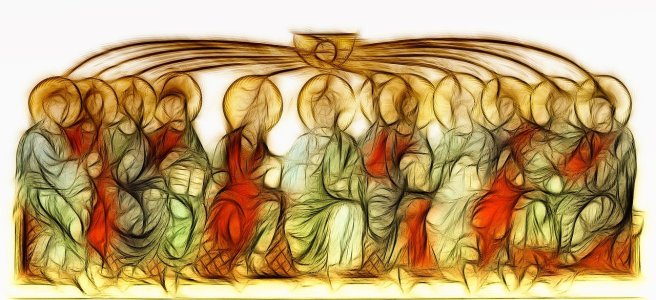
Afterward Jesus went up on a mountain and called out the ones he wanted to go with him. And they came to him. Then he appointed twelve of them and called them his apostles. They were to accompany him, and he would send them out to preach, giving them authority to cast out demons. These are the twelve he chose:

Simon (whom he named Peter),
 James and John (the sons of Zebedee, but Jesus nicknamed them “Sons of Thunder”),
 Andrew,
 Philip,
 Bartholomew,
 Matthew,
 Thomas,
 James (son of Alphaeus),
 Thaddaeus,
 Simon (the zealot),
 Judas Iscariot (who later betrayed him).

What an odd mix.

Among them are fishermen, a tax collecting bureaucrat, a rebel who under different circumstances might try to kill the tax collector, some loud, pushy brothers, and a petty thief who would eventually prove to be a traitor. Their de facto leader, functioning like a senior student, is one of the fishermen, good old foot-in-mouth Peter.

Other than being Jews, the common denominator in the group was that they would all abandon Jesus after his arrest. I once knew a seminary professor who referred to them as the “duh-sciples.”

Out of the larger crowd of people following Jesus, these were the 12 deemed worthy to be part of the inner circle, the ones charged with spreading the Good News about Jesus, proclaiming to the world that salvation is available.

In them, I see what has been evident far too often in me: inattentiveness, dull wit, self-centeredness, impatience, insecurity, striving, and yes, the failure to perceive what is godly and right in front of me. And when I consider these flawed men, I take great comfort.

As we assess these men charged with the role of apostleship—the spread of the Good News and the growth of the church—here’s what’s incredible: They got the job done! The fact that there are more than 2 billion people calling themselves Christians nearly 2,000 years later is the proof.

Well, let me rephrase that a little. God got the job done through them, and through many who followed them. The key, it seems, is that the apostles who remained after Jesus’ resurrection were willing to let the Holy Spirit fill them and guide their work. Grace began to pour forth from these badly cracked earthenware vessels, and it just kept on pouring.

Never doubt for a moment that God can work through any of us.

Lord, thank you for the blessing of broken people who give themselves over to you. Amen.

Give It Time

Acts 5:33-42 (NRSV)

When they heard this, they were enraged and wanted to kill them. But a Pharisee in the council named Gamaliel, a teacher of the law, respected by all the people, stood up and ordered the men to be put outside for a short time. Then he said to them, “Fellow Israelites, consider carefully what you propose to do to these men. For some time ago Theudas rose up, claiming to be somebody, and a number of men, about four hundred, joined him; but he was killed, and all who followed him were dispersed and disappeared. After him Judas the Galilean rose up at the time of the census and got people to follow him; he also perished, and all who followed him were scattered. So in the present case, I tell you, keep away from these men and let them alone; because if this plan or this undertaking is of human origin, it will fail; but if it is of God, you will not be able to overthrow them—in that case you may even be found fighting against God!”

They were convinced by him, and when they had called in the apostles, they had them flogged. Then they ordered them not to speak in the name of Jesus, and let them go. As they left the council, they rejoiced that they were considered worthy to suffer dishonor for the sake of the name. And every day in the temple and at home they did not cease to teach and proclaim Jesus as the Messiah.


The “them” in the opening sentence of this passage consisted of Peter and the other apostles, who were going about in the earliest days of the church performing miracles and preaching that Jesus is the Christ.

The leaders of the temple in Jerusalem were, in the words of Acts 5:17, “filled with jealousy,” so they had the apostles arrested, only to discover these men of Christ were preaching again the next morning in the temple. An angel had freed them from prison overnight, telling them to get back to delivering the message that gives life.

So, the temple leaders had the apostles arrested again, this time intending to kill them.

As we see in our passage today, a much cooler, wiser head prevailed. Gamaliel, as we are told, was deeply respected by his fellow leaders. By the way, one of his rabbinical students was the Apostle Paul, who at this point in the story of the church had not experienced Christ on the road to Damascus.

Gamaliel correctly understood that he and the other Jewish leaders should be centered on one important task: Seeking the will of God. He also believed God would reveal whether these apostles and others who would claim to speak for God were right in what they said.

Gamaliel was spot on. Ultimately, messages and movements opposed to God will fail. All of creation is moving toward reconciliation and reunion with God, so it’s only logical that movements opposed to God will eventually collapse, even if that process sometimes takes longer than we like.

Gamaliel’s colleagues did arrange for the apostles to receive a beating none of us would want to face today. As long as evil and good continue to grow side by side, angry, jealous men will sometimes extract the vengeance they so desperately desire.

That part of the story reminds us that doing what God asks—in the apostles’ case, preaching the Good News—may require some sacrifices.

Dear Lord, your Good News has continued to be preached for nearly 2,000 years, reaching people all around the globe. May we have the courage of the apostles, trusting that the truth of Jesus Christ as Lord and Savior will always be vindicated and reign supreme at the end of time. Amen.

The Big Promise

Genesis 12:1-3 (NRSV)

Now the Lord said to Abram, “Go from your country and your kindred and your father’s house to the land that I will show you. I will make of you a great nation, and I will bless you, and make your name great, so that you will be a blessing. I will bless those who bless you, and the one who curses you I will curse; and in you all the families of the earth shall be blessed.”


I find myself repeatedly referencing these promises while I’m preaching or teaching. The last one, “in you all the families of the earth shall be blessed,” is one of those linchpins of the Bible, firmly connecting the Old and New Testaments.

Abram, of course, eventually was renamed “Abraham” by God, who worked through this man to establish a people, the Israelites, with whom God could be in relationship. Sin had broken the relationship between God and humanity, but God has from the earliest pages of the Bible wanted it restored.

What a sweeping promise: All the families of the earth shall be blessed! When we really start to think that through, it boggles the mind.

Yes, Abraham is known widely, having influenced the development of Judaism, Christianity and Islam. But being known and being the conduit of a blessing spanning millennia are two very different matters.

As Christians, we understand that God came among us in flesh through the Israelites, the promised descendants of Abraham. Jesus Christ died on the cross because “God so loved the world.” Through the work of Christ, restoration to God—the great blessing granting us forgiveness from sin and eternal life—is possible.

The promise to Abraham seems to go beyond mere possibilities, though. “All” and “shall” hint at the completeness of God’s plan, which will play out in ways that should astonish us. Salvation through Jesus Christ will be global; no family will be untouched.

The astounding quantity of God’s grace should fill us with hope, whatever our circumstances.

Lord, we seek new visions and evidence of how widespread your loving work extends, and we look forward to the day when it is complete. Show us our role in all that is to transpire. Amen.

The Q Recovery

2 Peter 1:20-21 (New Living Translation)

Above all, you must realize that no prophecy in Scripture ever came from the prophet’s own understanding, or from human initiative. No, those prophets were moved by the Holy Spirit, and they spoke from God.


Discerning whether supposed prophets speak for God can be difficult. The task becomes even more difficult when their audiences desperately want to hear someone assert that change is swiftly coming.

Such an environment is ripe for abuse by hoaxsters, con artists and power mongers. This is an ancient problem; nearly 3,500 years ago, God gave the Israelites simple instructions regarding how to discern whether a prophet is true or false. In short, God told them, time will tell.

Deuteronomy 18:22: “If the prophet speaks in the Lord’s name but his prediction does not happen or come true, you will know that the Lord did not give that message. That prophet has spoken without my authority and need not be feared.”

I raise this subject today because the ancient problem remains a current problem, and I am genuinely concerned for a group of people. They are or were followers of an anonymous self-styled internet prophet called Q, forming a fringe movement which began to develop many of the traits of a religion. In some places, people even have attempted to blend Q with Christianity, resulting in a voodoo-like mashup of ideas.

I don’t spend any time drifting about in the part of the internet where Q followers share their thoughts, but people who monitor these places say many of these folks are struggling. Q’s prophecies regarding the Trump presidency and what was supposed to happen by now in U.S. politics simply have not come true.

People with a strong stake in profiting from the movement—think of online donations and Q-emblazoned sweatshirts for sale—already have begun to adjust their interpretations to stretch the timeline. A lot of these Q followers remain disillusioned, however.

I don’t know if any of them would ever see what I write today, but I do want to offer them some comfort and a new path to consider.

You clearly are passionate people, and you have a deep desire to participate in important change in this world. Someone took unfair advantage of these powerful traits you carry within you, but those traits are gifts from God!

I so want you to examine prophecies that have come true, ancient promises from God fulfilled by the sacrifice of Jesus Christ on the cross. There is no way I can unpack that statement for you in a short blog item, but it is my prayer that despite your frustration, you will explore this idea: “God so loved the world that he gave his one and only Son, so that everyone who believes in him will not perish, but have eternal life.” (John 3:16)

If this is a new idea, consider it for the first time by picking up a simple translation of the Bible, something along the lines of the New Living Translation I’ve been quoting today. Start at Matthew, the first book of the New Testament.

If you were disillusioned by a bad church experience, or if you realize you’ve drifted from core, traditional Christian beliefs, please consider doing exactly the same thing. Let the Holy Spirit rather than human beings do the talking through God’s word, and you then will know what to do next.

I pray you also will see how the Holy Spirit brings about true Great Awakenings, those moments when communities rapidly grow in their understanding that the work of Jesus Christ is setting all of creation right. This holy process happens not via politics, but through the peaceful transformation of hearts, and Christ’s followers have a critical role to play in the change to come.

I seek nothing from you. If I or people in similar roles can help, don’t be afraid to ask.

Lord, speak your empowering word to passionate hearts, and may your truth resound in them like a tolling bell calling the faithful home. Amen.

Silence

Psalm 62:5-12  (NRSV)
For God alone my soul waits in silence,
    for my hope is from him.
He alone is my rock and my salvation,
    my fortress; I shall not be shaken.
On God rests my deliverance and my honor;
    my mighty rock, my refuge is in God.
Trust in him at all times, O people;
    pour out your heart before him;
    God is a refuge for us. Selah
Those of low estate are but a breath,
    those of high estate are a delusion;
in the balances they go up;
    they are together lighter than a breath.
Put no confidence in extortion,
    and set no vain hopes on robbery;
    if riches increase, do not set your heart on them.
Once God has spoken;
    twice have I heard this:
that power belongs to God,
     and steadfast love belongs to you, O Lord.
For you repay to all
    according to their work.

Silence.  

It is possible to have silence during worship.  After hearing the joys and concerns of the congregation, I like to begin the pastoral prayer with silence.  There is something about a congregation quieting themselves before God.  When our week has been hectic and uncertain, waiting together to hear from the Lord is beneficial.

No matter whether we are of low or high estate, it is helpful to be silent before God.  To know the power and steadfast love that belongs to God, is for us to know that God is our rock and salvation.  We take a “Selah,” an interlude.  Humbling ourselves, examining our lives, or taking a moment to pause, are what can happen in the silence we have before the God.  Maybe in the silence, we can hear God, again.

God, we know you as our refuge.  The psalmist knew setting aside time in silence was good.  We are learning to be in silence.  As we turn to you, may we once again hear you speak to us.  Thank you for being our rock and salvation.  It is in the name of Jesus that we hope to be found when you repay all of us according to our work.  Amen.

Toddling Toward the Kingdom

Luke 18:15-17 (NRSV)

People were bringing even infants to him that he might touch them; and when the disciples saw it, they sternly ordered them not to do it. But Jesus called for them and said, “Let the little children come to me, and do not stop them; for it is to such as these that the kingdom of God belongs. Truly I tell you, whoever does not receive the kingdom of God as a little child will never enter it.”


My colleague John Grimm, a LifeTalk contributor, wrote last Thursday about the importance of transmitting the gospel from generation to generation. And it’s clear from today’s text that Jesus sees little children as having a special ability to hear the gospel.

Over the years, I have had parents tell me of their children declaring at age 5 or 6 that they believe in Jesus. Often, the parents want to know if I think the belief is somehow “real.”

Yes, it’s real. Nowhere in the Bible does it say we have to grow to adulthood, make a comparative study of religions and take philosophy classes before we are qualified to believe. We need to grow as disciples throughout our lives, but faith in Jesus is not an intellectual exercise.

It was difficult for Jesus to go to the cross, but that’s because out of love for humanity he was doing all the work, bearing the burden of every sin committed. Salvation is simple for us because all we have to do is believe in the work’s effectiveness. Jesus loves me, this I know, and for a child, salvation is a straightforward proposition.

Theologically, we do have much to work through as we get older. Concepts like soteriology (how salvation works) and theodicy (the answer to why evil continues to persist) are enough to keep our minds busy for a lifetime. But even the complicated questions require simple, childlike faith as a starting point in the search for answers.

Blessed are the children. Blessed are all who come to Christ with childlike wonder.

Lord, help us to recover and maintain the faith of a child, even as we make our way through the complicated world of adulthood. Amen.

A Healthy Fear

Death of Ananias, Raphael, 1515.

Acts 5:1-11 (NRSV)

But a man named Ananias, with the consent of his wife Sapphira, sold a piece of property; with his wife’s knowledge, he kept back some of the proceeds, and brought only a part and laid it at the apostles’ feet. “Ananias,” Peter asked, “why has Satan filled your heart to lie to the Holy Spirit and to keep back part of the proceeds of the land? While it remained unsold, did it not remain your own? And after it was sold, were not the proceeds at your disposal? How is it that you have contrived this deed in your heart? You did not lie to us but to God!” Now when Ananias heard these words, he fell down and died. And great fear seized all who heard of it. The young men came and wrapped up his body, then carried him out and buried him.

After an interval of about three hours his wife came in, not knowing what had happened. Peter said to her, “Tell me whether you and your husband sold the land for such and such a price.” And she said, “Yes, that was the price.” Then Peter said to her, “How is it that you have agreed together to put the Spirit of the Lord to the test? Look, the feet of those who have buried your husband are at the door, and they will carry you out.” Immediately she fell down at his feet and died. When the young men came in they found her dead, so they carried her out and buried her beside her husband. And great fear seized the whole church and all who heard of these things.


Just to be sure we are all on the same page, I should point out what most careful readers will observe. This harsh, shocking story is not about money.

It is instead about the very serious nature of Christians’ relationship with their church, “church” being a gathering of people sharing a mutual belief in Jesus Christ, and the mission flowing from that belief.

Readers of the Bible have struggled for centuries with this story, finding themselves confused by the rapid judgment falling upon this couple. Was there no room for them to repent and find grace?

Peter’s words and a particular Greek verb in the text, one used only when divine judgment is at hand, make it clear the answer is “no.” Working through the hearts of this couple, Satan had dared to enter the holy group established by God to spread the gospel over all the earth.

Such deceit from this couple could not be tolerated. These two likely were hoping to leverage their false gift into acclaim, and their acclaim into power, and God could not allow the devil to embed himself so deeply in the fledgling church.

We should read this story as a reminder to take very seriously the vows we make as Christians, be they the words we say at baptism and confirmation or commitments we make later. We especially need to be sure that any actions we take to support or participate in the life of the church are intended for the glory of God.

The devil still seeks to find entry, and God still sees his holy, catholic church of believers to be precious and worth defending.

Lord, help us to search our hearts continually as we serve the kingdom through the church. May our motives be pure. Amen.

Start Right

Psalm 86:8-13 (NRSV)
There is none like you among the gods, O Lord,
    nor are there any works like yours.
All the nations you have made shall come
    and bow down before you, O Lord,
    and shall glorify your name.
For you are great and do wondrous things;
    you alone are God.
Teach me your way, O Lord,
    that I may walk in your truth;
    give me an undivided heart to revere your name.
I give thanks to you, O Lord my God, with my whole heart,
    and I will glorify your name forever.
For great is your steadfast love toward me;
    you have delivered my soul from the depths of Sheol.

When life seems complicated, it is good to lift up a simple prayer. If the news is any indicator, this week could prove to be complicated, so let’s prayerfully turn our eyes toward our wisest guide, as revealed in Psalm 86.

There is none like God. How can anything created be like the one who creates? At best, we can hope to be a reflection of God, an image pointing toward what is holy.

And what is holy will be revealed in full. Despite the turmoil, the striving, and the evil within the nations of the world, all people will one day conform to God’s will. It simply is part of God’s plan.

The greatest and most wondrous thing God has done is to give sinful beings a path home to their creator. We now understand that this reconciliation occurs through Jesus Christ, God Among Us.

In a great, mysterious act of love, Jesus died on the cross, bearing the burden of our sins so we do not have to do so. Simply through our belief in this act, we are restored, made worthy of eternal life in God’s presence.

Teach us, O Lord; help us to put aside what is not of you and live every moment of our lives for you. As we better recognize the incredible gifts you have given us, may we be a people filled with thankfulness, and may you be glorified in all we do.

Lord, carry us through this week and beyond; hear our prayer. Amen.