A Lost Generation

First of all, I apologize that this is the first devotion to run this week. I’ve been with a family member who needed surgery. (All is well.) Today and tomorrow, we will look at Nehemiah, continuing an exploration of books of the Bible this blog has yet to consider.

The Book of Nehemiah

By Chuck Griffin

Go looking for God, and you may get an unexpected result. There’s a good chance you will find your real identity.

The conquered, beaten-down Jews of Nehemiah’s day certainly had lost all sense of who they were. Their once-great city of Jerusalem lay in ruins, abandoned with no wall to protect it. Nehemiah had been living in exile as cupbearer to the conquering king.

It was a role of trust, a role that eventually allowed him to gain permission from the king to rebuild Jerusalem and restore some sense of belonging for the scattered people of God. The best of the Jews had been carried away to distant capitals; the rest had been left defenseless among their enemies, people who despised and abused them.

To get the full story, I would suggest you read all of the book of Nehemiah. Suffice it to say his task was a difficult one. Over time, he managed to organize the Jews there, overcoming intimidation, murder plots, and the constant threat of attack by surrounding tribes who hated the Jews of old and did not want to see them re-establish a foothold in Jerusalem.

As Nehemiah and those who rallied around him rebuilt Jerusalem’s destroyed wall and its gates, they often had to work with swords strapped to sides or a weapon in one hand. And yet, they rebuilt the wall in 52 days, an accomplishment even their enemies considered miraculous. Nearly 50,000 Jews and their livestock poured into the city.

It was not too much later that the process of discovery began. The people gathered to hear the word of God, and they were distraught at what had been forgotten over the long captivity. That moment of discovery is recorded in Nehemiah 8:1-10. Over a day, it is likely they heard the story of creation; they once again learned of the fall. They heard how God established them as a separate, chosen, holy people through Abraham.

They heard what God had done for their ancestors through Moses after the Israelites had fallen into captivity in Egypt. There were stories of miracles, all evidence of God’s great love. And there were detailed explanations of God’s covenant with them and God’s law for them, and they realized how far they had strayed, how godless they had become. Exploring God’s word that day proved to be a life-changing journey for them.

From God’s word, they remembered how to worship, and began to do so again, celebrating forgotten festivals and re-telling forgotten stories. They confessed their sins to God and sought mercy.

As different as we are today, it is a pattern we can follow. It can be a bit of a shock to discover how far we’ve strayed from God, but as we become Bible-exploring people, we find our true selves. Like Nehemiah’s Jews, one of the first lessons we learn in Genesis is that we are made in our creator’s image, meaning we were designed to reflect God’s nature and God’s will. Know God and we know what should come natural for us.

Knowing God and consequently knowing ourselves seems difficult for one reason alone. Sin remains in the world and in us. Upon hearing what God’s word had to say about God’s expectations of them, Nehemiah’s Jews realized they had suffered mightily because they had stopped acting as God would have them act. They had fallen into sin, and they wept. A sense of brokenness and loss always precedes redemption.

The priestly interpreters of the word, knowing God’s word, had an interesting response, however. They told the people not to weep. The Jews of Jerusalem once again saw God for who God is, and they were in worship! The priest Ezra and the Levites knew that God’s grace would once again shine through their darkness, and joy would be restored.

We see them understanding and experiencing the same kind of forgiving, loving grace ultimately expressed in Jesus Christ, God among us in flesh. Christ came to bring us face-to-face with our need for God.

When we look to Christ, we sometimes don’t like what we see in ourselves. But I tell you today, do not weep, but rejoice—in turning to Christ, we find eternal life and take important steps toward holiness in this life. In Christ God offers us new hope and a new identity.

Dear Lord, help us to become the people we would have been had sin never entered the world.

Your God My God

Book of Ruth

By Chuck Griffin

There is no doubt that in churches all across America, we’re experiencing divisions that break along generational lines.

I don’t find satisfying the current approaches many churches are using. In some cases, they establish two cultures under one roof, leading to competition for prime worship times and resources. Other churches simply cater to a particular generation. They sometimes look successful doing so, but I wonder how they will fare as time passes. What do you do when you are 50 years old in a church aiming for an average age of 35? How does a church clinging to the old ways ultimately survive?

I do think I’ve glimpsed the beginning of an answer in the Book of Ruth, an Old Testament text taking us back to the early days of the Israelites, a time when the people were ruled by God-inspired judges rather than kings.

I’ll try to summarize a complicated story quickly; I hope you’ll take time to read it in full. To understand the Book of Ruth, it helps to grasp Old Testament concepts like the role of a kinsman redeemer, and how property rights were developed to protect family interests.

The story is primarily about a Jewish widow, Naomi, and her non-Jewish daughter-in-law, Ruth. Ruth and another non-Jewish daughter-in-law, Orpah, are widowed when Naomi’s sons die. Naomi had moved with her husband to Moab during a famine, but once all the men in her family are gone, she decides it is best to return home to Bethlehem. She tells her widowed daughters-in-law to go back to their Moabite families and find new husbands.

It is good advice; Naomi has nothing to offer the young women, and all three are in danger of dying in poverty or even by violence without male protectors. Orpah takes Naomi’s advice and departs. Ruth loves Naomi dearly, however, and cannot leave her.

“Where you go, I will go; where you lodge I will lodge; your people shall be my people, and your God my God,” Ruth says. She even makes a poignant promise to die where Naomi dies, a statement rooted in the poor odds they face together. A sad, bitter Naomi accepts Ruth’s company from then on.

Once in Israelite territory, however, the situation improves dramatically for the two. Rather than rejecting Ruth as a foreigner, the people of Bethlehem are deeply impressed by this young Moabite woman’s devotion. A relative of Naomi’s husband also takes notice of Ruth. He first ensures Ruth and Naomi have plenty to eat, and ultimately he arranges through some complicated legal wrangling at the city gate for Ruth to be his bride. In the process, Naomi’s family name and property are preserved.

The story ends like a fairy tale; all involved find their happiness restored. Generations later, this non-Jewish woman who faithfully followed her mother-in-law despite their desperate circumstances is remembered by the Jews as the great-grandmother of King David. And according to Matthew 1, she also is in the lineage of Jesus Christ, making her a symbol of how God has used broken circumstances to redeem the world.

It all worked because two women from two generations loved each other to the point that each was willing to sacrifice for the good of the other. Ruth gave up all she had known to follow Naomi, with little hope in sight. Naomi risked being rejected by the people in her home village, her last safe retreat, when she brought home a Moabite woman.

Sacrificial, intergenerational love is an important concept if we are to strengthen our churches. When we as Christians focus on our own desires, we are being ruthless. When we are Ruth-like, and Naomi-like, each generation looks to the other’s interests, clinging to each other, refusing to depart each other, going so far as to say I will die where you die before I will allow us to be separated.

Who wins? In the Book of Ruth, everyone does, even as they fall over themselves to take care of one another.

This story of intergenerational sacrifice is part of the loving crucible in which Jesus Christ was formed. In our churches, similar sacrifice could spark a resurgence in the Holy Spirit’s willingness to work among us.

Lord, we are faithful to you first. May our love and obedience toward you be our common intergenerational bond, and may we walk together in your light from cradle to grave, accommodating each other’s holy needs along the way. Amen.

The Prophet Who Never Got It

“Jonah and the Whale,” Pieter Lastman, 1620, courtesy Google Art Project

The Book of Jonah

By Chuck Griffin

Do you ever wish God were different? It sounds like a strange question, but the prophet Jonah could have easily answered, “Yes.”

The story of Jonah opens with the prophet at home somewhere in Israel, hearing from God with the clarity most biblical prophets seem to experience. God gave Jonah a simple command: “Go at once to Nineveh, that great city, and cry out against it; for their wickedness has come up before me.”

Nineveh was to the east, in what is now the northern part of Iraq. (Its ruins are near the city of Mosul, where modern battles have been fought in recent years.) It was one of the great cities of the Assyrian empire, a wonder to those who beheld it. Jonah had no doubt which direction Nineveh lay, yet Jonah headed west by sea, rather than east by land.

The story tells us Jonah went to the coast and got on a ship bound for Tarshish, a place not easily identified today. In the novel Moby Dick, the clergyman at the New Bedford Whaleman’s Chapel, Father Mapple, preaches on Jonah and asserts that Tarshish must have been a port in Spain, the farthest point west a Jew in Jonah’s day would have known. It’s not a bad notion—we’re told Jonah is trying to go “away from the presence of the Lord,” so what seemed like the end of the earth would have been a logical destination.

Storms soon began to worry the ship on its journey to Tarshish, to the point that the pagan crew cried out to their various gods. The captain implored Jonah to pray, too. They cast lots to determine who was the cause of the problem, and something like a throw of the dice showed the cause was Jonah.

And, very early in the story, Jonah began to understand that God was present regardless of how far Jonah ran or sailed. He admitted to the crew who he was and what he had done, and despite their initial reluctance, he convinced them to throw him in the sea. The sea immediately became calm.

This brings us to the part we know best from childhood: God sent a big fish to swallow Jonah. (Yes, it could have been a whale; the Hebrew word used in the story literally means a large fish, but the Jews would have used this word to include whales.) In the belly of this large sea critter, Jonah prayed a powerful psalm, in part acknowledging that God is everywhere, even capable of hearing one of his rebellious prophets trapped beneath the waves, “at the roots of the mountains.”

In response to this prayer, God had the fish vomit Jonah out somewhere on dry land. And Jonah once again heard his marching orders: “Get up, go to Nineveh, that great city, and proclaim to it the message that I tell you.” This time, Jonah headed in the right direction, presumably after cleaning himself up.

Once in Nineveh, Jonah preached his message. “Forty days more, and Nineveh shall be overthrown!” And here’s the twist we might not expect when reading this story the first time—those pagan, supposedly godless residents of sprawling Nineveh responded!

Even the king put on sackcloth and ashes and repented. He ordered everyone to do the same, and to fast. They went so far as to cover the livestock with sackcloth and withhold the animals’ food or water. The prayers, wails, bleating and lowing set up a din that had to reach to heaven.

God heard, and God relented from the destruction he had promised. And that, we learn, was precisely what Jonah feared would happen.

“O Lord!” he prayed. “Is not this what I said while I was still in my own country? That is why I fled to Tarshish at the beginning; for I knew that you are a gracious God and merciful, slow to anger, and abounding in steadfast love, and ready to relent from punishing.”

Jonah was so bitter, he prayed that God might kill him. You see, the Israelites considered the people of Nineveh their enemy. The Jews had suffered terribly under Assyrian rule; Jonah had hoped for a scene of destruction worthy of Sodom and Gomorrah. And now, here was the God the Jews acknowledged, the God over all things, showing mercy to these people!

All Jonah could do was pout. That pretty much sums up the rest of the story of Jonah. He pouted while God explained his deep concern for the people of Nineveh, using a simple plant as an example.

God is love. God is mercy. Yes, God’s holiness demands justice. But God seems to have this unrelenting desire to let people off the hook, to forgive, to find a way to draw people back into relationships with him.

That truth is best expressed through Jesus Christ, of course. Through the great sacrifice of Christ on the cross, God found a way to extend mercy to all, no matter what evil has been done. Repercussions in this life for our bad deeds may be unavoidable, but a renewed, ongoing relationship with God is constantly available, in any moment, on any day, under any circumstances.

When we find ourselves hoping God will crush someone, we’re wishing God were different. When we think there’s no way God could love us, forgive us, or change us, we’re underestimating who God is.

Why would we want to wish for a different kind of God? The one we have freely offers eternal life. We’ll do no better than that.

Lord, thank you for your incredible, undeserved mercy, expressed most clearly by Jesus Christ on the cross, dying for our sins. Amen.

Malevojoy

The Book of Obadiah

By Chuck Griffin

The little prophetic book of Obadiah contains a description of an emotion so nasty that God promised to destroy those who felt it.

Oddly, as powerful an emotion as it is, we don’t have a word for it in English. The Germans call it schadenfreude. The Greeks call it epichairekakia.

It is the joy we sometimes feel when someone else experiences trouble. Usually, that someone else is a rival or enemy, and we are reminded in Obadiah that we can treat people quite close to us as rivals or enemies.

Obadiah, a prophet we know little about, described in 21 tight verses why God would destroy the Edomites. The Edomites, you may recall, were the descendants of Esau, twin brother of Jacob. Jacob, of course, was a progenitor of the Israelites.

In other words, the Israelites and the Edomites were cousins. They considered themselves the killing kind rather than the kissing kind, however, keeping alive some very old grudges going back to their twin forefathers.

While we don’t know the exact time frame for Obadiah, his prophecy clearly came after the Israelites had suffered terrible defeat and destruction. The Edomites were guilty not so much of committing violence, but of reveling in what they witnessed.

“You should not have gloated over your brother on the day of his misfortune; you should not have rejoiced over the people of Judah on the day of their ruin; you should not have boasted on the day of their distress,” God said to the Edomites through Obadiah.

The desire to grin at a rival’s pain is such a common emotion that I’m surprised we don’t have a word for it in English. Perhaps we need one; it’s hard to identify and repent from a sin when you cannot name it. “Malevojoy,” a fusion of “malevolence” and “joy,” might work.

We see such perverse emotion displayed again in the New Testament, as Jesus is hanging on the cross. The chief priests, scribes and elders watch their rival bleeding and dying and mock him, no doubt with grins on their faces.

“And the people stood by watching; but the leaders scoffed at him, saying, ‘He saved others; let him save himself if he is the Messiah of God, his chosen one!'” (Luke 23:35.)

The potential result of their malevojoy seems much different in the New Testament, however. We are told in Luke how Jesus dealt with such people before they so much as spoke, knowing full well the judgment his enemies might face one day. “Father, forgive them, for they do not know what they are doing.”

Even at his death, Jesus felt only love and pity for his rivals.

Dear Lord, forgive us for the nameless sins we commit. Amen.

Let Justice Roll Down

Amos 5

By Chuck Griffin

The wisdom in Amos, much of which is about justice, has helped me to better understand tithing and other offerings, including our offerings of time.

Amos is famous for one verse in particular. The prophet says in chapter 5 that God no longer wants what the Jews would have considered “traditional worship,” music and animal sacrifices. Instead, he says, “Let justice roll down like waters, and righteousness like an ever-flowing stream” (Amos 5:24).

In other words, the mark of a people truly in love with God is that justice is done in mighty and wonderful ways in their community. From that, we are left to ask, “What is justice?”

Scripture gives us a rich, clear answer. In fact, the answer is at the very core of Jesus’ message in the New Testament.

Just as Amos talks about a coming time of judgment, Jesus talks about judgment, too, and he tells us in Matthew 25 that our fate at the judgment will depend on whether we’ve brought justice into the world.

For Jesus, justice is a straightforward thing. It happens when those who have resources help those who aren’t so fortunate. The hungry need food, the thirsty need drink, strangers need welcoming, the poor need clothing, the sick need care, and the prisoners need visiting.

Help them, he says, and it is as if you did it for Jesus.

That brings me to tithes and offerings. Too often, we’re so caught up in operating budgets and building needs that we forget the primary reason we exist as a church. We are to inject God’s justice into a broken world.

Buildings are important and lights are important, but they’re just the basics, functioning as tools the church can use. Here’s a tough question every church needs to face: Have we failed to bring justice to those who need it simply because we lack resources?

To do a noteworthy job in bringing real justice to the world, it takes more money and time than most American Christians seem willing to give. Yes, the coming of Christ did away with legalism in giving. But frankly, the coming of Christ—the coming of “Kingdom of God” justice—calls us to do even more than our tithing Jewish forebears were ever required to do.

The next time the offering plate goes by, or a call for ministry volunteers goes out, remember that you’re being given the opportunity to participate in the greatest event in history, the remaking of the world by God.

Lord, reveal to us the best way to spend our time and money on behalf of your kingdom and in thanks for eternal life. Amen.

Trajectory

Paul’s Letter to Philemon

By Chuck Griffin

A few years ago on television, there was a show where a fictional senator and president discussed their discomfort with Christianity. The senator, played by Alan Alda, said, “I couldn’t believe there was a God who had no penalty for slavery. The Bible has no problem with slavery at all.”

Like all good fiction, this show dealt with ideas that trouble real people. Why doesn’t God say in the Bible, “Followers of Christ, it is wrong to own another person!”

The Apostle Paul’s words to an early Christian named Philemon are worth examining if we’re concerned about how effectively the Bible influences society. Philemon was a slave owner. Onesimus, his slave, had run away to Paul, converting to Christianity in the process. Paul then sent Onesimus back to Philemon. 

Paul’s decision to send a slave back to his master hardly seems to condemn slavery. But Paul also gave Onesimus a letter to take to Philemon. And the content of that subtle letter is so powerful that we now call it a book of the Bible.

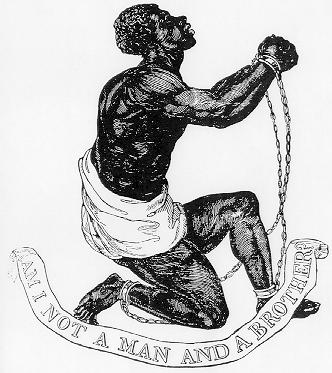
The official medallion of the British Anti-Slavery Society, 1795, Josiah Wedgwood.

Nowhere in the letter will you find Paul saying, “End slavery now!” There’s one obvious reason. Such a direct attack on a central feature of the society in which early Christians lived would have invited terrible punishment.

Instead, Paul uses gentle coercion to change the situation. First, he speaks lovingly of the slave owner’s faith, found under Paul’s pastoral guidance.

Then Paul speaks of the slave’s faith, calling him “my child” and asking the master to receive the slave as a brother. The implication is obvious—how do you enslave and punish a beloved brother or sister?

As the television senator noted, there is no outright rejection of slavery in the letter to Philemon or anywhere else in the Bible. But we must learn to think of the Bible as more than a rule book from ancient history. It often works like a launching pad for ideas, ideas that God has shot like rockets through time so people are changed.

Now, we do have to be careful; some people would take a concept like scriptural trajectory and use it to argue that the Bible says whatever they want it to say. We have to be certain that we go in the direction God first sent us. Otherwise, we will spin north, south, east and west until we finally hit the ground like an experimental missile.

God used Paul and his little letter to change the world dramatically over several centuries. Certainly, Paul wanted to free Onesimus from slavery. But more importantly, he wanted to free Philemon from any anger he might have been feeling toward his escaped slave and the wrongheaded notions that allowed the enslavement to occur.

If Paul had simply issued a rule for Philemon to follow, he never would have gotten to the heart of the matter. Was the Holy Spirit really changing Philemon? Could this slave owner find himself capable of loving Onesimus as a Christian brother?

And that brings us to the deepest lesson from the letter to Philemon. Christians change the world by changing hearts, not by rigorous rule making. Once hearts are changed, the rules for living become obvious and begin to fall in place.

Dear Lord, help us see the true trajectory of your great plan so we may conform ourselves to the holiness you offer your creation. Amen.

The Whole Heart

2 Chronicles 25

By Chuck Griffin

Have you ever been in a spiritually good place, feeling “right with God,” and then suddenly found yourself sinning mightily?

Those who have experienced such behavior know the sudden turn can be shocking and confusing. The author of 2 Chronicles repeatedly tells us stories of leaders who make such sudden wrong turns.

In chapter 25, we find Amaziah presented as one of the more successful kings over Judah, at least to a point. Early in his reign, he seems to follow God’s law scrupulously. When he goes to war against the Edomites, God tells him to send home the mercenaries he has hired to supplement his army, assuring the king he will have victory without such unsavory assistance.

And victory is Amaziah’s. That’s what makes his next act so odd.

Rather than giving thanks to the God who has given him assurances through prophets and victory on the battlefield, he carries home the idols of his defeated enemy and begins to worship them.

God, of course, expresses anger, speaking through a prophet. But even then, Amaziah is unrepentant, threatening the prophet with death. Amaziah eventually falls into the hands of his enemies and dies as the result of a conspiracy, all a result of divine displeasure.

We do receive an early clue to Amaziah’s problem in 25:2. We’re told that Amaziah “did what was right in the eyes of the Lord, yet not with a whole heart.”

In other words, while part of Amaziah loved and followed God, there were dark places where he had not allowed God to penetrate. Therein lay the problematic parts of his personality.

Self-righteous anger may have been one of Amaziah’s serious problems. On their way home, the mercenaries he had dismissed looted parts of Judah, doing a lot of damage.

Perhaps Amaziah blamed God for allowing such a thing to happen. If so, Amaziah failed to see that the mercenaries’ behavior was more evidence that they were not the kind of people to be aligned with a godly mission, and that he had made a serious mistake in hiring them.

It also was a tradition in the Ancient Near East to take home the gods of a defeated people, absorbing them into the conqueror’s religious traditions. It may be that Amaziah forgot the special nature of the God over Judah, the God who declared himself One and Only. If so, Amaziah is simply another example of the folly of blending worldliness with godliness.

We again see how the Old Testament points us toward the New Testament. Only one with a whole and holy heart, Jesus Christ, could make it possible for the darkest parts of the human heart to be filled with light.

Dear Lord,when we experience sudden, surprising failure like Amaziah’s, search us deeply and show us what we still keep hidden. And of course, help us to hear your guidance and make the changes we need to make. Amen.

A Prayer of Faith

Habakkuk 3:17-19
Though the fig tree should not blossom,
    nor fruit be on the vines,
the produce of the olive fail
    and the fields yield no food,
the flock be cut off from the fold
    and there be no herd in the stalls,
yet I will rejoice in the Lord;
    I will take joy in the God of my salvation.
God, the Lord, is my strength;
    he makes my feet like the deer's;
    he makes me tread on my high places.

By Chuck Griffin

Monday, we looked at how the prophet Habakkuk wrestled with his era’s version of the problem of evil, the questions that arise about God when bad people seem to prosper. The context was very different from our own—God’s chosen people were overrun by brutal conquerors—but the frustration and confusion expressed by the prophet were similar to what we might experience today.

We stopped at Habakkuk 2:1, the point where the prophet took a stand, seemingly demanding answers.

And God answered. Rooting the vision he offered Habakkuk in a seemingly distant but certain end to the divine plan, God asserted that the “righteous shall live by faithfulness.” He also assured Habakkuk that our perception of right and wrong is correct. Those who build wealth out of their own strength and corruption, making idols of objects in this world, will fail, although the patience of the righteous will be required.

It was enough to launch Habakkuk into prayer. We might even say song, as the third chapter has embedded in it instructions that there be musical accompaniment.

Habakkuk shows us the right attitude to maintain, even when the answers aren’t at first satisfying. He declared the greatness of God, poetically recounting the actions of the one who is clearly over all creation.

And even in pain, with all around him seeming lost, the prophet made it clear that God would continue to be worthy of honor and worship. “I will take joy in the God of my salvation,” he said (3:18).

How blessed are we that we have seen so much of God’s great plan play out! With the coming of Christ, we see how the cross marks the end of sin and death, even if we must wait patiently for Christ’s work to come to full fruition.

We will tread the high places.

Dear Lord, when we experience our own times of woe, help us to have the faith and perseverance of Habakkuk, trusting in the end of your plan to come. Amen.

Finding Our Watchposts

Note: I’m going to try something a little different for at least a few months. Normally, I’ve developed devotions based on daily readings found in the lectionary, but I thought it would be enlightening (at least for me) to focus on Scripture I’ve tended to neglect. I’ve been writing for this blog for nearly two years, and by my count, there are 13 books of the Bible I have never even referenced, much less explored. Let’s begin by looking at a portion of Habakkuk.

Habakkuk 2:1
I will take my stand at my watchpost
    and station myself on the tower,
and look out to see what he will say to me,
    and what I will answer concerning my complaint.

By Chuck Griffin

The precise details about when Habakkuk made his prophetic statements, or who he was, are unclear. We can tell, however, that he lived in a woeful time. The people who were certain they were God’s Chosen were experiencing ongoing conquest and oppression, causing them great confusion.

Habakkuk opens with an expression of that confusion, and in the process the prophet points out a core problem we wrestle with today: How can a holy and loving God allow sin and violence to take hold so deeply that justice is perverted?

Habakkuk finds God’s initial answer unsatisfying. Essentially, God says he has raised up these invaders, clearly describing their efficiency in war and their ability to plunder at will.

While acknowledging God uses these brutal people to bring judgment and reproof on the disobedient, Habakkuk also wonders how God can tolerate ongoing evil, saying in verse 1:13, “You who are of purer eyes than to see evil and cannot look at wrong, why do you idly look at traitors and remain silent when the wicked swallows up the man more righteous than he?”

It’s a question many all around the world ask today. Yes, we are imperfect, but must we continually suffer at the hands of people who are clearly evil?

Rather than moving on to the rest of Habakkuk, I want to stop where we hear today’s focus verse, which begins the second chapter. The prophet makes a declaration that some might find impudent: I will stand like a sentry, eyes forward, expecting more of an answer from the Lord.

I respect the prophet’s dutiful stance, and I have no doubt God wants to meet us and answer us in these moments. As evidence, I would note that the Holy Spirit-inspired Bible offers us several psalms that, when recited, allow us to loudly lodge a complaint. For example, Jesus quoted a portion of Psalm 22 from the cross: “My God, my God, why have you forsaken me?”

We will spend more time in Habakkuk this week, hearing more of God’s response, and what Habakkuk says from there. For now, let’s consider this: Where are we confused? Do we have the courage to climb dutifully onto our watchtower, that place of prayer that will be different for each of us?

From there, can we admit our inner turmoil to God, listening for his reply, regardless of what it might be?

Lord, make us brave enough to hear what you say so that your words change us, shaping us into the holy beings you would have us be. Amen.

Epiphany 2022

Matthew 2:1-12 (NLT)

By Chuck Griffin

Gerard David, Adoration of the Kings, National Gallery, London, circa 1515

I hope I’m not overplaying the Epiphany by spending two days on the subject. To me, it seems appropriate. Throughout much of Christian history, the celebration of the Feast of the Epiphany was a much bigger deal than celebrating Christmas.

From that alone, we should assume the story associated with it, the story of the Wise Men, is important.  So what does the story tell us about God?

We receive little detail about these men chasing a “star” in search of a newborn king, a star no one else seems to have noticed. Tradition has led us to think of three wise men, but the Bible doesn’t give us an exact number.

Today, let’s simply consider some odd facts. As mentioned yesterday, an event in a tiny village was communicated via the stars and planets. We also should note that these wise men likely would not have understood God the way a Jew did, and yet God drew them into the story of his ultimate intervention in history.

It seems the big lesson God gives us in this story is how surprising he can be as he tries to shower us in grace and save us from sin. He not only will meet us where we are, he will work through our current practices to change us. (Methodists call this “prevenient grace,” the love God tries to show us even before we acknowledge who God is.)

When I think of the wise men seeing Christ’s birth registered in the sky, I also think of all the stories I’ve heard of nonbelievers discovering God in unlikely places: in bars, in prison, in dive hotels—any of those locations or moments where we might wrongly think God is not present.

The story peaks in a happy way. God led the wise men on from their visit with Herod, and there was the baby, just as promised. They gave Jesus gifts. What a joy that must have been, to give the Christ child a gift! And even better, they were able to kneel before him.

Was it worship? Translators debate how to deal with the word describing their act. We kneel in worship, but the wise men also would have been likely to kneel before a king.

We can say for certain that the moment marked a dawning awareness. These wise men would have understood God was working in the world in powerful ways, and that they had been drawn into the plan. They even would continue to hear from God in dreams, protecting the child and themselves in the process.

These wise men, these magi, were a foreshadowing of the purpose behind Jesus’ work on the cross decades later, and the church’s Holy Spirit-inspired work today. God truly calls to all people, regardless of their location or circumstances. After all, “For God so loved the world … .”

Lord, in 2022, may we with great joy worship the Christ. Thank you for the revelations about Jesus that we receive through Scripture and experience in our hearts. May we give him our gift of faithfulness, made possible by your Holy Spirit. Amen.