Joy

Yesterday, I mentioned how biblical peace describes the current relationship between God and humanity, a state made possible by Jesus’ sacrifice on the cross. Bliss is a perfectly appropriate response to that peace.

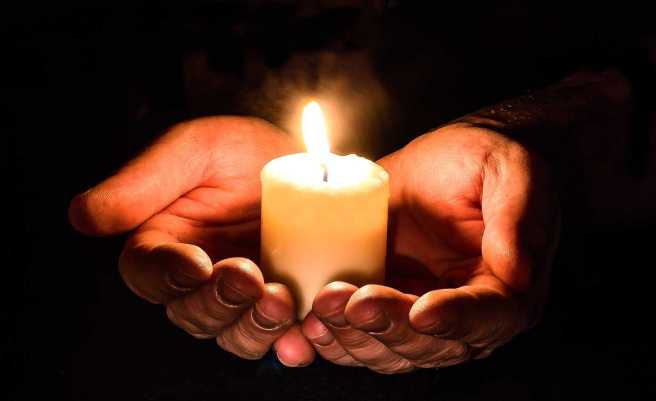
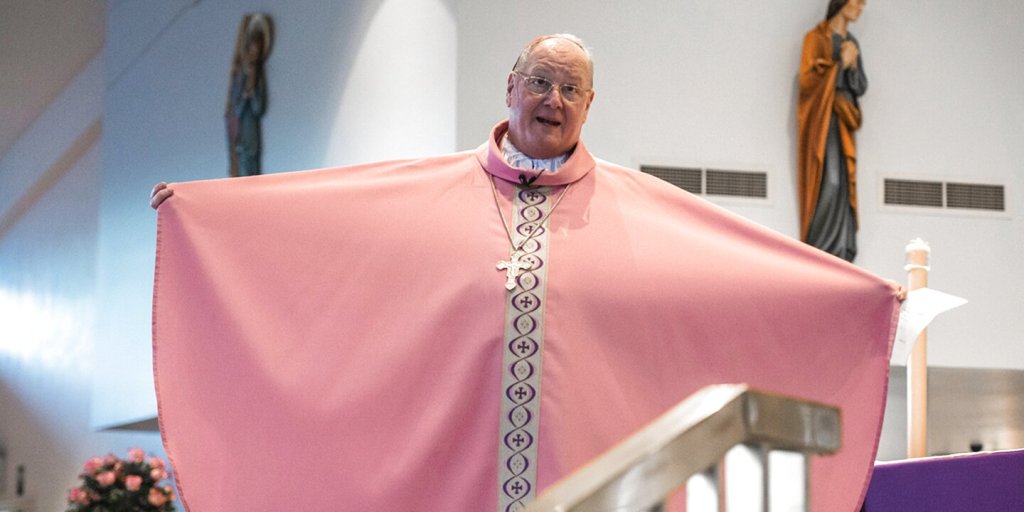
There is a more exuberant emotion, too, the third theme of Advent. There is joy! It is so important, many churches use a pink- or rose-colored candle to mark the third Sunday of Advent. In some traditions the clergy even wear matching vestments, like these:

Just in case you’re wondering, I don’t want to wear that.

I do, however, want to celebrate joy! And when we talk about biblical joy, we mean an emotion that resides in us in all circumstances, even when we are experiencing what otherwise might be thought of as “bad times.”

“Rejoice in the Lord always; again, I will say, rejoice,” Paul told the church at Philippi. (Philippians 4:4.)

Why? Think what we have been given:

Eternal life!

The promise that all that has gone wrong, is going wrong and will go wrong will be made right.

The experience of God in this life, now.

Therein lies our joy. We are able to look at any negative situation and say, “You know what? That has already been defeated.”

Lord, may our experience of joy be as emotional as it is intellectual. And again, may others see in us what you are offering them. Amen.

Peace

Romans 5:1: “Therefore, since we have been justified by faith, we have peace with God through our Lord Jesus Christ.”

Let’s continue exploring the four big themes of the season of Advent. Today, we will consider the concept of peace.

When we talk about biblical peace, we don’t just mean a feeling of bliss. Biblical peace is more akin to peace between nations that have been at war. When they agree to peace, they end hostilities and seek new possibilities for their relationship.

Through his sacrifice, Jesus ended the state of war between God and humanity. Humans brought on this terrible situation by sinning against God, creating a state of unholiness that called for our destruction. Through Jesus Christ, God made a unilateral offering of peace, restoring our ability to relate to our creator.

To accept the offer, we simply look to the cross and believe, accepting that the work done there is complete and irrevocable.

Now, don’t get me wrong, a state of peace does also bring a feeling of bliss. The threat of destruction is removed.

In terms of emotional responses, there’s more, too. But that’s for tomorrow.

Lord, thank you for the tremendous offer of peace made to us when you had all the power and divine privilege. Amen.

Hope

For the rest of this week, let’s consider the four themes of the Advent season—hope, peace, joy and love—which are usually captured in readings during the lighting of candles on the Advent wreath each Sunday.

As odd as it might seem, Romans 5:1-4 ties hope among the believers to suffering:

“Therefore, since we have been justified by faith, we have peace with God through our Lord Jesus Christ. Through him we have also obtained access by faith into this grace in which we stand, and we rejoice in hope of the glory of God. Not only that, but we rejoice in our sufferings, knowing that suffering produces endurance, and endurance produces character, and character produces hope, and hope does not put us to shame, because God’s love has been poured into our hearts through the Holy Spirit who has been given to us.”

I find it helpful to realize that suffering can have a point, so long as we continue in our faith that God’s promises have come true and will continue to come true.

Whatever we are experiencing, we learn to say in stronger and more authoritative ways, “Yes, this situation is bad, but it is temporary. God has promised that evil and all of its effects will be overcome.”

The light at the end of the tunnel isn’t a train. There’s no trick in store for us. The light of Christ is bearing down on us, coming to our rescue.

Hope also serves as a great evangelism tool. When people look at a Christian and say, “I want what that person has,” odds are the believer is exhibiting hope. People long to know that there is a potential happy ending to every story, and they particularly want to know how to ensure they can take part in that ending.

It is the basic role of every Christian to project hope where people may find themselves in despair. Where will we demonstrate hope today?

Lord, we don’t like to suffer, but thank you for being there in the midst of suffering, helping us to turn it into something good on behalf of your kingdom. Amen.

Ready

Occasionally, a piece of Scripture is so clearly instructional that a preacher or a devotional writer mostly needs to get out of its way and let the original author continue doing his holy work.

Ephesians 6:10-17 is one of those texts. I’ll offer a few starter questions here and there, but please, take time to meditate on the words and hear what they say to you. What a great way to start a work week during a difficult year!

A final word: Be strong in the Lord and in his mighty power.

Do we genuinely believe we can draw strength from God? It’s not difficult to see God as simultaneously mighty and inaccessible. How do we know his power is fully available to us?

Put on all of God’s armor so that you will be able to stand firm against all strategies of the devil. For we are not fighting against flesh-and-blood enemies, but against evil rulers and authorities of the unseen world, against mighty powers in this dark world, and against evil spirits in the heavenly places.

We tend to imagine other humans when we think of our enemies. How does it affect our outlook when we acknowledge there are unseen powers at work around us, and that these powers are the real enemy?

Therefore, put on every piece of God’s armor so you will be able to resist the enemy in the time of evil. Then after the battle you will still be standing firm.

Are we bothered by the idea of this being a “battle”? What do warlike images say to us about the focus and commitment required of every Christian? How does God’s armor differ from our own?

Stand your ground, putting on the belt of truth and the body armor of God’s righteousness. For shoes, put on the peace that comes from the Good News so that you will be fully prepared. In addition to all of these, hold up the shield of faith to stop the fiery arrows of the devil. Put on salvation as your helmet, and take the sword of the Spirit, which is the word of God.

These verses continue the battle imagery, but we also need to think about them more literally. How will truth-telling, truth-seeking, and the pursuit of righteousness improve our chances in this world?

Does the story of Christ’s crucifixion and resurrection give us lasting peace? If not, have we considered the story from start to finish recently?

When faced with evil, do we first trust that our faith in Jesus Christ is enough to protect us? Do we have a sense of assurance about our faith that gives us great confidence?

And lastly, do we know and trust God’s word enough that we are confident we can use it to defeat evil?

Dear Lord, thank you for reminding us that we are a people fully equipped to face whatever might come our way. Help us to be a people who trust and tap into the power you offer us every day, making a difference for your kingdom. Amen.

On to Perfection

Philippians 3:12-16

I don’t mean to say that I have already achieved these things or that I have already reached perfection. But I press on to possess that perfection for which Christ Jesus first possessed me. No, dear brothers and sisters, I have not achieved it, but I focus on this one thing: Forgetting the past and looking forward to what lies ahead, I press on to reach the end of the race and receive the heavenly prize for which God, through Christ Jesus, is calling us.

Let all who are spiritually mature agree on these things. If you disagree on some point, I believe God will make it plain to you. But we must hold on to the progress we have already made.


I was naively drawn to Methodism for very old reasons. The idea that there was a form of Christianity emphasizing continual spiritual growth toward a high standard set by God fascinated me.

I say I was naive because I somehow conflated the historic Methodism of John Wesley with the modern United Methodist Church I joined in my late twenties. Yes, because we developed a traditional understanding of Methodism, my wife and I joined the denomination when we were everything a church wants—young, seeking to be involved, and with small children.

Certainly, vestiges of the Methodism that lured us remain. But it has become obvious that with the formation of the United Methodist Church in 1968, that old, very successful form of Methodism has increasingly been forced to share a tent with people hostile to some of its basic principles. The last 20 years or so have been particularly telling.

The headline on an April 22, 1972, New York Times story about that year’s General Conference, where the fledgling United Methodist Church established its doctrines, clearly identified what would trouble the denomination for the next half-century: “Methodists Back Theological Pluralism.”

Today’s Scripture, and some important words preceding it, lay out what the UMC no longer emphasizes—a burning desire for holiness, including the pursuit of perfection.

If you just pursed your lips and wrinkled your nose, you are struggling with what these terms mean. You may be falling into the stereotype nonbelievers like to apply to church folk: “Those Christians think they are perfect.”

Hardly. Instead, we know we are broken by sin, and that we cannot find healing without God’s help. Given the great gift of salvation by Jesus Christ on the cross, we methodically go about the activities that allow the Holy Spirit to penetrate us more deeply day by day, changing us into the people God would have us be.

For most people, it’s a long process, one God likely will have to complete in us at death. But in this life, we press on, seeing Scripture as a corrective for our broken minds, learning to pray without ceasing, and living in fellowship so we can help each other through the process.

An old Nazarene preacher—the Nazarene denomination is part of the broader, very traditional Methodist movement—once described holiness as our learning to love the way Jesus loves.

Jesus was obedient unto death; Jesus offered love freely. Seems pretty straightforward to me, even if I have yet to perfect it.

Lord, help us to embrace not just salvation, but the tremendous change you are willing to make in our lives as we submit to you. Amen.

The Day Will Come

Psalm 126

A song for pilgrims ascending to Jerusalem.

When the Lord brought back his exiles to Jerusalem,
    it was like a dream!
We were filled with laughter,
    and we sang for joy.
And the other nations said,
    “What amazing things the Lord has done for them.”
Yes, the Lord has done amazing things for us!
    What joy!

Restore our fortunes, Lord,
    as streams renew the desert.
Those who plant in tears
    will harvest with shouts of joy.
They weep as they go to plant their seed,
    but they sing as they return with the harvest.

Let’s paint a mental picture that also can serve as a prayer for today.

A day will come when we once again ascend and enter our places of worship, knowing we will bare our faces and sing unrestrained praises to our savior.

At first, it will seem like a dream. We will recognize this unfettered form of worship, but it also will seem new. Thanks to a very hard reminder about the value of group worship, we will praise God with a heightened sense of joy.

Some who have never entered such holy places of communion will feel the urge to join us. The Holy Spirit is working in them now, readying them for salvation, and the outline of our figures climbing our hills and steps and standing in the open doors of our churches will be an irresistible invitation for the lonely, the disconnected, the seekers.

“Yes, the Lord has done amazing things for us. What joy!”

Restore our fortunes, Lord. Restore our worship. Amen.

The Zechariah Effect

Zechariah and the Angel Gabriel

Luke 1:18: Zechariah said to the angel, “How can I be sure this will happen? I’m an old man now, and my wife is also well along in years.”


There is an odd reaction people sometimes have to gifts from God. I call it the “Zechariah Effect.”

We receive what we have so long desired. Clearly, what we receive is a blessing from God. And yet, we question whether what is happening is real.

I guess we could also call this the “Sarah Effect.” After all, Abraham’s wife laughed when she heard from a divine source that she would bear a child in old age.

The opposite to these startled, inappropriate responses is Mary’s response to hearing from the angel Gabriel that she would bear Christ. After asking a childlike “how” question, she simply replied, “I am the Lord’s servant. May everything you have said about me come true.”

Be sure to read the full story of how Zechariah learned he and his wife would have a child in old age, a child who would come to be known as John the Baptist. (I preached about him last Sunday.) There’s no doubt Zechariah knew an angel standing in a very holy place was telling him good news. He simply struggled to believe!

Some of you may have ideas regarding why we might react to divine gifts in such ways. I can think of at least a couple of possibilities.

First, it’s possible we’ve lived with a particular form of brokenness for so long that we have learned to accommodate it, using little mind tricks to keep our related sadness or dysfunction at bay. It can be disturbing to discover God is going to disrupt our stasis, even if we’ve been preserving something negative in our lives.

Second, maybe we’re discovering our faith isn’t as strong as we thought. Even with a miracle before us, our human doubts may briefly outrun the increase in faith we are going to receive from the experience.

By biblical standards, Zechariah’s punishment was relatively mild. Sarah was chastised, but just slightly. It would appear God is patient with our human reactions, even if he does want a more Mary-like faith from us.

Lord, grant us not only the changes we seek for our lives, but the wisdom to recognize when they have arrived. Amen.

The Greater Good

By Chuck Griffin
LifeTalk Editor

Acts 2:43-47

A deep sense of awe came over them all, and the apostles performed many miraculous signs and wonders. And all the believers met together in one place and shared everything they had. They sold their property and possessions and shared the money with those in need. They worshiped together at the Temple each day, met in homes for the Lord’s Supper, and shared their meals with great joy and generosity—all the while praising God and enjoying the goodwill of all the people. And each day the Lord added to their fellowship those who were being saved.



We’re simply picking up where we left off yesterday, talking about the ongoing response the earliest Christians had to the gift of salvation.

For those of us with a traditional American view of the world, the type of living described in the Book of Acts can be puzzling. We are a people raised on concepts like individual rights, property rights, and the need to lift ourselves up “by our own bootstraps.” In Acts, we see a Spirit-driven communal behavior quite foreign to us. 

The great gift our nation gives us is, of course, freedom. If Christians are going to involve themselves in the world politically, their first priority should be to guard freedom. After all, we want to ensure we are always free to think and speak about God’s revelation in Scripture as we see fit, and then live accordingly.

For Christians, however, freedom is not our final word on how to live. We who read our Bibles carefully should also see that God calls us to voluntarily participate in a more communal life, guided by the Holy Spirit as we do so.  Christians should be the first people to speak and act on behalf of the common good, even if significant individual sacrifice is involved.

Communal conservation of resources during World War II provides a powerful example of shared sacrifice during a time of crisis. Could you get by on three gallons of gas a week? A lot of people couldn’t, and found ways to cheat, turning to the black market. We don’t think highly of them now, though.

The sacrifices we are called to make to slow the current pandemic are certainly milder, shorter-term examples of communal care. Try to see masks, social distancing and other pandemic-related sacrifices as part of our Christian duty to the larger community.

The Spirit will strengthen us as we root our decisions in mutual care for one another.

Lord, bless us with an understanding that when we care for one another, it is as if we have cared for you. Amen.

Fuel for the Fire

By Chuck Griffin
LifeTalk Editor

Acts 2:37-42 (NRSV)

Now when they heard this, they were cut to the heart and said to Peter and to the other apostles, “Brothers, what should we do?” Peter said to them, “Repent, and be baptized every one of you in the name of Jesus Christ so that your sins may be forgiven; and you will receive the gift of the Holy Spirit. For the promise is for you, for your children, and for all who are far away, everyone whom the Lord our God calls to him.” And he testified with many other arguments and exhorted them, saying, “Save yourselves from this corrupt generation.” So those who welcomed his message were baptized, and that day about three thousand persons were added. They devoted themselves to the apostles’ teaching and fellowship, to the breaking of bread and the prayers.


We used this text as the basis for a devotional Aug. 4, but it bears further exploration. This time around, let’s consider how we stretch a moment into a lifetime.

Filled with the Holy Spirit, Peter had preached the first fully developed Christian sermon. About 3,000 people accepted Christ as Savior and were baptized. What a day! They would carry memories of that day for the rest of their lives.

Most of us who accept the moniker “Christian” have a similar point in time where the work of Jesus Christ on the cross became very personal. We were “cut to the heart,” expressing sorrow for our sins while simultaneously understanding Jesus gave us a way to put them behind us. We knew God had lovingly committed to save us, so we committed to following God.

I also know from my own experience and the shared experiences of others that it is not unusual over time to feel a little lost again. A day comes when we crave that spiritual fire in the belly we once felt, and simply remembering the specific day we turned toward Christ isn’t enough to fan the flames.

Think of it this way: Christians are like cavemen without fire-making tools. When we find fire, we want to keep it burning through all circumstances, and the only way to do that is to feed it the fuel it needs.

Remember, these early Christians experienced works of the Spirit that astonished them. Yet even they knew what was required to continue their burning faith.

“They devoted themselves to the apostles’ teaching and fellowship, to the breaking of bread and the prayers.”

There’s the fuel for spiritual fire. We are blessed to now have the apostles’ wisdom and experiences captured in the Holy Bible.

Fellowship and the “breaking of bread” are a little more difficult for us right now, but thank God for the technology that keeps us connected, if only we make a small effort.

And of course, we can pray anywhere and anytime. The most totalitarian governments in the world have yet to figure out how to stop people who want to pray from doing so.

If you’re feeling a little cool, feed the flame God placed within you!

Lord, forgive us when we neglect the great gift you have given us, the gift of life lived now with you. Where we have gone very cold, reignite us once again—you are the sole source of spiritual fire. Amen.

Our Time of Testing

By Chuck Griffin
LifeTalk Editor

Acts 11:19-26 (NLT)

Meanwhile, the believers who had been scattered during the persecution after Stephen’s death traveled as far as Phoenicia, Cyprus, and Antioch of Syria. They preached the word of God, but only to Jews. However, some of the believers who went to Antioch from Cyprus and Cyrene began preaching to the Gentiles about the Lord Jesus. The power of the Lord was with them, and a large number of these Gentiles believed and turned to the Lord.

When the church at Jerusalem heard what had happened, they sent Barnabas to Antioch. When he arrived and saw this evidence of God’s blessing, he was filled with joy, and he encouraged the believers to stay true to the Lord. Barnabas was a good man, full of the Holy Spirit and strong in faith. And many people were brought to the Lord.

Then Barnabas went on to Tarsus to look for Saul. When he found him, he brought him back to Antioch. Both of them stayed there with the church for a full year, teaching large crowds of people. (It was at Antioch that the believers were first called Christians.)


There are a lot of memes on social media saying things like, “May there never be another year like 2020.” I get it. This year has been a relatively miserable experience, particularly for those who have lost loved ones.

Our current situation makes me appreciate the story of the early Christians who fled persecution, but then continued to preach the truth that got them persecuted in the first place. The resilience of this first generation of Christians, and some generations that have followed, is amazing.

The early Christians who went to Antioch are especially worth remembering. They transported the Christian message into a new culture, the first step in making our faith a global religion. Talk about making lemonade out of lemons!

Christians of 2020, we are in a time of testing. Will we be numbered among the resilient generations, or will we fold?

The answer lies in our commitment to the same principle that drove Generation One. As we exit this year and pass through the next couple of years, time will tell whether we grew as disciples and made disciples of others.

Did we cut through the fear and political chatter and get to the main point: In good times or bad, Jesus Christ is Lord! Were people so taken by the message that they were baptized and absorbed into the life of Christ’s holy, universal church?

Christ’s message of love and forgiveness gives us hope in this life, and hope is what we most need when we feel times are tough. In many ways, nonbelievers should be more ready to hear this powerful message now than ever.

Enough of us have to be ready to deliver it, though. We know that within Generation One there were several who fell away because of hardship and discomfort, ending their commitments to the fledgling movement. Enough stood strong to change the world, though.

Will we change the world once again?

Lord, even if we as your church prove to be a remnant, may we be filled with your Holy Spirit, a seed that will sprout in mighty ways for your kingdom. Amen.