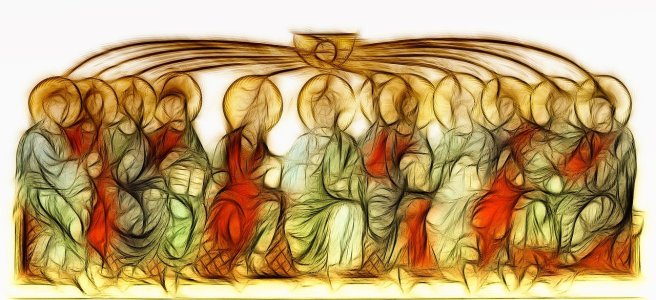
The Chosen Ones

Mark 3:13-19 (NLT)

Afterward Jesus went up on a mountain and called out the ones he wanted to go with him. And they came to him. Then he appointed twelve of them and called them his apostles. They were to accompany him, and he would send them out to preach, giving them authority to cast out demons. These are the twelve he chose:

Simon (whom he named Peter),
 James and John (the sons of Zebedee, but Jesus nicknamed them “Sons of Thunder”),
 Andrew,
 Philip,
 Bartholomew,
 Matthew,
 Thomas,
 James (son of Alphaeus),
 Thaddaeus,
 Simon (the zealot),
 Judas Iscariot (who later betrayed him).

What an odd mix.

Among them are fishermen, a tax collecting bureaucrat, a rebel who under different circumstances might try to kill the tax collector, some loud, pushy brothers, and a petty thief who would eventually prove to be a traitor. Their de facto leader, functioning like a senior student, is one of the fishermen, good old foot-in-mouth Peter.

Other than being Jews, the common denominator in the group was that they would all abandon Jesus after his arrest. I once knew a seminary professor who referred to them as the “duh-sciples.”

Out of the larger crowd of people following Jesus, these were the 12 deemed worthy to be part of the inner circle, the ones charged with spreading the Good News about Jesus, proclaiming to the world that salvation is available.

In them, I see what has been evident far too often in me: inattentiveness, dull wit, self-centeredness, impatience, insecurity, striving, and yes, the failure to perceive what is godly and right in front of me. And when I consider these flawed men, I take great comfort.

As we assess these men charged with the role of apostleship—the spread of the Good News and the growth of the church—here’s what’s incredible: They got the job done! The fact that there are more than 2 billion people calling themselves Christians nearly 2,000 years later is the proof.

Well, let me rephrase that a little. God got the job done through them, and through many who followed them. The key, it seems, is that the apostles who remained after Jesus’ resurrection were willing to let the Holy Spirit fill them and guide their work. Grace began to pour forth from these badly cracked earthenware vessels, and it just kept on pouring.

Never doubt for a moment that God can work through any of us.

Lord, thank you for the blessing of broken people who give themselves over to you. Amen.

Dark Nights

By Chuck Griffin
LifeTalk Editor

Psalm 90:13-17 (NLT)

O Lord, come back to us!
    How long will you delay?
    Take pity on your servants!
Satisfy us each morning with your unfailing love,
    so we may sing for joy to the end of our lives.
Give us gladness in proportion to our former misery!
    Replace the evil years with good.
Let us, your servants, see you work again;
    let our children see your glory.
And may the Lord our God show us his approval
    and make our efforts successful.
    Yes, make our efforts successful!

If you’ve ever felt overwhelmed by doubt or abandoned by God, take heart. The best of Christ’s followers have such experiences.

The Israelites, including today’s psalmist, regularly expressed the sense that God was no longer with them. And God did sometimes abandon them for periods of time in response to their forgetting who is Creator and Rescuer.

Just before Moses’ death, God explained to Moses and his replacement, Joshua, the pattern the Israelites would find themselves experiencing over the centuries.

“After you are gone, these people will begin to worship foreign gods, the gods of the land where they are going. They will abandon me and break my covenant that I have made with them. Then my anger will blaze forth against them,” God told the two. “I will abandon them, hiding my face from them, and they will be devoured. Terrible trouble will come down on them, and on that day they will say, ‘These disasters have come down on us because God is no longer among us!’ At that time I will hide my face from them on account of all the evil they commit by worshiping other gods.” (Deuteronomy 31:16b-18)

God did give Moses and Joshua a song to teach the people for such times. While lengthy, its elements are obvious: Declare who God is, confess the sins of idolatry and forgetfulness, and recognize God’s goodness and desire to restore his people.

Sin obviously separates us from God, taking us to the dangerous point where we might question God’s love or even his existence. Christian mystics have also recognized through the centuries that Christ’s closest followers can experience similar feelings, what a 16th-century poet called St. John of the Cross described as the “dark night,” sometimes now referred to as “the dark night of the soul.”

The mystics see these moments as a time of spiritual purging. This includes a simultaneous acknowledgment that God is unknowable in full but also worth pursuing.

Regardless of the cause of why we may feel abandoned by God or filled with doubt, the appropriate response remains the same. Never stop acknowledging who God is. Root out sins, confess them to God, and take the necessary time to grow in understanding of what God is doing in the world through Christ’s sacrifice.

Fear not, the morning does come.

Dear Lord, pour out new grace on those who struggle with their dark nights. Return them to a sense of assurance and keep within them a deep desire to serve your kingdom. Amen.