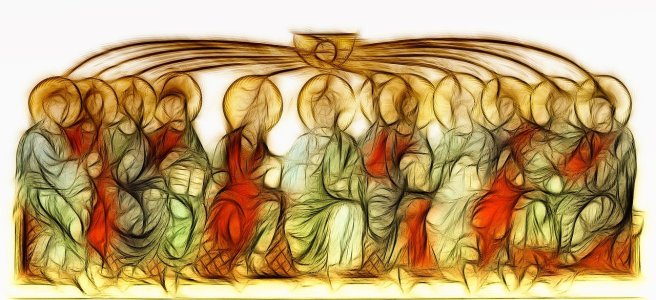
The Chosen Ones

Mark 3:13-19 (NLT)

Afterward Jesus went up on a mountain and called out the ones he wanted to go with him. And they came to him. Then he appointed twelve of them and called them his apostles. They were to accompany him, and he would send them out to preach, giving them authority to cast out demons. These are the twelve he chose:

Simon (whom he named Peter),
 James and John (the sons of Zebedee, but Jesus nicknamed them “Sons of Thunder”),
 Andrew,
 Philip,
 Bartholomew,
 Matthew,
 Thomas,
 James (son of Alphaeus),
 Thaddaeus,
 Simon (the zealot),
 Judas Iscariot (who later betrayed him).

What an odd mix.

Among them are fishermen, a tax collecting bureaucrat, a rebel who under different circumstances might try to kill the tax collector, some loud, pushy brothers, and a petty thief who would eventually prove to be a traitor. Their de facto leader, functioning like a senior student, is one of the fishermen, good old foot-in-mouth Peter.

Other than being Jews, the common denominator in the group was that they would all abandon Jesus after his arrest. I once knew a seminary professor who referred to them as the “duh-sciples.”

Out of the larger crowd of people following Jesus, these were the 12 deemed worthy to be part of the inner circle, the ones charged with spreading the Good News about Jesus, proclaiming to the world that salvation is available.

In them, I see what has been evident far too often in me: inattentiveness, dull wit, self-centeredness, impatience, insecurity, striving, and yes, the failure to perceive what is godly and right in front of me. And when I consider these flawed men, I take great comfort.

As we assess these men charged with the role of apostleship—the spread of the Good News and the growth of the church—here’s what’s incredible: They got the job done! The fact that there are more than 2 billion people calling themselves Christians nearly 2,000 years later is the proof.

Well, let me rephrase that a little. God got the job done through them, and through many who followed them. The key, it seems, is that the apostles who remained after Jesus’ resurrection were willing to let the Holy Spirit fill them and guide their work. Grace began to pour forth from these badly cracked earthenware vessels, and it just kept on pouring.

Never doubt for a moment that God can work through any of us.

Lord, thank you for the blessing of broken people who give themselves over to you. Amen.

Give It Time

Acts 5:33-42 (NRSV)

When they heard this, they were enraged and wanted to kill them. But a Pharisee in the council named Gamaliel, a teacher of the law, respected by all the people, stood up and ordered the men to be put outside for a short time. Then he said to them, “Fellow Israelites, consider carefully what you propose to do to these men. For some time ago Theudas rose up, claiming to be somebody, and a number of men, about four hundred, joined him; but he was killed, and all who followed him were dispersed and disappeared. After him Judas the Galilean rose up at the time of the census and got people to follow him; he also perished, and all who followed him were scattered. So in the present case, I tell you, keep away from these men and let them alone; because if this plan or this undertaking is of human origin, it will fail; but if it is of God, you will not be able to overthrow them—in that case you may even be found fighting against God!”

They were convinced by him, and when they had called in the apostles, they had them flogged. Then they ordered them not to speak in the name of Jesus, and let them go. As they left the council, they rejoiced that they were considered worthy to suffer dishonor for the sake of the name. And every day in the temple and at home they did not cease to teach and proclaim Jesus as the Messiah.


The “them” in the opening sentence of this passage consisted of Peter and the other apostles, who were going about in the earliest days of the church performing miracles and preaching that Jesus is the Christ.

The leaders of the temple in Jerusalem were, in the words of Acts 5:17, “filled with jealousy,” so they had the apostles arrested, only to discover these men of Christ were preaching again the next morning in the temple. An angel had freed them from prison overnight, telling them to get back to delivering the message that gives life.

So, the temple leaders had the apostles arrested again, this time intending to kill them.

As we see in our passage today, a much cooler, wiser head prevailed. Gamaliel, as we are told, was deeply respected by his fellow leaders. By the way, one of his rabbinical students was the Apostle Paul, who at this point in the story of the church had not experienced Christ on the road to Damascus.

Gamaliel correctly understood that he and the other Jewish leaders should be centered on one important task: Seeking the will of God. He also believed God would reveal whether these apostles and others who would claim to speak for God were right in what they said.

Gamaliel was spot on. Ultimately, messages and movements opposed to God will fail. All of creation is moving toward reconciliation and reunion with God, so it’s only logical that movements opposed to God will eventually collapse, even if that process sometimes takes longer than we like.

Gamaliel’s colleagues did arrange for the apostles to receive a beating none of us would want to face today. As long as evil and good continue to grow side by side, angry, jealous men will sometimes extract the vengeance they so desperately desire.

That part of the story reminds us that doing what God asks—in the apostles’ case, preaching the Good News—may require some sacrifices.

Dear Lord, your Good News has continued to be preached for nearly 2,000 years, reaching people all around the globe. May we have the courage of the apostles, trusting that the truth of Jesus Christ as Lord and Savior will always be vindicated and reign supreme at the end of time. Amen.

Specific Gifts

By Chuck Griffin
LifeTalk Editor

1 Corinthians 12:28 (NLT)

Here are some of the parts God has appointed for the church:
first are apostles,
second are prophets,
third are teachers,
then those who do miracles,
those who have the gift of healing,
those who can help others,
those who have the gift of leadership,
those who speak in unknown languages.


Over the last couple of weeks, I’ve referenced spiritual gifts while preaching, and last Friday I issued an invitation to those of you who might want to learn more about your gifts, regardless of whether you’re a regular part of Holston View UMC. Today, please let me provide you with just a little more detail.

There are lots of ways to assess spiritual gifts, some formal, some informal. At previous churches, I’ve used the “3 Colors of Your Gifts” book and tests as part of an introductory church class for visitors and new members. I like these materials, and most people have found them useful. I think such a formal approach is at least a start in the right direction.

These tests usually work best in a small group setting, with a leader who has some training in the materials (I do). If you also have an interest in small groups, it’s fun to use spiritual gifts discovery as a starting point for a group.

Whether your search is formal or informal, you of course want to start with prayer. Simply ask God to reveal to you the gifts that will make you a more effective Christian. If you’re going the informal route, at least talk with a pastor and with other mature Christians around you about how they see God working in you, and consider how what they say lines up with a list of scriptural gifts, like this one:

Trusting your likes and dislikes is an important part of your discernment. If you find yourself on a planning committee and not really happy about it, you’ve learned something—you probably lack the spiritual gifts that go along with such service.

That’s okay! Don’t give up, just change up how you serve, and find what gives you joy while bearing fruit for the kingdom. Again, trust the guidance of mature Christians around you.

I promise you this: No sane pastor or church leader will try to prevent you from exploring different forms of gift-based service. We never have enough people in the church doing kingdom work under the guidance of the Holy Spirit. We want you to find your place, and in the process, find the kind of joy that helps you experience eternity now.

Lord, thank you for the ongoing grace you pour on us in the form of spiritual gifts. Help us to see how we fit into your plans to change the world. Amen.