What They Saw

Acts 2:14-24 (NRSV)

But Peter, standing with the eleven, raised his voice and addressed them, “Men of Judea and all who live in Jerusalem, let this be known to you, and listen to what I say. Indeed, these are not drunk, as you suppose, for it is only nine o’clock in the morning. No, this is what was spoken through the prophet Joel:

"In the last days it will be, God declares,
that I will pour out my Spirit upon all flesh,
    and your sons and your daughters shall prophesy,
and your young men shall see visions,
    and your old men shall dream dreams.
Even upon my slaves, both men and women,
    in those days I will pour out my Spirit;
        and they shall prophesy.
And I will show portents in the heaven above
    and signs on the earth below,
        blood, and fire, and smoky mist.
The sun shall be turned to darkness
    and the moon to blood,
        before the coming of the Lord’s great and glorious day.
Then everyone who calls on the name of the Lord shall be saved."

The above passage is the beginning of Peter’s sermon at Pentecost, delivered shortly after the Holy Spirit had fallen upon the disciples.

Peter referenced a prophecy from Joel, found in Joel 2:28-32, to explain what was happening in the moment, the enthusiastic declaration of the gospel by disciples in languages they should not have known. Peter also continued to quote from Joel about the sun being darkened and the moon turning to blood.

I am fascinated by that second part. There is no record of anyone in the crowd asking, “And exactly when did these signs in the sky occur?” It appears there was no need for such a question because these events had been witnessed and discussed widely for more than a month.

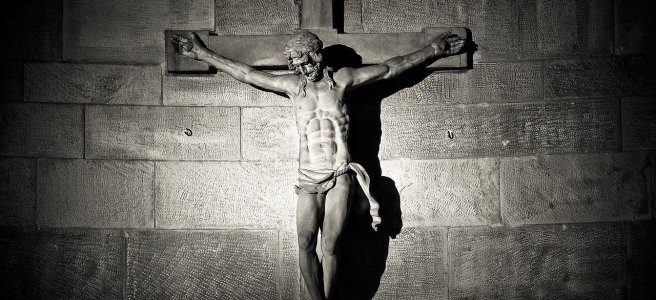
In regard to the sun darkening, all we have to do is look at Luke’s account of the crucifixion, focusing on the actual moment of Jesus’ death. According to the NRSV translation, Luke tells us “the sun’s light failed.” 

We can be certain this was not the result of a natural solar eclipse, for reasons rooted in moon phases and how they relate to the Passover, the religious festival that was the backdrop for Jesus’ death. I consider the unknown cause either directly miraculous or a miracle of timing, incorporating a sandstorm or some other strange environmental phenomena.

The moon turning to blood is easier to explain. Again, because of the moon phase during Passover, it is quite possible the moon rose with a deep red tint on the Saturday while Jesus was in the grave, a disturbing reminder of the blood spilled the day before.

Regardless of how these events in the sky happened, they were very much on people’s minds, and Peter was able to reference them without explanation.

The crowd was troubled by all they had seen, just as we sometimes are troubled, and they became even more troubled as Peter offered them their share of blame for Jesus’ crucifixion. Blessedly, his sermon went on to deliver good news.

“Repent, and be baptized every one of you in the name of Jesus Christ so that your sins may be forgiven; and you will receive the gift of the Holy Spirit. For the promise is for you, for your children, and for all who are far away, everyone whom the Lord our God calls to him.”

Lord, thank you for the signs of love and reconciliation we receive from you now, preparing us for the glorious day of your return. Amen.

We See You!

Mark 3:7-12 (NLT)

Jesus went out to the lake with his disciples, and a large crowd followed him. They came from all over Galilee, Judea, Jerusalem, Idumea, from east of the Jordan River, and even from as far north as Tyre and Sidon. The news about his miracles had spread far and wide, and vast numbers of people came to see him.

Jesus instructed his disciples to have a boat ready so the crowd would not crush him. He had healed many people that day, so all the sick people eagerly pushed forward to touch him. And whenever those possessed by evil spirits caught sight of him, the spirits would throw them to the ground in front of him shrieking, “You are the Son of God!” But Jesus sternly commanded the spirits not to reveal who he was.


The religious phrase “Great Awakening” has been borrowed by some who badly abused it in secular settings the last couple of years. Today’s text reminds us of what it means for people to leap to their feet and respond to the clear presence of God.

Jesus’ ministry, of course, was the ultimate Great Awakening, as he first revealed an expanded understanding of God’s plan and then, in his crucifixion, resurrection, ascension and sending of the Holy Spirit, made an ongoing, living connection to God possible.

Any later Great Awakening simply was or will be a revival, a renewed understanding of what has come before. As in Jesus’ day, when such an event happens, people more easily recognize miracles past and present. They may travel great distances to hear what God has to say, even though these truths have long been available to them in God’s word.

I particularly like the idea that the spiritual world in contention with God trembles at the idea of such moments that lead to movements. Unseen evil beings trouble us all the time. Why should they not be troubled, too?

Hear the Good News: Jesus Christ is Lord! The evil in this world is in retreat and the brokenness of creation is being healed. It is a truth established for you and for me. It is simultaneously personal and global; it will change our lives forever.

Lord, may we see such an Awakening in our day, to the benefit of our families, friends, neighbors, enemies, and of course, ourselves.

Peace

Romans 5:1: “Therefore, since we have been justified by faith, we have peace with God through our Lord Jesus Christ.”

Let’s continue exploring the four big themes of the season of Advent. Today, we will consider the concept of peace.

When we talk about biblical peace, we don’t just mean a feeling of bliss. Biblical peace is more akin to peace between nations that have been at war. When they agree to peace, they end hostilities and seek new possibilities for their relationship.

Through his sacrifice, Jesus ended the state of war between God and humanity. Humans brought on this terrible situation by sinning against God, creating a state of unholiness that called for our destruction. Through Jesus Christ, God made a unilateral offering of peace, restoring our ability to relate to our creator.

To accept the offer, we simply look to the cross and believe, accepting that the work done there is complete and irrevocable.

Now, don’t get me wrong, a state of peace does also bring a feeling of bliss. The threat of destruction is removed.

In terms of emotional responses, there’s more, too. But that’s for tomorrow.

Lord, thank you for the tremendous offer of peace made to us when you had all the power and divine privilege. Amen.

Death of the Son

By Chuck Griffin
LifeTalk Editor

Psalm 9:1-14

So, right up front, I might as well tell you what I’m doing wrong. I’m taking an obscure, hard-to-translate heading on a psalm and likely stretching it into far more than was intended.

The least controversial way to translate Psalm 9’s heading is, “To the chief musician upon Muth-labben,” which avoids all problems in translating the Hebrew phrase “Muth-labben.”

I studied a little Hebrew in seminary, but let’s just say I never wanted to make a living working in biblical languages. I have enormous respect for those who choose this path. But as best as I can tell, even the experts have trouble agreeing on the translation of this particular psalm title.

I will not bore you with all the possibilities, but my favorite, the one chosen by the New Living Translation, is, “To be sung to the tune, ‘Death of the Son.’ “

That translation begs other questions. Whose son? Being considered a psalm of David, Absalom, perhaps? Again, it’s impossible to answer for sure.

Just for the fun of it, let’s stick with “Death of the Son” as the title and then really Christianize the psalm. We will look at it like people who believe Jesus Christ is somehow present in every page of the Bible, Old Testament or New Testament.

What follows Psalm 9’s heading is unrestrained praise for God. This is the God who fills us with joy!

We also hear of the God who restores us at the judgment, sending our sin-aligned enemies staggering away mortally wounded.

The nations are all rebuked for unholiness. All is set right, and God is understood to be astonishingly loving, the one who shelters and restores the oppressed and hopeless.

Regardless of the psalmist’s intent, I think of the God who came among us in flesh and died for our sins, making resurrection and restoration possible. I think of Jesus Christ, the cross, and a stone rolled away from a tomb.

It’s enough to make me wonder if “Death of the Son” was a joyous tune.

Lord, help us begin our week immersed in the idea that Jesus Christ died for our sins, and in the hope that death brings. Amen.

Ultimate Covenant

By Chuck Griffin
LifeTalk Editor

Jeremiah 31:31-34

“The day is coming,” says the Lord, “when I will make a new covenant with the people of Israel and Judah. This covenant will not be like the one I made with their ancestors when I took them by the hand and brought them out of the land of Egypt. They broke that covenant, though I loved them as a husband loves his wife,” says the Lord.

“But this is the new covenant I will make with the people of Israel after those days,” says the Lord. “I will put my instructions deep within them, and I will write them on their hearts. I will be their God, and they will be my people. And they will not need to teach their neighbors, nor will they need to teach their relatives, saying, ‘You should know the Lord.’ For everyone, from the least to the greatest, will know me already,” says the Lord. “And I will forgive their wickedness, and I will never again remember their sins.”


If we are going to grasp what’s going on in the Bible from Genesis to Revelation, there are a handful of critical concepts. Two major ones are in this prophecy from Jeremiah.

First, there is the idea of “covenant.” God’s covenants with humanity evolve through time, growing ever more expansive regarding whom they reach. You can see the potential for expansion was there from the start, when God entered a covenant, a holy contract, with the man we would come to know as Abraham.

Genesis 12:1-3: “The Lord had said to Abram, ‘Leave your native country, your relatives, and your father’s family, and go to the land that I will show you. I will make you into a great nation. I will bless you and make you famous, and you will be a blessing to others. I will bless those who bless you and curse those who treat you with contempt. All the families on earth will be blessed through you.'”

Followers of Jesus Christ see his death on the cross thousands of years later as establishing a new covenant that makes salvation possible for all the families on earth. 

As covenants are established through time, we better understand a second critical concept, the idea of holiness. As God expands his relationship with humanity through Jesus Christ globally, he also begins to penetrate the hearts of his followers more deeply.

Jeremiah speaks of a time when holiness is complete, when God’s followers are so closely aligned with him that they have no need of written or spoken instruction. God will be so present within us that we simply will know God’s will for ourselves, enabling us to live in perfect harmony.

We obviously are not there yet. But as we practice faithful discipleship, it’s good to know where we are headed.

Lord, help us grow in holiness as we accept the eternal covenant offered us through Jesus Christ. Thank you for meeting us in our imperfect states, rescuing us from sin and death. Amen.

Timing

By Chuck Griffin
LifeTalk Editor

Joshua 6:1-20 (NLT)

Today is election day, and as I look at the recommended Nov. 3 Scripture readings, the irony of finding a particular story from the Book of Joshua does not escape me.

In the story there is a wall, and the wall collapses. The story has inspired many people through the years, including Black slaves who once sang, “Joshua fought the Battle of Jericho, and the walls came tumblin’ down.” It is a story of change, chaotic change, but change designed to benefit the people of God.

First and foremost, let’s be praying that any change to come from today’s voting process is according to God’s will, and to the benefit of Christ’s kingdom on earth. There also is a lesson in this story about timing, a lesson any culture can benefit from in any era.

Joshua asked the Israelites to do a difficult thing—trust God’s timing. It must have been strange, marching around a city’s high wall day after day in silence. I wonder, once back in camp in the evening, did anyone mutter, “When are we going to actually do something effective?”

Timing is difficult to master. If you’ve ever played sports or music, you know how critical timing is. My father has been a drag racer for decades; races are often won or lost by thousandths of a second. In karate, there’s an ancient saying: “The time to strike is when opportunity presents itself.” You can be too quick or too slow. 

People sometimes like to act as if God isn’t fully awake. The solution we’ve deemed right must be forced, it seems: Here, Abram, go impregnate Hagar. Other times, we lose focus, and we’re too late to be effective. (I plan to preach this “too late” text Sunday.)

Jesus’ earthly ministry relied on timing. He repeatedly warned the disciples and others not to reveal too much about him, not just yet. It was as if Jesus knew exactly which beams and nails had to be available for his crucifixion if heaven and earth were to be joined through him.

If we’re going to master timing as Christians, we need to be sure we’re hearing clearly from God. Let’s neither rush nor miss those moments when our Lord says, “Blow those trumpets! Shout!” Again, prayer and study of Scripture are the best ways to unstop our ears.

Once we know God has issued a call to action, we can be confident our efforts to change things for the better will be effective, even if it turns out we’re just one move in the Lord’s long game.


Today seems like a good day for John Wesley’s covenant prayer. Here’s a modern version:

I am no longer my own, but yours.
Put me to what you will, rank me with whom you will;
put me to doing, put me to suffering;
let me be employed for you, or laid aside for you,
exalted for you, or brought low for you;
let me be full,
let me be empty,
let me have all things,
let me have nothing:
I freely and wholeheartedly yield all things
to your pleasure and disposal.
And now, glorious and blessed God,
Father, Son and Holy Spirit,
you are mine and I am yours. So be it.
And the covenant now made on earth, let it be ratified in heaven.
Amen.