Children of the Aramean

Deuteronomy 26:1-11

By Chuck Griffin

When we think of Old Testament texts on giving, our minds often go to the tithe, the giving of 10 percent of the harvest or income to support what would eventually become the work of the temple, work that included care for the poor. Today’s Deuteronomy text really doesn’t take us into the concept of the tithe, however.

What we hear is a recitation, a declaration of what God had done to help his chosen people. From a practical perspective, the offering brought to the altar was a mere token, but theologically it was huge. The head of a family was acknowledging that all he had truly came from God.

I believe in hard work. I believe in the idea that if we are to succeed in life, there is a need to use our bodies and minds to the best of our abilities.

But at the same time, as people who acknowledge we were made by God and saved from sinful brokenness by God, we have to be the first to say we are dependent on God.

If we think about it, we do owe everything to God, even if we’ve done all we can to succeed. If we’re intelligent enough to make the right choices, it’s because God made us so. If we have been able to succeed through hard physical labor, it is because God at some point graced us with healthy bodies.

And we can never forget that there is at least some randomness in how well we do or don’t do in life. If we’re not careful, we will simply stumble into success and then start thinking we are brilliant.

A good Jew acknowledged these truths with his recitation and offering. We do much the same when we declare ourselves followers of Christ—for example, if we recite the Apostles’ Creed in worship. We declare God Creator. We then retell the story of Christ’s life, sacrifice and resurrection, following that with the story of God continuing to work in the world up to this very day through the Holy Spirit.

That true understanding—that perspective regarding who God is and who we are—should shape every nook and cranny of our lives. For many, that deepest, hardest to reach cranny is where we store our attitude about income and possessions.

As I said before, this text isn’t really about tithing. Tithing was a powerful Old Testament concept, of course, but a text like we have today shows us that tithing was just a beginning point, a rule designed to lead a person to a right way of relating to God through our income and possessions.

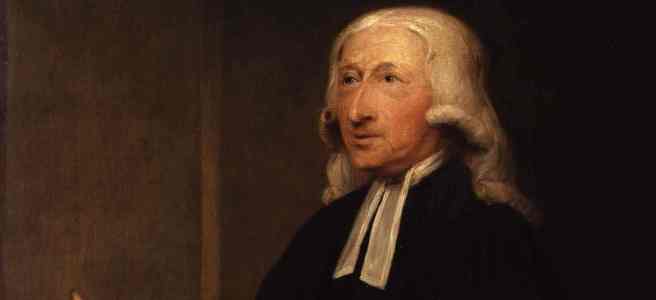
John Wesley preached that God provides for the roof over our heads, food, and other basic needs, allowing us to ensure the well-being of our families and even a business we may operate. Beyond those provisions, everything we are given counts as riches, and they have been given to us to use “to the glory of God.” Often, this means using our riches to help those who are less blessed materially, playing a role in God’s provision for people’s basic needs.

Even for a tither, this is a concept that requires thought. It forces a reassessment of every decision we make regarding how we handle our income and possessions, simply because we learn to say, “It’s not really mine, anyway.”

If you find this idea a little daunting, be encouraged. Look back to today’s verses; notice how our little scene at the altar closes. There is celebration in the house of God, the kind of joy to be shared even with the dependent and disenfranchised people among us.

I wonder what we miss when we fail to embrace such a powerful attitude about income and possessions.

Lord, give us the spiritual strength to turn every aspect of our lives over to you, and may the celebration that follows be most rewarding. Amen.
Praise

Psalm 113       (NRSV)

Praise the Lord!
Praise, O servants of the Lord;
    praise the name of the Lord.

Blessed be the name of the Lord
    from this time on and forevermore.
From the rising of the sun to its setting
    the name of the Lord is to be praised.
The Lord is high above all nations,
    and his glory above the heavens.

Who is like the Lord our God,
    who is seated on high,
who looks far down
    on the heavens and the earth?
He raises the poor from the dust,
    and lifts the needy from the ash heap,
to make them sit with princes,
    with the princes of his people.
He gives the barren woman a home,
    making her the joyous mother of children.
Praise the Lord!

By John Grimm

We can praise the Lord.  This psalm from the Hebrew people is not only for the Jews.  It is for all people!  Learning to have joy in our lives, as Paul instructs, comes from praising the Lord.  Thankfully, the first Church Council in Jerusalem, as described in Acts, has extraordinarily little limiting Gentiles who place faith in Jesus Christ.  Thankfully, as we read this psalm, we can see no infringement upon the Jewish law, ceremonial or otherwise. 

It is knowing the Lord is our God that gives us the ability and the insight to praise him.  No one else is seated on high, for this life is not about who is the king of the mountain.  The Lord our God not only looks down from heaven, but he is also involved in life on earth by removing the poor and needy from squalor.  Do we remember the times we were poor, and the Lord raised us up?  Do we remember the times we were needy, and God removed us from the ash heap?  These are reasons we praise God.

Maybe we do not have those memories.  Maybe we are the princes of God’s people.  Knowing and seeing the Lord lift others from squalor gives us reason to praise.  Thanking God for the changed welfare of another person is appropriate.  It is then that we see God has expanded our lives to include those who are not like us.

There are barren women, and barren couples, today.  Knowing the Lord can and does place children in the lives of barren people is a praise.  Even though someone is barren does not mean others bar them from participating in life.  It is a joy for barren women, and couples, to lovingly teach and encourage children to know the Lord.  Again, this opportunity is reason to praise the Lord.

Yes, we can praise the Lord.  He is our God.  Who knows, maybe someone who hears us giving praise to the Lord will make the Lord their God!

We praise God, for you have worked in our lives.  You can see from heaven and can assist us here on earth.  Thank you for lifting us from squalor.  Thank you for allowing even the princes of the earth to see your work on earth.  It is through the name of Jesus Christ that we know you as our God.  Amen.

Risky Business

This Sunday at Holston View United Methodist Church, the sermon will draw from Mark 12:38-44, where Jesus again causes us to think about our spiritual relationship with money. If you cannot join us in person, join us online at 11 a.m., or watch a recording later.

Today’s Preparatory Text:  1 John 3:16-24 (NLT)


By Chuck Griffin

When preaching, I occasionally reference the biblical concept of hospitality. As we prepare for this Sunday’s sermon, I want us to further explore this tame-sounding idea that actually is quite radical.

In the letter of 1 John, we hear what real love is, our eyes drawn to the death of Jesus on the cross. This is the same author who wrote in the Gospel of John, “For God so loved the world that he gave his only Son, so that everyone who believes in him may not perish but may have eternal life.” Later in the Gospel of John, in the 15th chapter, he also quoted Jesus as saying this: “No one has greater love than this, to lay down one’s life for one’s friends.”

With the idea in mind that we might need to die for each other, it’s no stretch to say that living the Christian life requires us to take risks. We should never be foolish with our lives, but it’s possible our lives could be endangered as we work on behalf of our savior and the world around us. It takes spiritual courage not to pull away when such risks arise.

In my opinion, American Christians can be a little short on this kind of courage, in part because we are so affluent compared to the rest of the world. When you have stuff, you get used to guarding your stuff from others who might want it.

Our concern for our stuff makes our tolerance for risky interactions with others low. I’m generalizing, of course, but I feel comfortable that I just described our group average, and I acknowledge I often am more a part of the problem than the solution. A risk-averse people have difficulty solving many of the social problems around them simply because they cannot, as a group, step up and do the hard work that has to be done.

For an example, let’s look at helping the homeless. This kind of hospitality ministry invites us to make sacrifices in our own lives so we can dramatically impact the lives of others. Individually, some Christians go so far as to maintain “Elisha rooms,” creating simple spaces for people in need. (The Bible story behind the name is in 2 Kings 4:8-17.)

Again, there is risk, particularly when we engage with people we don’t know that well, and with risk comes fear. But when we dwell in a Holy Spirit-inspired community, we can help each other with hospitality, reducing risk and fear.

Sometimes the solution is as simple as modifying our church spaces with hospitality in mind. At my first appointment out of seminary, the church was expanding its facilities. The church leaders plopped the blueprints down in front of me one day and asked if I had any input.

“Just one,” I said. “Maybe a shower somewhere? Then if people in the community have an emergency, we could use the building for short-term housing.”

The church members liked the idea so much they put in two shower facilities. They now regularly house and feed homeless guests through a program providing temporary help to displaced families.

Sadly, not enough American churches have a hospitable mindset. Many churches, perhaps most churches, have yet to embrace this very scriptural work. They even are willing to pass that responsibility on to the government, distancing themselves from the powerful call God places upon us in Scripture.

Where do we get the spiritual strength to take radical risks as we make ourselves more hospitable? Well, we begin with small, communally shared risks, and we grow in strength over time.

It is my prayer that one day the American church, regardless of its denominational lines, will fully be the hospitable church described in the Bible. When that happens, the government’s intractable problems will prove to be no problem for God and his people.

Lord, take us down paths requiring courage, filling us with your Holy Spirit as we go. Amen.

What’s in Your Cabinet?

By Chuck Griffin

This Sunday’s worship at Holston View UMC in Weber City, Va., will be different, focusing specifically on healing. A formal Service of Healing, including communion and anointing with oil, seems appropriate as we continue to make our way through a pandemic that is impacting the world in so many ways. Of course, we have to acknowledge that because of the pandemic, many people will not be comfortable attending in person. The service will be viewable online.

If you would like someone’s name placed on the prayer rail during the service, simply email me, and I will make sure that happens.

Today’s Preparatory Bible Passage

“For the Lord gives wisdom; from his mouth comes knowledge and understanding.” (Proverbs 2:6)


Cake and ice cream. Shoes and socks. Salt and pepper. Wife and husband. Sticks and stones, and their modern cousins, bats and balls. Or to quote Forrest Gump, “Jenny and me was like peas and carrots.”

There are many things in the world that can function alone, but that work better in conjunction with something else.

Let’s add this to the list: medicine and faith.

If we are to seek healing, we need to understand both are gifts from God. God pours his love into the world, and through faith some are reunited with the source of eternal life. God pours his knowledge and wisdom into the world, and some are so mentally blessed by the gift that from generation to generation, humans are better able to alleviate suffering.

A friend recently told me about a grandmother who kept her medicine cabinet stocked, but who also kept an empty bottle there labeled “Faith.” It was her reminder to get a dose of everything she needed to be well.

People of the Bible had little in the way of medicine and relied heavily on faith. We have so much in the way of medical care that we sometimes treat faith as an afterthought. Does this conversation sound familiar?

Friend: “I’m so sorry you’re suffering. What can I do for you?”

Suffering person: “Well, not much, really. Just pray for me.”

In this hurting world, we Christians should prayerfully pursue healing with the same kind of determination that dedicated doctors, nurses and researchers employ in their daily lives. Where healing is concerned, we all have God-given roles, and those roles work together for the betterment of those around us.

Lord, may we see an outbreak of healing, the kind of events that declare your kingdom is present. Amen.

For My Welfare?

Isaiah 38:10-20

By John Grimm

For my welfare?  We think we know what is best for ourselves.  We plan, we maneuver, and we make connections so that we can have the best life possible.  Then troubles come our way and we are at a loss.  Getting through the troubles strains us.

We then ask ourselves, is the trouble because of my own sins?  Are we the ones who caused our own souls to be bitter?  Or is the truth that someone else caused our misfortune and our problems?  Is it not that since we live godly lives, we can escape such bitterness?

When we know that we have caused our own bitterness, then we repent of our ways.  We confess our sin to God and he restores us.  We may even eventually see that God had been protecting us, despite our willful rebellion against him.  As soon as we recognize the good God was keeping us for, we thank him that he did not allow us to be punished for all time because of our rebellion. 

When we do not know the source of the bitterness in our life, we should keep turning to God.  It is through Jesus that we find salvation, even in the midst of bitterness.  It is during these times that we catch a glimpse of how much evil that God has kept from us.  Yes, going through the bitterness was for our welfare!

It is by living through bitterness brought on by our own sin or someone else’s sin that we can praise God!  Then we get to be in the sanctuary with other believers to sing and praise God for his work in our lives.  What a witness we have when those around us know of the bitterness of our souls and they get to hear us praise God.  Maybe it is during this pandemic that the bitterness of our souls is for our welfare.  It seems like a good time to praise God for getting us through these days.  What better way to shrug off bitterness than to be in the house of the Lord, thanking God for our deliverance?

God, we know who and what has caused bitterness in our souls.  It was not you.  We allowed that bitterness to grow.  Yet, you are using the state of our souls so that we may see how you are working to deliver us.  As we become content in your faithfulness, may we see the bitterness washing away and hear chords of praise coming from our lungs.  It is in Jesus’ name that we thank you for making a way for our welfare even when we could not grasp what was happening.  Amen.  And Amen!

The Wise and Foolish Builders, Pt. 2

Luke 6:46-49 (HCSB)

46 “Why do you call Me ‘Lord, Lord,’ and don’t do the things I say? 47 I will show you what someone is like who comes to Me, hears My words, and acts on them: 48 He is like a man building a house, who dug deep and laid the foundation on the rock. When the flood came, the river crashed against that house and couldn’t shake it, because it was well built. 49 But the one who hears and does not act is like a man who built a house on the ground without a foundation. The river crashed against it, and immediately it collapsed. And the destruction of that house was great!”


By ‘Debo Onabanjo

In last Tuesday’s devotional, we learned that the difference between the wise and foolish builders is not what they know, but how they act based on what they know. The wise builder builds on a solid foundation, which represents the teaching of Jesus. The foolish builder serves as a metaphor for ignoring the teaching of Jesus, building his house on sand.

In our focus text for today, we find a slight variation on this teaching of Jesus, although he once again underscores the importance of people coming to him, listening to his teaching and then following through on the instruction they receive.

I have a hard time believing someone would build a house without a foundation, but we do have many people around us who have either chosen to build their lives with no foundation or at best a sandy foundation. Some people have built their lives on their personal careers, their wealth, their position in society, their kids or their fame.  Such lives are in constant danger of collapsing.   

As John Wesley, the founder of Methodism, was prone to remind us, not all who profess to be followers of Jesus Christ are doing the will of God.

We can deceive others about our faith journey, but we cannot deceive Jesus.  Christ makes it clear that just as a tree is known by its fruit, people will be known by their actions. (Matthew 7:15-23.) Christ warns us that he will shock people when he tells them he never knew them.  People who talk about heaven or appear pious don’t necessarily belong to the Kingdom of God.  Other humans see what we display outwardly, but God sees every heart, and nothing is hidden from God’s all-seeing eyes. 

While there may not be immediate noticeable differences in our lives when we follow Christ, if we are truly building on the right foundation, the genuineness of our faith will be revealed with time.  

Help us heavenly Father to build on Jesus Christ the Solid Rock. Holy Spirit, teach us to build on Jesus the foundation of our faith with the right materials that will withstand the test of time and the challenges that will come along our journey. May we be fruitful and faithful to the end so that when our time here on earth comes to an end, we can hear you say to us, well done good and faithful servant, enter into the joy of your Master. We pray with confident assurance in the name of Jesus the Christ. Amen. 

A Shocking Assertion

This Sunday’s sermon at Holston View UMC in Weber City, Va., will be “Investing In the Future.” It will be based on Jeremiah 32:6-9. If you want to view the sermon but cannot be present, the entire worship service will be available through Holston View UMC’s web page.

Today’s preparatory text: 1 Timothy 6:9 (NRSV)

But those who want to be rich fall into temptation and are trapped by many senseless and harmful desires that plunge people into ruin and destruction.


By Chuck Griffin

A couple of times before on Methodist Life, I have referenced a John Wesley sermon, “The Danger of Riches.” As we look toward Sunday’s Jeremiah text and consider how to live boldly, I thought it would be useful to consider what the sermon has to say.

Bold behavior for the kingdom doesn’t have to involve money, of course. But let’s be realistic. Money does make the modern world go around. When we are bold for the kingdom, we likely run into one of two scenarios. We either give from our abundance or we make life decisions that reduce our opportunity for abundance.

As we make these choices, we need to fix in our minds a question, one along the lines of what I wrote for Wednesday. Do we live as if this life is the only one that counts? Or do we live as people who believe something greater is happening—that God’s kingdom is truly arriving, and that the kingdom is where we store our true treasures and live out eternity!

Once we choose the latter option, we’re ready to hear what Wesley said as he expanded on 1 Timothy 6:9.

In the sermon, Wesley asserted that God provides for the roof over our heads, food, and other basic needs, allowing us to ensure the well-being of our families and even businesses we may own. What we own beyond those basic provisions count as riches, and they have been given to us to use “to the glory of God.”

Often, this means using our riches to help those who are less blessed materially, playing a role in God’s provision for people’s basic needs.

Wesley offered us an interpretation that might even surprise a tither. I have no doubt someone accused the founder of Methodism of having “gone to meddling.”

His very correct interpretation of Scripture should force a reassessment of every decision we make regarding how we handle our income and possessions. When we learn to make such decisions in the light of God’s dawning kingdom, we not only trust God daily, we begin to participate actively in the kingdom’s growth.

In other words, we become quite bold.

Lord, the world needs people who look to you as the source of all that matters and then act accordingly. Raise up a bold generation so that your Holy Spirit may rush through them, making your Kingdom work complete. Amen.

Asking by Faith

James 1:2-8 (NIV)

Consider it pure joy, my brothers and sisters, whenever you face trials of many kinds, because you know that the testing of your faith produces perseverance. Let perseverance finish its work so that you may be mature and complete, not lacking anything. If any of you lacks wisdom, you should ask God, who gives generously to all without finding fault, and it will be given to you. But when you ask, you must believe and not doubt, because the one who doubts is like a wave of the sea, blown and tossed by the wind. That person should not expect to receive anything from the Lord. Such a person is double-minded and unstable in all they do.


By John Grimm

Trials?  What trials?  That seems to be one approach to living through this pandemic.  We know of men and women who are no longer involved in any church, of any kind, because of restrictions placed upon churches during this pandemic.  Instead of facing trials, some men and women have tried to avoid any trial during the pandemic.

Trials!  What trials!  That’s a different approach. Yes, we have placed restrictions upon churches during this pandemic.  But in the midst of all of that, consider what God has helped us learn. We can be disciples of Christ during this pandemic through active participation in church.

Before this pandemic, I had never pastored a church during a pandemic.  I am sure that before this pandemic, you did not know how to live through a pandemic.  We can expect God to give us wisdom so that we may become mature in Christ during this pandemic. 

If we are avoiding trials, then are we double-minded and unstable in all we do?  Faith in  God was possible before the pandemic.  Faith in God is possible through the pandemic.  Once we leave the pandemic behind, we should find our perseverance is closer to finishing its work in us.

God, thank you that you have been with us through this pandemic.  When we asked you for wisdom about how to face trials caused by this pandemic, you have generously given to us!  What a joy it is to be alive during a pandemic and see how you continue to give to us!  May our brothers and sisters in Christ who are not involved in church because of the pandemic find this joy that we have from placing our faith in you.  In the name of Jesus, we pray.  Amen.

The Emboldening Truth

This Sunday’s sermon at Holston View UMC in Weber City, Va., will be “Investing In the Future.” It will be based on Jeremiah 32:6-9. If you want to view the sermon but cannot be present, the entire worship service will be available through Holston View UMC’s web page.

Today’s preparatory text: 1 Corinthians 15:12-20 (NLT)

But tell me this—since we preach that Christ rose from the dead, why are some of you saying there will be no resurrection of the dead? For if there is no resurrection of the dead, then Christ has not been raised either. And if Christ has not been raised, then all our preaching is useless, and your faith is useless. And we apostles would all be lying about God—for we have said that God raised Christ from the grave. But that can’t be true if there is no resurrection of the dead. And if there is no resurrection of the dead, then Christ has not been raised. And if Christ has not been raised, then your faith is useless and you are still guilty of your sins. In that case, all who have died believing in Christ are lost! And if our hope in Christ is only for this life, we are more to be pitied than anyone in the world.

But in fact, Christ has been raised from the dead. He is the first of a great harvest of all who have died.


By Chuck Griffin

When we fully understand what it means to follow Christ, Christians should, in theory, stop thinking of our interests as existing solely within the nine decades or so we hope to live.

We look back to Jesus hanging on a cross and then exiting a tomb nearly 2,000 years ago, and we see how our lives are changed now. We understand salvation because earlier Christians made great sacrifices to ensure the message of Jesus Christ spread from one generation to the next.

We also look forward to a day when the Redeemer will restore us from death in the resurrection.

Job expressed it well centuries before Christ was born:

“But as for me, I know that my Redeemer lives, and he will stand upon the earth at last. And after my body has decayed, yet in my body I will see God! I will see him for myself. Yes, I will see him with my own eyes. I am overwhelmed at the thought!” (Job 19:25-27.)

We should stay overwhelmed at the thought. And if others are to share that thought, then we may need to chase objectives that might seem irrational to the secular world.

When we reach that thought’s fulfillment, I wonder what we will regret more as we stand before the holy Savior. Will it be the wrong things we did, or the right things we failed to do? Sometimes we are so focused on sins of commission that we’re not thinking about sins of omission.

Often, I think, sins of omission are simply failures to be bold, to live bravely as citizens of a dawning kingdom.

I don’t know what your bold move might be. It may involve your time or your money. It may involve the direction of your life.

All we can do is ask God to reveal what seemingly irrational steps he may ask us to take, and then pray for the courage to take them.

Lord, once again root our souls in the truth of Jesus Christ, and let us see what you would have us do now as people who will live forever. Amen.

As Indeed You Are Doing?

1 Thessalonians 5:1-11 (NRSV)

1 Now concerning the times and the seasons, brothers and sisters, you do not need to have anything written to you. 2 For you yourselves know very well that the day of the Lord will come like a thief in the night. 3 When they say, “There is peace and security,” then sudden destruction will come upon them, as labor pains come upon a pregnant woman, and there will be no escape! 4 But you, beloved, are not in darkness, for that day to surprise you like a thief; 5 for you are all children of light and children of the day; we are not of the night or of darkness. 6 So then let us not fall asleep as others do, but let us keep awake and be sober; 7 for those who sleep sleep at night, and those who are drunk get drunk at night. 8 But since we belong to the day, let us be sober, and put on the breastplate of faith and love, and for a helmet the hope of salvation. 9 For God has destined us not for wrath but for obtaining salvation through our Lord Jesus Christ, 10 who died for us, so that whether we are awake or asleep we may live with him. 11 Therefore encourage one another and build up each other, as indeed you are doing.


By John Grimm

I cannot count how many times that I have read these verses.  Well, to be honest, I have heard only a portion of these verses being emphasized.  It appears that in my life I have heard many people only quote verse one and two.  What about verses three through eleven, do they matter to us?

Paul is emphasizing how we Christians are to live, remembering that the day of the Lord will come like a thief in the night.  Faith, love, and salvation are our themes as we live as children of light and children of the day.  It is through our Lord Jesus Christ that we live, now and later.  Salvation is ours in Christ now.  The day of the Lord is later, and salvation is ours also at that time.

You can be encouraged with this info.  You can build up other Christians with this news.  Paul says that is “as indeed you are doing.”  However, we know what we have been doing.  We stopped reading after verse two.  God help us!  As we live as children of the night or of darkness, we have not been able or willing to encourage one another or to build up each other. 

Will you take time today to recognize the salvation you have in Jesus?  Will you start encouraging and building up other Christians, even today? 

God, as I live in Christ, nothing will surprise me about the day of the Lord.  Yet, I have not grasped the salvation I have in the Lord Jesus Christ.  Forgive me for my slowness of living as a child of light and a child of the day.  In this day, may other Christians find encouragement and be built up in Christ by my words and actions.  In the Name of Jesus, I hope to be found on the day of the Lord, amen.