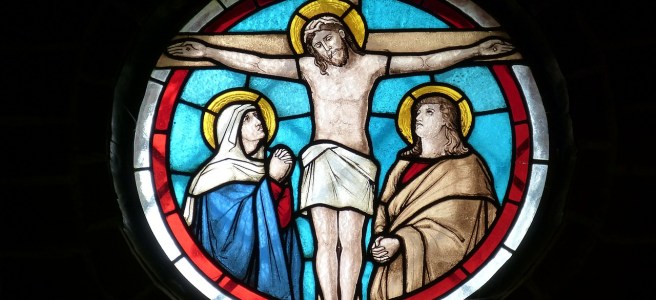
Dodging the Cross

This Sunday’s sermon at Holston View UMC will be “A Piercing Truth,” drawing on Hebrews 4:12-16. If you cannot be with us in person, please join us online live or to watch a recording later.

Today’s Focus Text: Mark 8:27-38


By Chuck Griffin

Like most preachers,  I tend to mention God’s grace a lot. This makes sense; the fact that God loves us despite our sinfulness serves as the basis of salvation.

Grace is a heart-warming joy. We need to remember, however, that while God gives us grace freely, grace is by no means cheap, having been purchased at a terrible price.

Grace comes to us primarily through Jesus Christ, of course. In Mark 8:27-38, Jesus speaks in no uncertain terms about its price.

Jesus asks his disciples, “Who do you say that I am?” Peter has the good sense to declare Jesus to be Messiah.

Jesus then begins to teach his followers exactly what this means. As Messiah, Jesus must suffer, be rejected by religious authorities, be killed, and rise from the dead.

Peter cannot stand it. He goes so far as to rebuke Jesus for saying such things.

“Get behind me, Satan!” is Jesus’ response. “For you are setting your mind not on divine things but on human things.”

Despite his moment of brilliance, Peter has proven to be wilfully blind to the cross in Jesus’ future. Informed of the cross, he still refuses to see it. To Peter, half the story is better than the whole story; he wants the joy of Christ’s presence and power without the pain required to redeem the world from sin.

Even after hearing Jesus’ teachings on this matter, the disciples still refuse to understand. They never understand until after Jesus’ resurrection.

Modern Christians, myself included, are so often like the pre-resurrection disciples that I want to cringe. We like grace and the warm, secure feeling it provides us. Now, if we could just avoid the idea of the cross.

It’s particularly difficult because Jesus spoke not only about his own cross, but the cross his followers must bear, too. Our cross usually proves to be more metaphorical, but we hardly find it more pleasant to consider.

But can the requirements of a Christian be any more clear? “If any want to become my followers,” Jesus says, “let them deny themselves and take up their cross and follow me.”

When Jesus says “deny themselves,” he is telling us to set aside our own worldly interests. When he tells us to take up our cross, he is telling us to make God’s will, the establishment of his kingdom on earth, our top priority.

Such thinking turns our lives upside down. Suddenly, even our own well-being does not matter so much as loving God with all our heart, soul, mind and strength, and loving our neighbors as if their interests precede our own.

Fortunately, such thinking also turns the world upside down. And the more we think this way, the more visible God’s kingdom becomes.

We may even learn to like our cross, understanding it to be the proper response to the sacrifice Christ made on his cross.

Lord, show us our crosses, and may we bear them in gratitude for the eternal life we have received. Amen.


The editor of Methodist Life’s Lifetalk blog will be on vacation through the end of October, so the blog will be on hiatus, too.

Conquerors

This Sunday’s sermon at Holston View UMC will be “A Piercing Truth,” drawing on Hebrews 4:12-16. If you cannot be with us in person, please join us online live or to watch a recording later.

Today’s Focus Text: 1 John 5:1-6


By Chuck Griffin

This scripture meditation may sound a little old-fashioned.

Lately, a lot of clergy are more prone to talk about new ideas—clever ways to connect with the lost, or new trends in communication, which is all good stuff, of course. We have to remember, however, that the core truth about Jesus Christ doesn’t change. The author of 1 John brings us back to that core.

First, there is belief, specifically believing that Jesus is the Christ, God’s chosen redeemer for the world. In particular, we are to believe Christ’s death on the cross defeated sin, and that the resurrection is both proof of that fact and a promise regarding what is to come.

People come to believe in various ways. It is important for the converted to remember the unconverted may come to Christ in ways we don’t expect. I’m reminded of the story of the man who went to a hotel room to commit suicide, but instead opened a Gideon Bible and met Jesus in its pages.

Another favorite conversion story is of a man sitting in a Chicago church as a worship service opened with a full processional down the center aisle. As the crucifer—for those of you unfamiliar with more formal worship, that’s the person carrying the cross at the top of a long pole—went by, the man said he looked up, saw the cross and believed. No sermon, no prayer, he said. He just knew. Sounds strange to me, but it worked for him.

What is important, of course, is that we come to believe, and then live into our belief.

Belief allows us to be incorporated into a new family, 1 John also tells us. Again, it’s a little old-fashioned sounding, but we are “brothers and sisters.” The family metaphor doesn’t work for everyone. If Momma ran off when you were a baby and Daddy was a drunk, the word “family” probably sounds terrible. We’re supposed to think of the ideal version of family, however.

The author of 1 John goes on. In a healthy family, we abide by certain standards; for Christians, it is the commandments, the Ten Commandments and the other guidance God gives us in Scripture regarding right and wrong. In summing up the law, Jesus kept matters simple. Love the Lord with all your heart, soul, mind and strength, and love your neighbors as yourselves. Right remains right, and wrong remains wrong, but love controls how we deal with sin when it is before us.

I thought about how love fits into the conversion equation when I drove by some placard-waving Christians at an intersection. The signs covered a range of issues. One asked God to bless Israel; another said homosexuality is still a sin, while a third noted, “Drunkards shall not enter the kingdom of heaven.”

Sitting at a red light watching them, I was struck by an odd dichotomy. Scripturally they were correct, but from a kingdom-building perspective, being right doesn’t always mean you are helping. They mostly appeared to be an example of like attracting like and repelling those who needed a deeper relationship with Christ. Right (or perhaps simple self-righteousness) was present, but I did not see love offered.

I do like the way we as traditional Methodists handle some of the more difficult issues requiring both law and grace. Human sexuality, for example—we call sin a sin, and we recognize that defiantly unrepentant sinners shouldn’t be leaders. At the same time, however, we acknowledge that in God’s eyes, all people are worthy of grace and need access to that grace through Christian community and worship. It’s a more complicated position than many Christians try to live out, but it’s easy enough to understand, if we try.

Once we get all these core concepts right, there is much to celebrate. As 1 John tells us, there is victory; we win! We conquer the world, ripping it from the grasp of evil and restoring it to its rightful owner. That in itself should be enough to draw people to Christ.

Yes, these ideas are old-fashioned, but in them there is good news, the kind of news that can transform anyone forever.

Lord, keep us grounded in the faith that has sustained the church and changed the world for centuries. Amen.

Justice Is a Holy Word

This Sunday’s sermon at Holston View United Methodist Church, “Justice in the Gate,” will explore Amos 5:6-15. If you cannot be with us in the sanctuary Sunday, you are welcome to join us online at 11 a.m., or view a recording later.

Today’s focus text: Matthew 5:38-42 (NRSV)

“You have heard that it was said, ‘An eye for an eye and a tooth for a tooth.’ But I say to you, Do not resist an evildoer. But if anyone strikes you on the right cheek, turn the other also; and if anyone wants to sue you and take your coat, give your cloak as well; and if anyone forces you to go one mile, go also the second mile. Give to everyone who begs from you, and do not refuse anyone who wants to borrow from you.”


By Chuck Griffin

“Justice” fits into all sorts of slogans: Justice is blind. Justice will prevail. No justice, no peace.

Here’s what I and a lot of other Bible-focused people might add. Justice is about relationships; perfect justice requires holy relationships. From a Christian perspective, God’s justice is constantly trying to expand its influence in our sin-wracked societies as we better learn to relate to one another as children of God.

Thousands of years ago, “an eye for an eye and a tooth for a tooth” was a radical expansion of justice. Before that concept developed, only the rich and powerful had anything resembling justice. The weak and poor just lost a lot of teeth and eyes. What sounds like Old Testament vitriol to us now was in fact an attempt to guarantee everyone would be treated the same.

Sure, there often was a gap between intent and implementation, and we still see unequal applications of justice today. Dear Lord in heaven, did I even need to say that after these last few years? We harden our hearts against one another because of race or economic status, and we fail to offer a holy relationship to someone we think of as “other.”

And by the way, no, I did not just offer a wholesale restatement of the progressive left’s justice message. We are all guilty as we peer at each other from our various vantage points in the public square. When it comes to ensuring justice for all, most of us remain in the stage where we shout across the pavement, “You go first.”

Jesus’ difficult-to-accept description of kingdom justice is largely about deciding to go first, and it is hard to embrace because he asserts that change can happen when a victim begins the process. The great hope is that when people turn the other cheek, give the litigious more than they sought, and freely help beggars and borrowers, they trigger life-changing responses from these recipients of unexpected grace.

I know, I know. It’s so hard to follow Jesus’ teachings consistently. These recipients of grace often take advantage of the giver. They don’t seem to change, and we find ourselves constantly compromising when it comes to reaching out to really difficult people.

Let’s remember that it took centuries for most of humanity to be able to agree that “an eye for an eye and a tooth for a tooth” sounds primitive—that there might be a better way. It may be a little longer before Christ’s vision of justice fully prevails. I suspect Christ will have to return to make his work complete.

That doesn’t mean we stop striving for justice now, though, establishing new, holy relationships wherever we can.

Lord, where we see injustice, give us the words and actions you would use if standing in our place, and then fill us with your courage. Amen.

Salvation Is Free—Stop Slaving!

Luke 15:24b-32 (NRSV)

“Now his elder son was in the field; and when he came and approached the house, he heard music and dancing. He called one of the slaves and asked what was going on. He replied, ‘Your brother has come, and your father has killed the fatted calf, because he has got him back safe and sound.’ Then he became angry and refused to go in. His father came out and began to plead with him. But he answered his father, ‘Listen! For all these years I have been working like a slave for you, and I have never disobeyed your command; yet you have never given me even a young goat so that I might celebrate with my friends. But when this son of yours came back, who has devoured your property with prostitutes, you killed the fatted calf for him!’ Then the father said to him, ‘Son, you are always with me, and all that is mine is yours. But we had to celebrate and rejoice, because this brother of yours was dead and has come to life; he was lost and has been found.’”


By ‘Debo Onabanjo

As I mentioned in last Tuesday’s devotion, Jesus’ Parable of the Prodigal or Lost Son gives all of us wonderful insight into the loving heart of our heavenly father. He also used the story to remind us of a profound truth. There is absolutely nothing we can do to earn God’s grace or to make God love us any better than he already does.  While God would very much prefer that we all live a life that is pleasing to him, he is always willing to extend compassion to those who repent of their sins and return home as the prodigal son did.  

As Jesus continued with the parable, he cleverly reintroduced the older son. Many of us would have conveniently forgotten the older son by this time, but Jesus used him as an object lesson for all of us. Truth be told, not everyone in the church (represented by the 99 righteous sheep that did not stray, as mentioned by Jesus in Luke 15:4-7) rejoices when the lone stray sheep returns. 

We who have been believers for so long can easily forget that our salvation is a gift and not a reward for something we have done. We are sometimes quick to show disdain when God pours out the richness of his grace on others. Even though it is never right, we can sometimes see others as undeserving of God’s grace. 

The older son saw the feasting and merry making and became very angry when he found out the party was for his younger brother. If you were an older sibling who received the news that your long-lost younger brother had returned home, and your father was celebrating his return, how would you react?  

Quite typical of Jesus, he did not leave us guessing and revealed the brokenness in us all, using the older brother as the example. Like the Pharisees and the teachers of religious law that Jesus constantly denounced for their hypocrisy and lack of compassion, the older brother did not want to be part of any celebration or gathering for his renegade younger brother.   As far as he was concerned, he was much better lost. 

Even when the loving father begged him to join the celebration, the older brother refused and castigated their father for his kindness. He displayed a warped sense of entitlement and selfishly wondered why their father had not celebrated his long years of slaving. Like the older brother, there are folks who have the wrong impression that salvation is something we earn through our hard work for God.

As Paul reminds us, “Salvation is not a reward for the good things we have done, so none of us can boast about it.” (Ephesians 2:9.)

The older brother in this parable, like some of us who are long time followers of Jesus, chose to stay at home not out of love for the father but for self-preservation.  He was slaving to retain his part of the inheritance. Even while he lived with the father at home, the older son, just like the younger son, lived in a distant land. He did not take the time to get to know the heart of the father. He had no relationship with his father and was only slaving daily with the expectation of earning his way into the inheritance when the father passed away. Our salvation is a gift and not dependent on any legalistic keeping of the laws or reward for our hard labor.  

The older son even disowned his younger brother and described him as a bum and scum who had dared to come back home “after squandering” his own share of the inheritance on “prostitutes.” How did he even know how the younger brother lived? 

He could not believe that his father killed the fattened calf for such a reprobate. The older brother, like the pompous Pharisees and teachers of religious law who looked down on sinners that came to be with Jesus, despised his younger brother.

Here is the moral of the parable: All of us have sinned, either in the manner of the older or younger son. We do not deserve eternal life, a gift from our eternal father.

I don’t know about you, but I am thankful that salvation is free. 

Compassionate and loving God, thank you for reminding us through your loving Son that we cannot earn our way to salvation. Help us to labor out of love and not because of what we hope to gain. Grant us compassion for everyone who is struggling with sin today and help us to offer a helping hand when needed. Grant us grace to be like our father in heaven, who is merciful and gracious to all his children without showing favoritism. Amen. 

For My Welfare?

Isaiah 38:10-20

By John Grimm

For my welfare?  We think we know what is best for ourselves.  We plan, we maneuver, and we make connections so that we can have the best life possible.  Then troubles come our way and we are at a loss.  Getting through the troubles strains us.

We then ask ourselves, is the trouble because of my own sins?  Are we the ones who caused our own souls to be bitter?  Or is the truth that someone else caused our misfortune and our problems?  Is it not that since we live godly lives, we can escape such bitterness?

When we know that we have caused our own bitterness, then we repent of our ways.  We confess our sin to God and he restores us.  We may even eventually see that God had been protecting us, despite our willful rebellion against him.  As soon as we recognize the good God was keeping us for, we thank him that he did not allow us to be punished for all time because of our rebellion. 

When we do not know the source of the bitterness in our life, we should keep turning to God.  It is through Jesus that we find salvation, even in the midst of bitterness.  It is during these times that we catch a glimpse of how much evil that God has kept from us.  Yes, going through the bitterness was for our welfare!

It is by living through bitterness brought on by our own sin or someone else’s sin that we can praise God!  Then we get to be in the sanctuary with other believers to sing and praise God for his work in our lives.  What a witness we have when those around us know of the bitterness of our souls and they get to hear us praise God.  Maybe it is during this pandemic that the bitterness of our souls is for our welfare.  It seems like a good time to praise God for getting us through these days.  What better way to shrug off bitterness than to be in the house of the Lord, thanking God for our deliverance?

God, we know who and what has caused bitterness in our souls.  It was not you.  We allowed that bitterness to grow.  Yet, you are using the state of our souls so that we may see how you are working to deliver us.  As we become content in your faithfulness, may we see the bitterness washing away and hear chords of praise coming from our lungs.  It is in Jesus’ name that we thank you for making a way for our welfare even when we could not grasp what was happening.  Amen.  And Amen!

Holy Ones

Psalm 34:9-14 (NRSV)
O fear the Lord, you his holy ones,
    for those who fear him have no want.
The young lions suffer want and hunger,
    but those who seek the Lord lack no good thing.

Come, O children, listen to me;
    I will teach you the fear of the Lord.
Which of you desires life,
    and covets many days to enjoy good?
Keep your tongue from evil,
    and your lips from speaking deceit.
Depart from evil, and do good;
    seek peace, and pursue it.

By John Grimm

Is this psalm written for us?  Are we “his holy ones”?  The answer to these questions depends upon whether we fear the Lord.  This psalm helps us define fear of the Lord.

It appears the state of fearing the Lord has to do with seeking the Lord.  It might be that as we pursue the Lord, we gain a sense of awe regarding how the Lord does what the Lord does.  On this level, we realize the fear of the Lord is what we as individuals can do.

We also notice that the fear of the Lord can be taught.  We can listen to someone who has had experience with the Lord.  The instructions for having the fear of the Lord show us two facts.  First, it is our responsibility to avoid speaking evil and deceit.  The second fact is that fearing the Lord involves physically doing good and pursuing peace.

From the whole of the Bible, we see that we are holy ones because of what God has done for us through Jesus Christ.  As we believe in Jesus, we become holy.  It is by living in the fear of the Lord that we receive the position of being holy ones.  It appears that this psalm was written for us and that we can be “his holy ones.”  Now, let us seek the Lord and learn from those who know about faith in Jesus Christ.

Almighty God, thank you for making us your holy ones.  We had wanted for so much before we found you.  You satisfy us and instruct us in how to live as your holy ones.  It is good to know that by faith in Jesus we can be holy as you are holy.  May we be found to be your holy ones, even this day.  In the Name of Jesus, we pray.  Amen.

Marked for Life

During August, the Sunday sermons will be rooted in stories from the Old Testament. This Sunday’s story is found in Genesis 4:1-16, where we learn about Cain and Abel. If you want to watch the sermon but cannot attend Holston View United Methodist Church, it will be available online.

Today’s text: Matthew 28:19-20 (NRSV): “Go therefore and make disciples of all nations, baptizing them in the name of the Father and of the Son and of the Holy Spirit, and teaching them to obey everything that I have commanded you. And remember, I am with you always, to the end of the age.”


By Chuck Griffin

In the story I plan to preach this Sunday, God sentences Cain to the life of a homeless wanderer for killing his brother, Abel.

“Anyone who finds me will kill me!” Cain declares. By some mysterious method, God marks Cain in response to this expression of fear.

In the English language, saying a person has “the mark of Cain” is pejorative, and the story has been used foolishly to justify all sorts of ill treatment of people, including race-based slavery. Cain’s mark was really a blessing, shielding him from violence by others.

Whatever it was that made Cain stand out to those who would do him harm, the mark amounted to undeserved protection from God. We certainly should classify the mark as God’s mercy, and in a way, perhaps it even represents grace, an act of love offered by God to one who has grievously sinned.

We are all sinners, meaning we all deserve death. We all should hope to be similarly marked so we can be protected from what we deserve.

And in fact, it is easy to receive a protective mark, one far better than Cain could have imagined. When we accept Jesus Christ as Lord and Savior, God marks us as his. We can think of baptism and confirmation as opportunities to formally accept the mark, which reads “Child of God.”

It also is easier than we might initially think to show our mark to others. As the Holy Spirit works within us, our lives should become signs of the presence of God’s kingdom.

Any time you show love, joy, peace, patience, kindness, generosity, faithfulness, gentleness or self-control to others, your mark is showing.

Lord, make us wholly yours, and may your Holy Spirit continue to seal us and keep us from the works of the evil one. Amen.

A Vessel of Grace

This Sunday’s sermon will be a reflection on deep brokenness and the power of God’s grace, based on both 2 Samuel 11:1-15 and John 6:1-14. If you want to watch the sermon but cannot attend Holston View United Methodist Church, it will be available online.

Today’s text: Matthew 14:13-21 (NRSV)


By Chuck Griffin

Today’s Bible passage is one of those accounts of Jesus feeding the multitudes. These feedings communicate a very important message about God: His grace is abundant beyond human comprehension.

Sometimes that grace is so abundant that it pours through others in surprising ways. Let me tell you about an old friend of mine named Bob Loy, a fellow I really look forward to seeing again one day.

Bob had every reason to feel crushed by the world. He had lived for decades with about 30 percent lung capacity after an accident that nearly killed him. By the time I knew him, he was elderly. His wife became very ill; while staying with her at the hospital, Bob slipped and fell, breaking his leg near the hip.

While Bob was laid up, his wife died. He couldn’t go to the funeral. His sister also died about the same time. Again, he couldn’t go to the funeral. This was a man who had every reason to surrender to despair.

But not Bob. Through a haze of pain, he kept studying the people in what had become a very tiny world for him, a hospital room. He was certain every day somebody near him needed God’s grace, and he was going to be God’s vessel for that grace. I know for a fact that he brought at least one nurse to a belief in Jesus Christ while flat on his back in that hospital bed.

He also showed me a lot of grace. I was a new pastor, and he constantly was encouraging me, even as pneumonia took over those weak lungs and he had to keep pulling at his oxygen mask to speak.

There was a secret that explained his attitude, a secret he had shared with me not long after we became friends. When he was injured in that accident decades earlier, he saw a vision of an entryway to heaven.

His had been the classic case of dying on the table and being brought back. He said his experience was indescribably beautiful, a vision of a stream, a vast plain, and the most glorious mountain he had ever seen. He knew that God was there, and if he crossed the stream, he could not go back. He also knew he had a choice. A young man at the time, he chose to return to his family, he told me.

But he did not forget the vision. He had seen what eternal victory in Christ looks like, if only briefly, and from then on that vision shaped his life, even as he had intermittent struggles.

Again, I knew Bob only late in his life; when it came time to preside at his funeral, I heard story after story of the lives he changed through the decades as he shared his joyous version of Christ’s redeeming power.

I don’t think we are required to have a near-death experience to understand what Bob understood. We have embraced the truth of a Savior who shows us repeatedly that when it comes to the things that matter—love, hope, joy—there is eternal abundance. We simply need to learn to dwell in that abundance, and offer it to everyone around us.

Lord, fill us with your love so we may pour it out on a hurting world. We declare today that we have no fear of running out of the grace you offer us. Amen.

The Gift of Giving

2 Corinthians 8:1-7 (NRSV)

We want you to know, brothers and sisters, about the grace of God that has been granted to the churches of Macedonia; for during a severe ordeal of affliction, their abundant joy and their extreme poverty have overflowed in a wealth of generosity on their part. For, as I can testify, they voluntarily gave according to their means, and even beyond their means, begging us earnestly for the privilege of sharing in this ministry to the saints—and this, not merely as we expected; they gave themselves first to the Lord and, by the will of God, to us, so that we might urge Titus that, as he had already made a beginning, so he should also complete this generous undertaking among you. Now as you excel in everything—in faith, in speech, in knowledge, in utmost eagerness, and in our love for you—so we want you to excel also in this generous undertaking.


By Chuck Griffin

In 2 Corinthians, Paul was writing to a church in an affluent part of the world, with well-off people mixed into the membership. (Sound familiar?) But when he wrote about an offering being taken up for the destitute Christians in Jerusalem, he cited what had already been raised among other churches nearly as poor.

In effect, he was asking, blessed Church of Corinth, will you do your share?

For Paul, giving was a matter of the heart, and it only made sense that people blessed with abundant resources would give abundantly. Yes, the idea of the Old Testament tithe, the giving of 10 percent, became obsolete in the light of New Testament grace, but it appears most early Christians interpreted that life-giving grace as a reason to go much further in their giving than a simple tithe.

Acts 2:43-45: “Awe came upon everyone, because many wonders and signs were being done by the apostles. All who believed were together and had all things in common; they would sell their possessions and goods and distribute the proceeds to all, as any had need.”

This pooling of resources sounds strange and even shocking to us today. As members of a capitalist society coming out of the Cold War and headed toward similar tensions with China, a lot of us don’t like anything that smacks of communism.

Don’t get lost in modern politics as you consider all this. The early Christians were filled with the Holy Spirit and madly in love with Jesus. Their resources became a way to show that love even from city to city, and Paul was praying the Christians in Corinth would join that movement, imitating what the earliest Christians and the Macedonian churches already had done.

The current-day lesson in all of this is pretty obvious: Our giving reflects our love for Jesus Christ and what he has done for us. Do we have a need to grow in love?

Dear Lord, inspire us with a deeper sense of your grace and a new understanding of how we are to use our resources to care for one another in the name of Jesus Christ. Amen.

The Holy City

Revelation 21:22-22:5 (NRSV)

I saw no temple in the city, for its temple is the Lord God the Almighty and the Lamb. And the city has no need of sun or moon to shine on it, for the glory of God is its light, and its lamp is the Lamb. The nations will walk by its light, and the kings of the earth will bring their glory into it. Its gates will never be shut by day—and there will be no night there. People will bring into it the glory and the honor of the nations. But nothing unclean will enter it, nor anyone who practices abomination or falsehood, but only those who are written in the Lamb’s book of life.

Then the angel showed me the river of the water of life, bright as crystal, flowing from the throne of God and of the Lamb through the middle of the street of the city. On either side of the river is the tree of life with its twelve kinds of fruit, producing its fruit each month; and the leaves of the tree are for the healing of the nations. Nothing accursed will be found there any more. But the throne of God and of the Lamb will be in it, and his servants will worship him; they will see his face, and his name will be on their foreheads. And there will be no more night; they need no light of lamp or sun, for the Lord God will be their light, and they will reign forever and ever.


By Chuck Griffin

Biblical visions of eternal life with God are highly symbolic. I do not say that to downgrade our expectations in any way—symbols point us toward an experience greater than what is described.

The images we are given in Revelation certainly lift me up, even knowing they fall short of what we will truly see. In our text today, we are granted a peek at life after a new heaven and earth have come into existence.

Our verses today focus on the vast city at the center of it all. This clearly is a place for those who have taken advantage of God’s unmerited offer of salvation, made possible by Jesus Christ’s sacrifice on the cross. 

What particularly entrances me is that the holy light of God, shining through the “Lamb,” Jesus, is all anyone needs for seeing. Just as God penetrates our hearts now, the undiluted truth of God will be continually and eternally revelatory, washing through our resurrected senses.

I also love the way the river of life flowing from the throne of God connects this vision in Revelation to the descriptions of Paradise found in Genesis. In a refashioning of what was lost to humanity because of the first sin, multiple versions of the tree of life are there, complete with death-defying fruit and leaves for healing.

I am left asking myself this question: How much of this can we experience now? Even as part of this old earth, we can make the decision to put God as revealed through Jesus Christ at the center of our lives, asking that we see everything with his holy, illuminating truth.

We are not yet invited to eat the fruit that will give eternal life, but we can be bearers of the leaves, offering healing words and actions carefully crafted to draw the lost toward salvation and holiness.

If we choose to do so, perhaps the holy city will seem vaguely familiar when we visit it for the first time.

Lord, we thank you for visions of what is to come. What we will experience will be a beautiful expansion of the gift Christ already has given us on the cross. Amen.