Deliverance

Psalm 32:6-11

By John Grimm

It may be that the enticing aspect of the rapture is that we will be taken out of terrible situations.  However, God does not pick us up, sweep away the trouble, and then place us down again in the same place we had been.  It is true to say that God is our hiding place.  It is true that God keeps us while trouble is going on around us.

While God is keeping us during trouble, we hear cries of deliverance.  Other people, who also trust God, are gladly shouting praise to God.  It is possible to exult God during trouble.  We find that as God is faithful to us, we also can be faithful to him.

Can we continue to learn from the Lord the way we should go?  Can we heed his counsel, knowing God knows the very situation we are in?  As we give affirmative answers to these questions, we realize God’s steadfast love surrounds us.  Our hearts become upright as we trust God.  Then, we rejoice greatly!

Lord God, you are with us in our troubles.  You hide and preserve us.  We know that we can get through the trouble.  We praise you for enveloping us with your steadfast love as we trust in you.  You make us glad.  Thank you!  We praise you in the name of Jesus Christ for the deliverance you are giving us.  Amen.

Muzzled

Psalm 39 (NRSV)

By John Grimm

I do not like to be silent.  It is my vocation that allows me to speak.  However, there are times to be silent.  As a Christian, there are times that my mouth can get me into trouble.  It is when I speak my piece that life falls to pieces!

Yes, I have been known to create problems for myself, and others, when I open my mouth.  It occurs to me that God may not want or need me to use the breath he has given me for all the purposes that I intend to voice.  Knowing the difference is necessary.   

My days will only be so long.  They are but a breath compared to the days of the Lord.  Then it is up to me to be silent.  I cannot speak and deliver myself from the trouble I have caused.  People would say, when you are done digging the hole you are in, put the shovel down!  If my hope is in God, then I can use my breath to state my hope is in God (v. 7). 

When God corrects me, I accept his chastisement.  God only corrects me so that I may be better, even holy as he is holy.  It is when I am going through the chastisement that I speak much.  My story about God chastising me need not be told to everyone while God is chastising me!  Only after God’s chastisement do I need to speak by giving praise to God.

It is a wise idea to speak more with God than with others, especially while God is chastising me.  Then I can speak to God how I have broken the peace between myself and others.  Others will know that I muzzled myself for my own good.  The speaking that is appropriate is praise of God.  It would be wise for me to know this truth. 

God, my relationship with you is important.  When I speak with others about my travails and my situation with the wicked, I realize I need to muzzle myself!  It is you who are capable and willing to get me through my travails and my being with the wicked.  I can trust you all my days.  Thank you for chastising me when I have needed such.  Thank you that I can speak your praises.  May I know the times I can take off the muzzle and let others know of how good you have been to me in my short life.  In the name of Jesus, I pray for such wisdom.  Amen.

A Sermon: “Headed Home”

Here’s a Monday Extra for Methodist Life readers. As some of you are aware, this blog began as part of outreach efforts by the Holston Wesleyan Covenant Association. The link below will take you to the manuscript of a sermon I preached last Saturday during worship, before our Holston chapter’s annual business meeting.

Headed Home”

Starting Point

By Chuck Griffin

Yesterday was Ash Wednesday, the beginning of our season of Lent. If you attended a traditional Ash Wednesday service, you may have had the opportunity to recite Psalm 51, which is clearly a psalm of repentance.

Whatever you might be planning to do during Lent to draw closer to God, repentance is the place to begin. Through repentance, we open ourselves to God. Through repentance, we relieve ourselves of all sorts of burdens.

So, here is our prayer for today:

Psalm 51 (ESV)

To the choirmaster. A Psalm of David, when Nathan the prophet went to him, after he had gone in to Bathsheba.

Have mercy on me, O God,
    according to your steadfast love;
according to your abundant mercy
    blot out my transgressions.
Wash me thoroughly from my iniquity,
    and cleanse me from my sin!

For I know my transgressions,
    and my sin is ever before me.
Against you, you only, have I sinned
    and done what is evil in your sight,
so that you may be justified in your words
    and blameless in your judgment.
Behold, I was brought forth in iniquity,
    and in sin did my mother conceive me.
Behold, you delight in truth in the inward being,
    and you teach me wisdom in the secret heart.

Purge me with hyssop, and I shall be clean;
    wash me, and I shall be whiter than snow.
Let me hear joy and gladness;
    let the bones that you have broken rejoice.
Hide your face from my sins,
    and blot out all my iniquities.
Create in me a clean heart, O God,
    and renew a right spirit within me.
Cast me not away from your presence,
    and take not your Holy Spirit from me.
Restore to me the joy of your salvation,
    and uphold me with a willing spirit.

Then I will teach transgressors your ways,
    and sinners will return to you.
Deliver me from bloodguiltiness, O God,
    O God of my salvation,
    and my tongue will sing aloud of your righteousness.
O Lord, open my lips,
    and my mouth will declare your praise.
For you will not delight in sacrifice, or I would give it;
    you will not be pleased with a burnt offering.
The sacrifices of God are a broken spirit;
    a broken and contrite heart, O God, you will not despise.

Do good to Zion in your good pleasure;
    build up the walls of Jerusalem;
then will you delight in right sacrifices,
    in burnt offerings and whole burnt offerings;
    then bulls will be offered on your altar.

Ash Wednesday

Isaiah 58:1-12

By John Grimm

The spiritual reasons for fasting have been lost on society.  United Methodists are surprised to learn that John Wesley fasted two days a week in his younger days. Later he fasted on Fridays. Charles Yrigoyen Jr., in “John Wesley: Holiness of Heart and Life,” writes:

Wesley was convinced that fasting, abstaining from food or drink, was a practice firmly grounded in the Bible. People in Old Testament times fasted (Ezra 8:23). So did Jesus and his followers (Matthew 4:2; Acts 13:3), and Wesley saw no reason why modern Christians should not follow the same pattern. His plan of fasting sometimes allowed for limited eating and drinking. He found that fasting advanced holiness.

Being holy, is that a reason to fast? Being holy seems to be a reason to fast. Isaiah 58 helps us get to how we should fast.

Why isn’t fasting working? We are rebelling.  These questions matter: Do we practice righteousness?  Whose interest are we serving? Are we quarreling?

God’s grace allows us to see the harsh reality of our lives. Sin is in our lives. At times, our attitudes are horrendous. It almost sounds like we, like Israel, can be spoiled brats trying to get the attention of our downtrodden parents! There must be more to drawing near to God.

What must change to have grace in our lives? We understand the kind of fast has the Lord chosen.  The fast the Lord has chosen includes justice, feeding the hungry, housing the homeless, giving clothes to the naked, and welcoming the stranger (among other tasks).  By doing these works, we work in the grace God has given us.

God’s grace can work through fasting. It is not a diet. Fasting is not an idea for young adults and youth who are worried about their body image, who are leaning toward purging. That is a sign of needing help. If you need to get closer to God, to be more holy, then fasting can be one way that you draw closer to God. That is if you are helping those who need help. Otherwise, we are just spinning our wheels.

It is in the basics of our faith that we gain the means to be closer to God, to become holy as he is. During Lent, we can give up chocolate or sweets. That would be categorized as abstaining. But to give up a meal or two and spend the time in prayer and giving those funds to the needy, that is fasting.

Will you fast this Lent? For those of us with health concerns, talk with your doctor before you fast. For those of us who need to get closer to God, to allow his grace to work in our lives, then let us fast. Just do not let anybody know when you are fasting.

Trajectory

Paul’s Letter to Philemon

By Chuck Griffin

A few years ago on television, there was a show where a fictional senator and president discussed their discomfort with Christianity. The senator, played by Alan Alda, said, “I couldn’t believe there was a God who had no penalty for slavery. The Bible has no problem with slavery at all.”

Like all good fiction, this show dealt with ideas that trouble real people. Why doesn’t God say in the Bible, “Followers of Christ, it is wrong to own another person!”

The Apostle Paul’s words to an early Christian named Philemon are worth examining if we’re concerned about how effectively the Bible influences society. Philemon was a slave owner. Onesimus, his slave, had run away to Paul, converting to Christianity in the process. Paul then sent Onesimus back to Philemon. 

Paul’s decision to send a slave back to his master hardly seems to condemn slavery. But Paul also gave Onesimus a letter to take to Philemon. And the content of that subtle letter is so powerful that we now call it a book of the Bible.

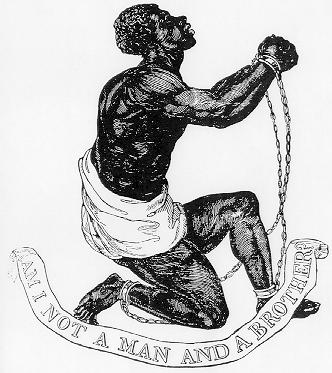
The official medallion of the British Anti-Slavery Society, 1795, Josiah Wedgwood.

Nowhere in the letter will you find Paul saying, “End slavery now!” There’s one obvious reason. Such a direct attack on a central feature of the society in which early Christians lived would have invited terrible punishment.

Instead, Paul uses gentle coercion to change the situation. First, he speaks lovingly of the slave owner’s faith, found under Paul’s pastoral guidance.

Then Paul speaks of the slave’s faith, calling him “my child” and asking the master to receive the slave as a brother. The implication is obvious—how do you enslave and punish a beloved brother or sister?

As the television senator noted, there is no outright rejection of slavery in the letter to Philemon or anywhere else in the Bible. But we must learn to think of the Bible as more than a rule book from ancient history. It often works like a launching pad for ideas, ideas that God has shot like rockets through time so people are changed.

Now, we do have to be careful; some people would take a concept like scriptural trajectory and use it to argue that the Bible says whatever they want it to say. We have to be certain that we go in the direction God first sent us. Otherwise, we will spin north, south, east and west until we finally hit the ground like an experimental missile.

God used Paul and his little letter to change the world dramatically over several centuries. Certainly, Paul wanted to free Onesimus from slavery. But more importantly, he wanted to free Philemon from any anger he might have been feeling toward his escaped slave and the wrongheaded notions that allowed the enslavement to occur.

If Paul had simply issued a rule for Philemon to follow, he never would have gotten to the heart of the matter. Was the Holy Spirit really changing Philemon? Could this slave owner find himself capable of loving Onesimus as a Christian brother?

And that brings us to the deepest lesson from the letter to Philemon. Christians change the world by changing hearts, not by rigorous rule making. Once hearts are changed, the rules for living become obvious and begin to fall in place.

Dear Lord, help us see the true trajectory of your great plan so we may conform ourselves to the holiness you offer your creation. Amen.

The Heart of Justice

Psalm 72:1-5 (NLT)
A psalm of Solomon.
Give your love of justice to the king, O God,
    and righteousness to the king’s son.
Help him judge your people in the right way;
    let the poor always be treated fairly.
May the mountains yield prosperity for all,
    and may the hills be fruitful.
Help him to defend the poor,
    to rescue the children of the needy,
    and to crush their oppressors.
May they fear you as long as the sun shines,
    as long as the moon remains in the sky.
    Yes, forever!

By Chuck Griffin

Justice was a byword for 2021, and it will continue to be an important concept for this year, as it has been for thousands of years.

When the above psalm was written, kings and princes were lifelong arbiters of justice, which is bound tightly to other concepts like equality and fairness. In modern times in a democracy, we still vest certain people—presidents, governors and judges, for example—with a similar power. The major difference between ancient kingdoms and modern democracies is that directly or indirectly, the citizenry can now revoke that power in nonviolent ways if it is abused.

Justice has its constants, however, regardless of the era. Psalm 72 points out an important one, a truth spanning thousands of years. Justice has a source. Justice springs forth from the very nature of God. His will defines what is just and unjust, and it also is part of God’s will that justice be done.

Be it a king, prince, governor or judge, it has always been the prayer of godly people that the justice-givers root their task in a studied understanding of who God is.

God seeks to make people free. As Christians should understand, Christ went to the cross to give us freedom from the sins that bound us as they caused us to treat each other unjustly. Accordingly, those charged with providing justice in this world need to ask if they are making the people around them more free.

God asks that we live now as a people who believe he will provide a full and complete kind of justice one day. Right will be declared right, and wrong will be declared wrong, but at the same time, tremendous mercy and grace will be available for those who took time to seek the forgiveness made possible by Jesus’ sacrifice.

It should be our hope that today’s justice-givers incorporate appropriate measures of grace in their decisions, while remembering that victims of injustice crave restoration and renewal.

It’s a tough job. I admire those who take it on; I also pray they humbly keep in mind their roles as temporary conduits of what flows eternally from our maker.

Dear Lord, may justice be done in 2022, and may those charged with its provision be blessed by your guidance. Amen.

A Prayer for the New Year

Lord, join our hearts with your Spirit as we pray for 2022.
No matter what happens, we give all glory to you.
     We know the hard work has been done for us on the cross.
May the pandemic end.
May the church in America and beyond find renewal,
     spreading word of salvation in new ways.
May our nation be blessed and shine more brightly as a beacon for you.
May our communities be safe places for the resident and the stranger.
May our hearts grow in holiness as we study your word
     and make our lives more prayerful.
It is in the name of Jesus Christ we pray. Amen.

Checking In

My apologies for the lack of devotions these last couple of mornings. Pastoral duties sometimes become demanding, making it difficult to find time to write something thoughtful.

Now is a good time to mention that Methodist Life welcomes submissions from new writers and artists. We tend to work from the daily lectionary readings, but I personally deviate from those texts from time to time, and submissions do not have to be built around them. As editor, all I ask is that you represent traditional Christianity well while not minding some editing when necessary. If you want to submit something, send it to chuck@methodist.life.

For your consideration today, I offer you an article I wrote for the Jonesborough Herald and Tribune while pastor of Fairview United Methodist Church more than a decade ago.


Heart Wide Open

By Chuck Griffin

How open are you to God’s influence?

Most of us who call ourselves Christian would like to think we are very open. And indeed, a lot of Christians allow God to influence them in ways that change their lives dramatically.

Often, you run into Christians who have given up careers and financial security to serve God.

Occasionally, you meet people who for long periods of time give up the comfort and familiarity of home to serve others in far-away places. For example, I once met a missionary who had gone to Papua New Guinea as a young woman in the early 1970s. She had felt God calling her to translate the New Testament for a tribe of people who speak an obscure language.

By 2005, she had finished the work. I met her while she was in Kentucky, a much older woman saying a last good-bye to her relatives. She loved the tribal people so much that she had decided to live with them the rest of her life.

Rarely, you meet people who face death to follow God’s lead. Mary, mother of Jesus Christ, falls in this category.

Stoning was the punishment of the day for a poor, unwed pregnant girl, which is how her neighbors would have viewed Mary. To follow God while facing such dire circumstances required a heart wide open to God’s influence.

God chose Mary, it seems, because she had the right soul for the job. She was young, perhaps as young as 14, but Scripture records in the first chapter of Luke her remarkable understanding of the meaning of Christ’s coming.

“My soul magnifies the Lord, and my spirit rejoices in God my Savior, for he has looked with favor on the lowliness of his servant,” Mary said. She was rejoicing with her much older cousin Elizabeth, who carried in her womb John the Baptist, the prophet who would announce the coming of Jesus’ ministry in adulthood.

As Mary continued in her rejoicing, she laid out the radical mission of Christ. He brings mercy to those who believe and follow God. He scatters the proud. He brings down the powerful. He lifts up the lowly and the hungry. He does all of this as a fulfillment of a promise made to the world through Abraham long ago.

And of course, we now understand that Jesus grew up to accomplish this radical realignment of power through his death on the cross, a sacrifice designed to break the grip of sin.

Governments and armies still seem to have power, but none can help you establish a relationship with God. At best, they can keep the relationship freely available.

If you believe, really believe, in the saving work of Christ, it becomes more difficult each day to see your place in the world in secular ways. How open are you to God’s influence?

The answer has a lot to do with how much of this world you’re willing to risk while knowing a better world is guaranteed.

A Growing List

2 Peter 1:2-11 (NLT)

May God give you more and more grace and peace as you grow in your knowledge of God and Jesus our Lord.

By his divine power, God has given us everything we need for living a godly life. We have received all of this by coming to know him, the one who called us to himself by means of his marvelous glory and excellence. And because of his glory and excellence, he has given us great and precious promises. These are the promises that enable you to share his divine nature and escape the world’s corruption caused by human desires.

In view of all this, make every effort to respond to God’s promises. Supplement your faith with a generous provision of moral excellence, and moral excellence with knowledge, and knowledge with self-control, and self-control with patient endurance, and patient endurance with godliness, and godliness with brotherly affection, and brotherly affection with love for everyone.

The more you grow like this, the more productive and useful you will be in your knowledge of our Lord Jesus Christ. But those who fail to develop in this way are shortsighted or blind, forgetting that they have been cleansed from their old sins.

So, dear brothers and sisters, work hard to prove that you really are among those God has called and chosen. Do these things, and you will never fall away. Then God will give you a grand entrance into the eternal Kingdom of our Lord and Savior Jesus Christ.

By Chuck Griffin

At the core of the above passage is a spiritual to-do list, a way to grow as a Christian. Each item is strengthened by something else on the list, with the ultimate goal of experiencing a strong, unshakable faith.

Moral excellence, or goodness, undergirds great faith and has to do with whether we choose what God would choose in the same circumstances. But how do we know how to choose?

Well, knowledge helps to prop up moral excellence. The Lord has revealed much to us in the Holy Bible, even if it does sometimes take a little effort and the guidance of the Holy Spirit to tease the information out. What a gift: thousands of years of holy revelation at our fingertips!

Why do we fail to dig out what we need? We have trouble staying focused. We lack self-control. The painful distractions and immediate pleasures of this world draw us away from the rich rewards available to us in the Bible and through direct contact with God in prayer.

Patient endurance marks the beginning of self-control. We see the fiery darts of the enemy coming at us, but regardless of whether and where they stick, we know we can keep moving forward as Christians because God is with us. And if we find ourselves passing through Vanity Fair, we don’t slow down, for we know our real destination.

If that previous paragraph was confusing, I just went all “Pilgrim’s Progress” on you. If you haven’t read it, you really should try it.

Godliness supports endurance, of course. This is a little different from the “goodness” or “moral excellence” that develops down the road in this spiritual journey. At this stage, there is a simple desire to please God, springing from the warmth that is felt when in fellowship with other Christians.

And the beginning of all of this is love. We understand true love when we first comprehend what God has done for us. “For God so loved the world … .” We didn’t deserve God’s love; maybe those around us should receive love regardless of what they deserve, too.

And don’t miss the promise Peter made: “Do these things, and you will never fall away. Then God will give you a grand entrance into the eternal Kingdom of our Lord and Savior Jesus Christ.”

Seems to me like we have a to-do list worth doing.

Lord, thank you for the guidance Peter and other conduits of your holy word offer us. May we grow as we live the lives of disciples. Amen.