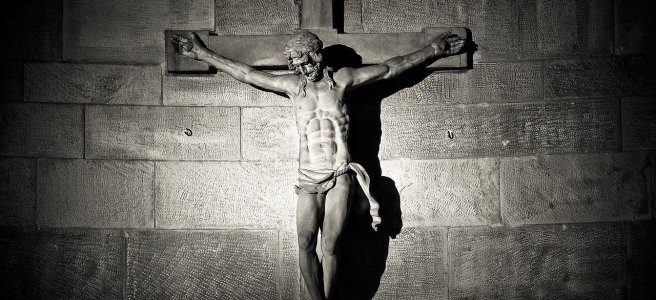
Death of the Son

By Chuck Griffin
LifeTalk Editor

Psalm 9:1-14

So, right up front, I might as well tell you what I’m doing wrong. I’m taking an obscure, hard-to-translate heading on a psalm and likely stretching it into far more than was intended.

The least controversial way to translate Psalm 9’s heading is, “To the chief musician upon Muth-labben,” which avoids all problems in translating the Hebrew phrase “Muth-labben.”

I studied a little Hebrew in seminary, but let’s just say I never wanted to make a living working in biblical languages. I have enormous respect for those who choose this path. But as best as I can tell, even the experts have trouble agreeing on the translation of this particular psalm title.

I will not bore you with all the possibilities, but my favorite, the one chosen by the New Living Translation, is, “To be sung to the tune, ‘Death of the Son.’ “

That translation begs other questions. Whose son? Being considered a psalm of David, Absalom, perhaps? Again, it’s impossible to answer for sure.

Just for the fun of it, let’s stick with “Death of the Son” as the title and then really Christianize the psalm. We will look at it like people who believe Jesus Christ is somehow present in every page of the Bible, Old Testament or New Testament.

What follows Psalm 9’s heading is unrestrained praise for God. This is the God who fills us with joy!

We also hear of the God who restores us at the judgment, sending our sin-aligned enemies staggering away mortally wounded.

The nations are all rebuked for unholiness. All is set right, and God is understood to be astonishingly loving, the one who shelters and restores the oppressed and hopeless.

Regardless of the psalmist’s intent, I think of the God who came among us in flesh and died for our sins, making resurrection and restoration possible. I think of Jesus Christ, the cross, and a stone rolled away from a tomb.

It’s enough to make me wonder if “Death of the Son” was a joyous tune.

Lord, help us begin our week immersed in the idea that Jesus Christ died for our sins, and in the hope that death brings. Amen.

Dark Nights

By Chuck Griffin
LifeTalk Editor

Psalm 90:13-17 (NLT)

O Lord, come back to us!
    How long will you delay?
    Take pity on your servants!
Satisfy us each morning with your unfailing love,
    so we may sing for joy to the end of our lives.
Give us gladness in proportion to our former misery!
    Replace the evil years with good.
Let us, your servants, see you work again;
    let our children see your glory.
And may the Lord our God show us his approval
    and make our efforts successful.
    Yes, make our efforts successful!

If you’ve ever felt overwhelmed by doubt or abandoned by God, take heart. The best of Christ’s followers have such experiences.

The Israelites, including today’s psalmist, regularly expressed the sense that God was no longer with them. And God did sometimes abandon them for periods of time in response to their forgetting who is Creator and Rescuer.

Just before Moses’ death, God explained to Moses and his replacement, Joshua, the pattern the Israelites would find themselves experiencing over the centuries.

“After you are gone, these people will begin to worship foreign gods, the gods of the land where they are going. They will abandon me and break my covenant that I have made with them. Then my anger will blaze forth against them,” God told the two. “I will abandon them, hiding my face from them, and they will be devoured. Terrible trouble will come down on them, and on that day they will say, ‘These disasters have come down on us because God is no longer among us!’ At that time I will hide my face from them on account of all the evil they commit by worshiping other gods.” (Deuteronomy 31:16b-18)

God did give Moses and Joshua a song to teach the people for such times. While lengthy, its elements are obvious: Declare who God is, confess the sins of idolatry and forgetfulness, and recognize God’s goodness and desire to restore his people.

Sin obviously separates us from God, taking us to the dangerous point where we might question God’s love or even his existence. Christian mystics have also recognized through the centuries that Christ’s closest followers can experience similar feelings, what a 16th-century poet called St. John of the Cross described as the “dark night,” sometimes now referred to as “the dark night of the soul.”

The mystics see these moments as a time of spiritual purging. This includes a simultaneous acknowledgment that God is unknowable in full but also worth pursuing.

Regardless of the cause of why we may feel abandoned by God or filled with doubt, the appropriate response remains the same. Never stop acknowledging who God is. Root out sins, confess them to God, and take the necessary time to grow in understanding of what God is doing in the world through Christ’s sacrifice.

Fear not, the morning does come.

Dear Lord, pour out new grace on those who struggle with their dark nights. Return them to a sense of assurance and keep within them a deep desire to serve your kingdom. Amen.

Being Immediate

By Chuck Griffin
LifeTalk Editor

Revelation 15:1-4 (NLT)

Then I saw in heaven another marvelous event of great significance. Seven angels were holding the seven last plagues, which would bring God’s wrath to completion. I saw before me what seemed to be a glass sea mixed with fire. And on it stood all the people who had been victorious over the beast and his statue and the number representing his name. They were all holding harps that God had given them. And they were singing the song of Moses, the servant of God, and the song of the Lamb:

“Great and marvelous are your works,
    O Lord God, the Almighty.
Just and true are your ways,
    O King of the nations.
Who will not fear you, Lord,
    and glorify your name?
    For you alone are holy.
All nations will come and worship before you,
    for your righteous deeds have been revealed.”

When exploring ideas about the end of time, thoughtful Christians have to piece together a lot of Scripture from various books of the Bible.

As we see in today’s text and the verses further into Revelation, we are promised there will be an end to the influence of evil, a completion of Christ’s work on the cross. Sin and death have already been defanged by Jesus’ sacrifice, but they still have to be put down completely, rabid dogs of Satan that they are.

Much of the Book of Revelation is highly symbolic, the images depicting events in the past, present and future. Complicating interpretation further, the reader’s perspective in Revelation keeps changing between heaven and earth.

As we study and process what is written there, one conclusion seems certain to me. We should sense a responsibility to let people know that heaven and earth will be remade one day, for the better, after terrible birth pangs. God is very much at work in the world.

Simultaneously, we should understand that we cannot know with any real certainty the what, where and who of Revelation, the apocalyptic sections of the Book of Daniel, or other biblical references to the last days, and we certainly cannot know the when.

“No one knows when these things will happen, not even the angels in heaven or the Son himself,” Jesus said. “Only the Father knows.” (Matthew 24:36.)

To process and live out what we are taught about the end times, I find it useful to cling to “immediacy,” the idea that God’s redemptive work in this world could end and Christ could return at any moment.

In the same section of Matthew, Jesus’ words continue:

When the Son of Man returns, it will be like it was in Noah’s day. In those days before the flood, the people were enjoying banquets and parties and weddings right up to the time Noah entered his boat. People didn’t realize what was going to happen until the flood came and swept them all away. That is the way it will be when the Son of Man comes.

Matthew 24:37-39

I think it’s dangerous when people claim certain events have to happen before Christ returns in full—even as believers, we can be lulled into apathy by such thoughts. The Apostle Peter had this in mind when he wrote, “Stay alert! Watch out for your great enemy, the devil. He prowls around like a roaring lion, looking for someone to devour.” (1 Peter 5:8.)

A proper understanding of our own mortality should also give us a sense of immediacy about conforming to the will of God. None of us truly knows whether a particular day might be our last. We tend to imagine observing the end of days with an earthly view, when there’s a significant chance we will have a very different perspective.

So, what to do? Well, today’s text has one image that should give us inspiration and joy. This side of heaven or the other, let’s be sure that first, we are praising God, who through Jesus Christ has saved us from what should have been the eternal grip of sin and death.

Let’s praise God here on earth with our voices and whatever musical instruments we may have on hand, just as we will praise him one day in a new heaven and earth. Perhaps we will even lift these praises with harps in hands, standing on something like a brilliant sea of fire-imbued glass.

Lord, let today be about you, and then let each day that follows be the same. Amen.


Website image courtesy FantasyStock at fantasystock@deviantart.com.

James: Single Mindedness

By Chuck Griffin
LifeTalk Editor

James 3:13-4:8

You’ve seen images of an angel on one shoulder and a devil on the other, each whispering in a person’s ear what to do. Often, these pictures are meant to be funny, but they also portray a very real internal battle we each face every day.

We fully engage in this battle when we accept Jesus Christ as Savior.  In doing so, we commit ourselves to join Christ in his ongoing work, pushing back against sin wherever we can.

Once we’ve made that leap of faith—once we’ve chosen to call ourselves Christian and really own the vision—the battle between God’s goodness and the evil within us is on. That most immediate expression of God, the Holy Spirit, begins to work inside of us, contending with the world to make us into what God would have us be.

God is going to win, so long as we allow God to win. God’s desire for us to be free beings is the only possible impediment to swift victory. He lets us choose to keep him out, but will rush in whenever we allow. The more we let God work, the more complete the victory within us becomes.

In time, we actually begin to experience another world, the one Christ represents, the kingdom that ultimately will consume and replace the broken world so obviously surrounding us right now.

James lays out a simple plan so we can better allow God to go to work. James says:

Humble yourselves before God. That’s fairly simple to understand. Know who you are relative to God. Know that God knows better. A lot of people find this hard to do, however. Their pride is so intense that they cannot imagine submitting to anything.

Resist the Devil. Don’t panic; we don’t have to do this alone. We could never win on our own, anyway. But God calls us to participate in the fight against evil, knowing God is with us throughout, strengthening us for the task.

Wash your hands, sinners. While it sounds like COVID-19 advice, James is calling us to set right, as much as humanly possible, the wrong we have done. Again, we have to trust God to make the ultimate, great fixes to the universe, but he wants us to involve ourselves in the process.

Purify your hearts. Don’t be what is sometimes translated as “double-minded,” agreeing with worldliness one minute and Christ the next. We have to stop reserving places in our emotions or our intellect for ideas or impulses that are not of God.

As God is more and more present in every aspect of our lives—as we become single-minded—the devil will flee. What is unholy cannot stand a strong dose of what is aligned with God.

Tomorrow, we’ll draw on James’ exhortation as we consider what it means to seek healing, believing we can see God’s dawning kingdom undeniably among us.

Lord, help us flick the demons away and listen only to your guidance. Amen.

Psalm 119, Day 2

By Chuck Griffin
LifeTalk Editor

Let’s continue our meditation on Psalm 119:105-112. Yesterday, we got through the first two verses; we’re picking up at verse 107.

I have suffered much, O Lord; restore my life again as you promised.

Our lives exist in the midst of a sin-broken world, and suffering is a given. Absent an understanding of God, life at times might not seem worth living. But we know God, and we know he is the God of hope.

Almost immediately after human sin fractured this world, God went to work making our restoration possible. He made promises in the process. For example, he told Abraham that eventually, “All the families on earth will be blessed through you.”

The culmination of that work is in Jesus Christ, God in flesh walking among us and dying on the cross to break the hold sin had on us. Restoration is ours.

Lord, accept my offering of praise, and teach me your regulations.

We do not fully understand God’s plan or God’s timing, of course. First Corinthians 13:12: “Now we see things imperfectly, like puzzling reflections in a mirror, but then we will see everything with perfect clarity. All that I know now is partial and incomplete, but then I will know everything completely, just as God now knows me completely.”

But it is enough to know we are saved! The gift of eternal life and its accompanying joy, a joy we can experience now, should trigger great acts of praise. It also should be natural for us to want to understand God’s will and abide by it. The pursuit of holiness is the obvious way to say thanks and signal others that our lives are truly changed.

My life constantly hangs in the balance, but I will not stop obeying your instructions. The wicked have set their traps for me, but I will not turn from your commandments.

Hey, back to the here and now. Life with God currently can still be hard—bad things happen to good people. Preachers of the so-called prosperity gospel mislead their flocks.

We find ourselves thrown into a spiritual war, a battle for the souls of those who have yet to commit to God through Jesus Christ, and the enemy will shoot back. Like soldiers, we must discipline ourselves. Some commitment is required.

Tomorrow, we’ll talk a little more about joy.

Lord, we thank you for the salvation and hope we are given. Again, guide us down the paths you would have us follow! Amen.