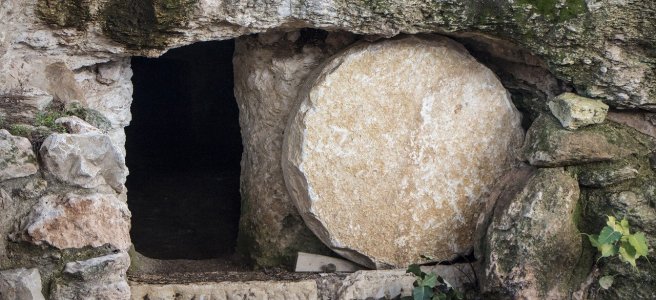
A Josiah Moment

2 Kings 22:11-20 (NLT)

By Chuck Griffin

It’s always a shock to discover we’ve strayed from the Lord’s plan.

In today’s Bible passage, we hear how a young, good king, King Josiah, was introduced to the basics of how his people were supposed to be living, via a rediscovered Book of the Law. A proper understanding of how God was to be worshiped had been lost during the reign of prior evil kings, men who allowed paganism to creep into the land.

When Josiah realized how far his flock had strayed from their very reason to exist, he grieved so powerfully that he tore his clothes. Disaster loomed large. Fortunately, there still were priests and prophets in the land, and the king learned that God’s just response to the rampant unholiness would be delayed until Josiah’s righteous reign had ended.

We live under an expanded, improved version of the plan, of course. Strict adherence to the law was the closest the Israelites could come to establishing a relationship with God. We live in the time after Jesus Christ, knowing that his willingness to die in our place for our sins now makes that relationship possible. All we have to do is believe, allowing God’s Spirit to go to work in our lives.

And yet, we stray.

In many ways, we can be like those ancient children of God, called to serve and worship but distracted to the point of forgetting who God is. One generation fails to adequately tell great truths to the next generation. The shiny things of the world and the worries of the world begin to dominate our thinking.

God’s call on us is powerful, though. It breaks through, and we can have a Josiah moment, grieving for ourselves individually and the people around us collectively. Dawning awareness of how wonderful it is to be in communion with God is an exciting and wonderful experience to have.

I have experienced such a moment in a big way in my life, and I continue to experience similar little moments as I exist with one foot in a time-bound world and the other in eternity. Let’s grieve over what we lose when we take our eyes off God, but let’s rejoice at how God offers to restore us when we lock our eyes on the throne once again.

Lord, help us to keep our eyes eternally fixed on you, and with your guidance and strength, may our lives be conformed to your will. Amen.


Those Wonderful Sheepdogs

Psalm 16

A psalm of David.

Keep me safe, O God,
    for I have come to you for refuge.

I said to the Lord, “You are my Master!
    Every good thing I have comes from you.”
The godly people in the land
    are my true heroes!
    I take pleasure in them!
Troubles multiply for those who chase after other gods.
    I will not take part in their sacrifices of blood
    or even speak the names of their gods.

Lord, you alone are my inheritance, my cup of blessing.
    You guard all that is mine.
The land you have given me is a pleasant land.
    What a wonderful inheritance!

I will bless the Lord who guides me;
    even at night my heart instructs me.
I know the Lord is always with me.
    I will not be shaken, for he is right beside me.

No wonder my heart is glad, and I rejoice.
    My body rests in safety.
For you will not leave my soul among the dead
    or allow your holy one to rot in the grave.
You will show me the way of life,
    granting me the joy of your presence
    and the pleasures of living with you forever.

By Chuck Griffin

God is our ultimate protector. When we believe in Jesus Christ as Savior, we are protected even as we experience death, carried into eternal life by God’s great plan. The final verses of today’s psalm are a prophecy of that plan, revealing how it culminates in the resurrection of Jesus.

A desire for safety in this earthly life and the idea that godly people can be heroes are two other concepts that come together in this psalm. And as I write this devotion knowing it will be published on Veterans Day, I cannot help but think of those who took time out of their lives to serve the United States of America in a military role to protect us.

I give particular thanks for those who take on such difficult roles while clinging to godliness, the pursuit of what God would have them do.

Sometimes you hear certain people described as having “sheepdog” personalities—friendly, gentle and loyal, but a force to be reckoned with when evil threatens. Many such people are naturally drawn to military service. I love the way the sheepdogs fit into the pastoral image of the Great Shepherd, the one responsible for the flock as a whole.

A good sheepdog becomes an extension of the shepherd’s hand, sensitive to the call of the master and following commands without allowing fear to get in the way. What a comfort sheepdogs should be to the flock!

Think of the sheepdogs around you today and offer them words of affection and thanks. Let them know they are loved and welcomed among us. We need their experiences and attitudes in the midst of our churches.

Lord, pour a special blessing out today on those who have chosen to form that thin line protecting us from disaster. Amen.

Praise

Psalm 113       (NRSV)

Praise the Lord!
Praise, O servants of the Lord;
    praise the name of the Lord.

Blessed be the name of the Lord
    from this time on and forevermore.
From the rising of the sun to its setting
    the name of the Lord is to be praised.
The Lord is high above all nations,
    and his glory above the heavens.

Who is like the Lord our God,
    who is seated on high,
who looks far down
    on the heavens and the earth?
He raises the poor from the dust,
    and lifts the needy from the ash heap,
to make them sit with princes,
    with the princes of his people.
He gives the barren woman a home,
    making her the joyous mother of children.
Praise the Lord!

By John Grimm

We can praise the Lord.  This psalm from the Hebrew people is not only for the Jews.  It is for all people!  Learning to have joy in our lives, as Paul instructs, comes from praising the Lord.  Thankfully, the first Church Council in Jerusalem, as described in Acts, has extraordinarily little limiting Gentiles who place faith in Jesus Christ.  Thankfully, as we read this psalm, we can see no infringement upon the Jewish law, ceremonial or otherwise. 

It is knowing the Lord is our God that gives us the ability and the insight to praise him.  No one else is seated on high, for this life is not about who is the king of the mountain.  The Lord our God not only looks down from heaven, but he is also involved in life on earth by removing the poor and needy from squalor.  Do we remember the times we were poor, and the Lord raised us up?  Do we remember the times we were needy, and God removed us from the ash heap?  These are reasons we praise God.

Maybe we do not have those memories.  Maybe we are the princes of God’s people.  Knowing and seeing the Lord lift others from squalor gives us reason to praise.  Thanking God for the changed welfare of another person is appropriate.  It is then that we see God has expanded our lives to include those who are not like us.

There are barren women, and barren couples, today.  Knowing the Lord can and does place children in the lives of barren people is a praise.  Even though someone is barren does not mean others bar them from participating in life.  It is a joy for barren women, and couples, to lovingly teach and encourage children to know the Lord.  Again, this opportunity is reason to praise the Lord.

Yes, we can praise the Lord.  He is our God.  Who knows, maybe someone who hears us giving praise to the Lord will make the Lord their God!

We praise God, for you have worked in our lives.  You can see from heaven and can assist us here on earth.  Thank you for lifting us from squalor.  Thank you for allowing even the princes of the earth to see your work on earth.  It is through the name of Jesus Christ that we know you as our God.  Amen.

Conquerors

This Sunday’s sermon at Holston View UMC will be “A Piercing Truth,” drawing on Hebrews 4:12-16. If you cannot be with us in person, please join us online live or to watch a recording later.

Today’s Focus Text: 1 John 5:1-6


By Chuck Griffin

This scripture meditation may sound a little old-fashioned.

Lately, a lot of clergy are more prone to talk about new ideas—clever ways to connect with the lost, or new trends in communication, which is all good stuff, of course. We have to remember, however, that the core truth about Jesus Christ doesn’t change. The author of 1 John brings us back to that core.

First, there is belief, specifically believing that Jesus is the Christ, God’s chosen redeemer for the world. In particular, we are to believe Christ’s death on the cross defeated sin, and that the resurrection is both proof of that fact and a promise regarding what is to come.

People come to believe in various ways. It is important for the converted to remember the unconverted may come to Christ in ways we don’t expect. I’m reminded of the story of the man who went to a hotel room to commit suicide, but instead opened a Gideon Bible and met Jesus in its pages.

Another favorite conversion story is of a man sitting in a Chicago church as a worship service opened with a full processional down the center aisle. As the crucifer—for those of you unfamiliar with more formal worship, that’s the person carrying the cross at the top of a long pole—went by, the man said he looked up, saw the cross and believed. No sermon, no prayer, he said. He just knew. Sounds strange to me, but it worked for him.

What is important, of course, is that we come to believe, and then live into our belief.

Belief allows us to be incorporated into a new family, 1 John also tells us. Again, it’s a little old-fashioned sounding, but we are “brothers and sisters.” The family metaphor doesn’t work for everyone. If Momma ran off when you were a baby and Daddy was a drunk, the word “family” probably sounds terrible. We’re supposed to think of the ideal version of family, however.

The author of 1 John goes on. In a healthy family, we abide by certain standards; for Christians, it is the commandments, the Ten Commandments and the other guidance God gives us in Scripture regarding right and wrong. In summing up the law, Jesus kept matters simple. Love the Lord with all your heart, soul, mind and strength, and love your neighbors as yourselves. Right remains right, and wrong remains wrong, but love controls how we deal with sin when it is before us.

I thought about how love fits into the conversion equation when I drove by some placard-waving Christians at an intersection. The signs covered a range of issues. One asked God to bless Israel; another said homosexuality is still a sin, while a third noted, “Drunkards shall not enter the kingdom of heaven.”

Sitting at a red light watching them, I was struck by an odd dichotomy. Scripturally they were correct, but from a kingdom-building perspective, being right doesn’t always mean you are helping. They mostly appeared to be an example of like attracting like and repelling those who needed a deeper relationship with Christ. Right (or perhaps simple self-righteousness) was present, but I did not see love offered.

I do like the way we as traditional Methodists handle some of the more difficult issues requiring both law and grace. Human sexuality, for example—we call sin a sin, and we recognize that defiantly unrepentant sinners shouldn’t be leaders. At the same time, however, we acknowledge that in God’s eyes, all people are worthy of grace and need access to that grace through Christian community and worship. It’s a more complicated position than many Christians try to live out, but it’s easy enough to understand, if we try.

Once we get all these core concepts right, there is much to celebrate. As 1 John tells us, there is victory; we win! We conquer the world, ripping it from the grasp of evil and restoring it to its rightful owner. That in itself should be enough to draw people to Christ.

Yes, these ideas are old-fashioned, but in them there is good news, the kind of news that can transform anyone forever.

Lord, keep us grounded in the faith that has sustained the church and changed the world for centuries. Amen.

Salvation Is Free—Stop Slaving!

Luke 15:24b-32 (NRSV)

“Now his elder son was in the field; and when he came and approached the house, he heard music and dancing. He called one of the slaves and asked what was going on. He replied, ‘Your brother has come, and your father has killed the fatted calf, because he has got him back safe and sound.’ Then he became angry and refused to go in. His father came out and began to plead with him. But he answered his father, ‘Listen! For all these years I have been working like a slave for you, and I have never disobeyed your command; yet you have never given me even a young goat so that I might celebrate with my friends. But when this son of yours came back, who has devoured your property with prostitutes, you killed the fatted calf for him!’ Then the father said to him, ‘Son, you are always with me, and all that is mine is yours. But we had to celebrate and rejoice, because this brother of yours was dead and has come to life; he was lost and has been found.’”


By ‘Debo Onabanjo

As I mentioned in last Tuesday’s devotion, Jesus’ Parable of the Prodigal or Lost Son gives all of us wonderful insight into the loving heart of our heavenly father. He also used the story to remind us of a profound truth. There is absolutely nothing we can do to earn God’s grace or to make God love us any better than he already does.  While God would very much prefer that we all live a life that is pleasing to him, he is always willing to extend compassion to those who repent of their sins and return home as the prodigal son did.  

As Jesus continued with the parable, he cleverly reintroduced the older son. Many of us would have conveniently forgotten the older son by this time, but Jesus used him as an object lesson for all of us. Truth be told, not everyone in the church (represented by the 99 righteous sheep that did not stray, as mentioned by Jesus in Luke 15:4-7) rejoices when the lone stray sheep returns. 

We who have been believers for so long can easily forget that our salvation is a gift and not a reward for something we have done. We are sometimes quick to show disdain when God pours out the richness of his grace on others. Even though it is never right, we can sometimes see others as undeserving of God’s grace. 

The older son saw the feasting and merry making and became very angry when he found out the party was for his younger brother. If you were an older sibling who received the news that your long-lost younger brother had returned home, and your father was celebrating his return, how would you react?  

Quite typical of Jesus, he did not leave us guessing and revealed the brokenness in us all, using the older brother as the example. Like the Pharisees and the teachers of religious law that Jesus constantly denounced for their hypocrisy and lack of compassion, the older brother did not want to be part of any celebration or gathering for his renegade younger brother.   As far as he was concerned, he was much better lost. 

Even when the loving father begged him to join the celebration, the older brother refused and castigated their father for his kindness. He displayed a warped sense of entitlement and selfishly wondered why their father had not celebrated his long years of slaving. Like the older brother, there are folks who have the wrong impression that salvation is something we earn through our hard work for God.

As Paul reminds us, “Salvation is not a reward for the good things we have done, so none of us can boast about it.” (Ephesians 2:9.)

The older brother in this parable, like some of us who are long time followers of Jesus, chose to stay at home not out of love for the father but for self-preservation.  He was slaving to retain his part of the inheritance. Even while he lived with the father at home, the older son, just like the younger son, lived in a distant land. He did not take the time to get to know the heart of the father. He had no relationship with his father and was only slaving daily with the expectation of earning his way into the inheritance when the father passed away. Our salvation is a gift and not dependent on any legalistic keeping of the laws or reward for our hard labor.  

The older son even disowned his younger brother and described him as a bum and scum who had dared to come back home “after squandering” his own share of the inheritance on “prostitutes.” How did he even know how the younger brother lived? 

He could not believe that his father killed the fattened calf for such a reprobate. The older brother, like the pompous Pharisees and teachers of religious law who looked down on sinners that came to be with Jesus, despised his younger brother.

Here is the moral of the parable: All of us have sinned, either in the manner of the older or younger son. We do not deserve eternal life, a gift from our eternal father.

I don’t know about you, but I am thankful that salvation is free. 

Compassionate and loving God, thank you for reminding us through your loving Son that we cannot earn our way to salvation. Help us to labor out of love and not because of what we hope to gain. Grant us compassion for everyone who is struggling with sin today and help us to offer a helping hand when needed. Grant us grace to be like our father in heaven, who is merciful and gracious to all his children without showing favoritism. Amen. 

The Emboldening Truth

This Sunday’s sermon at Holston View UMC in Weber City, Va., will be “Investing In the Future.” It will be based on Jeremiah 32:6-9. If you want to view the sermon but cannot be present, the entire worship service will be available through Holston View UMC’s web page.

Today’s preparatory text: 1 Corinthians 15:12-20 (NLT)

But tell me this—since we preach that Christ rose from the dead, why are some of you saying there will be no resurrection of the dead? For if there is no resurrection of the dead, then Christ has not been raised either. And if Christ has not been raised, then all our preaching is useless, and your faith is useless. And we apostles would all be lying about God—for we have said that God raised Christ from the grave. But that can’t be true if there is no resurrection of the dead. And if there is no resurrection of the dead, then Christ has not been raised. And if Christ has not been raised, then your faith is useless and you are still guilty of your sins. In that case, all who have died believing in Christ are lost! And if our hope in Christ is only for this life, we are more to be pitied than anyone in the world.

But in fact, Christ has been raised from the dead. He is the first of a great harvest of all who have died.


By Chuck Griffin

When we fully understand what it means to follow Christ, Christians should, in theory, stop thinking of our interests as existing solely within the nine decades or so we hope to live.

We look back to Jesus hanging on a cross and then exiting a tomb nearly 2,000 years ago, and we see how our lives are changed now. We understand salvation because earlier Christians made great sacrifices to ensure the message of Jesus Christ spread from one generation to the next.

We also look forward to a day when the Redeemer will restore us from death in the resurrection.

Job expressed it well centuries before Christ was born:

“But as for me, I know that my Redeemer lives, and he will stand upon the earth at last. And after my body has decayed, yet in my body I will see God! I will see him for myself. Yes, I will see him with my own eyes. I am overwhelmed at the thought!” (Job 19:25-27.)

We should stay overwhelmed at the thought. And if others are to share that thought, then we may need to chase objectives that might seem irrational to the secular world.

When we reach that thought’s fulfillment, I wonder what we will regret more as we stand before the holy Savior. Will it be the wrong things we did, or the right things we failed to do? Sometimes we are so focused on sins of commission that we’re not thinking about sins of omission.

Often, I think, sins of omission are simply failures to be bold, to live bravely as citizens of a dawning kingdom.

I don’t know what your bold move might be. It may involve your time or your money. It may involve the direction of your life.

All we can do is ask God to reveal what seemingly irrational steps he may ask us to take, and then pray for the courage to take them.

Lord, once again root our souls in the truth of Jesus Christ, and let us see what you would have us do now as people who will live forever. Amen.

As Indeed You Are Doing?

1 Thessalonians 5:1-11 (NRSV)

1 Now concerning the times and the seasons, brothers and sisters, you do not need to have anything written to you. 2 For you yourselves know very well that the day of the Lord will come like a thief in the night. 3 When they say, “There is peace and security,” then sudden destruction will come upon them, as labor pains come upon a pregnant woman, and there will be no escape! 4 But you, beloved, are not in darkness, for that day to surprise you like a thief; 5 for you are all children of light and children of the day; we are not of the night or of darkness. 6 So then let us not fall asleep as others do, but let us keep awake and be sober; 7 for those who sleep sleep at night, and those who are drunk get drunk at night. 8 But since we belong to the day, let us be sober, and put on the breastplate of faith and love, and for a helmet the hope of salvation. 9 For God has destined us not for wrath but for obtaining salvation through our Lord Jesus Christ, 10 who died for us, so that whether we are awake or asleep we may live with him. 11 Therefore encourage one another and build up each other, as indeed you are doing.


By John Grimm

I cannot count how many times that I have read these verses.  Well, to be honest, I have heard only a portion of these verses being emphasized.  It appears that in my life I have heard many people only quote verse one and two.  What about verses three through eleven, do they matter to us?

Paul is emphasizing how we Christians are to live, remembering that the day of the Lord will come like a thief in the night.  Faith, love, and salvation are our themes as we live as children of light and children of the day.  It is through our Lord Jesus Christ that we live, now and later.  Salvation is ours in Christ now.  The day of the Lord is later, and salvation is ours also at that time.

You can be encouraged with this info.  You can build up other Christians with this news.  Paul says that is “as indeed you are doing.”  However, we know what we have been doing.  We stopped reading after verse two.  God help us!  As we live as children of the night or of darkness, we have not been able or willing to encourage one another or to build up each other. 

Will you take time today to recognize the salvation you have in Jesus?  Will you start encouraging and building up other Christians, even today? 

God, as I live in Christ, nothing will surprise me about the day of the Lord.  Yet, I have not grasped the salvation I have in the Lord Jesus Christ.  Forgive me for my slowness of living as a child of light and a child of the day.  In this day, may other Christians find encouragement and be built up in Christ by my words and actions.  In the Name of Jesus, I hope to be found on the day of the Lord, amen.

The Game of Life

This Sunday’s sermon at Holston View UMC in Weber City, Va., will be “Seeking Signs,” based on Judges 6:36-40. If you want to view the sermon but cannot be present, the entire worship service will be available through Holston View UMC’s web page.

Today’s preparatory text: Ecclesiastes 9:11 (NLT)I have observed something else under the sun. The fastest runner doesn’t always win the race, and the strongest warrior doesn’t always win the battle. The wise sometimes go hungry, and the skillful are not necessarily wealthy. And those who are educated don’t always lead successful lives. It is all decided by chance, by being in the right place at the right time.

By Chuck Griffin

I play backgammon, mostly online with other people. The game can be maddening―your moves are limited by rolls of the dice, and dice are fickle.

It is quite possible to lose at backgammon while making no obvious mistakes. Chance simply smacks you down. Of course, on the other side of the board, your opponent benefits from the randomness, having made some mistakes but rolling three doubles in a row, or some other combination that looks like wizardry.

Skill does remain important. Players who understand the principles of risk management and employ them early in the game win more than they lose. Mostly, they keep themselves positioned to take advantage of good rolls while minimizing the impact of bad rolls.

If your only exposure to backgammon is a James Bond movie, I should add that I don’t play for money. I wouldn’t want a district superintendent to get the wrong idea! I also have never worn a white dinner jacket during a game. Actually, I’ve never worn a white dinner jacket.

I do utter the occasional Homer Simpson “Doh!” or Charlie Brown “Aaaaargh!” after an unlucky roll, but I love the game because of the way it mimics life. I think the author of Ecclesiastes would soberly appreciate backgammon—the fastest, the strongest and the wisest don’t always end up winning.

My mind sometimes drifts to theology as I play backgammon. (A drifting mind will quickly put you on the bar, by the way.) At times, I’ve wondered whether it’s possible that original sin corrupted the holy math underlying creation.

The devil certainly seems to be in the dice some days, a miniature expression of the way evil impedes our progress through illness, accidents and other unwanted events.

If that’s true, then we can think of salvation this way: God loaded the dice to work to our advantage. Jesus’ sacrifice on the cross rigged the game of life completely in our favor, even though we do not deserve to win.

Perhaps you don’t like my comparing salvation to a heinous act like cheating, but in his own way, Jesus went just as far, describing himself as a burglar plundering the house of a strong man, Satan.

There’s nothing wrong with cheating sin and death out of victory, our prize being eternal life.

Lord, help us to see the tremendous advantage you offer us through our belief in Jesus Christ as Lord and Savior. As we better understand the eternal life we are given, help us to offer your saving grace to others. Amen.

Marked for Life

During August, the Sunday sermons will be rooted in stories from the Old Testament. This Sunday’s story is found in Genesis 4:1-16, where we learn about Cain and Abel. If you want to watch the sermon but cannot attend Holston View United Methodist Church, it will be available online.

Today’s text: Matthew 28:19-20 (NRSV): “Go therefore and make disciples of all nations, baptizing them in the name of the Father and of the Son and of the Holy Spirit, and teaching them to obey everything that I have commanded you. And remember, I am with you always, to the end of the age.”


By Chuck Griffin

In the story I plan to preach this Sunday, God sentences Cain to the life of a homeless wanderer for killing his brother, Abel.

“Anyone who finds me will kill me!” Cain declares. By some mysterious method, God marks Cain in response to this expression of fear.

In the English language, saying a person has “the mark of Cain” is pejorative, and the story has been used foolishly to justify all sorts of ill treatment of people, including race-based slavery. Cain’s mark was really a blessing, shielding him from violence by others.

Whatever it was that made Cain stand out to those who would do him harm, the mark amounted to undeserved protection from God. We certainly should classify the mark as God’s mercy, and in a way, perhaps it even represents grace, an act of love offered by God to one who has grievously sinned.

We are all sinners, meaning we all deserve death. We all should hope to be similarly marked so we can be protected from what we deserve.

And in fact, it is easy to receive a protective mark, one far better than Cain could have imagined. When we accept Jesus Christ as Lord and Savior, God marks us as his. We can think of baptism and confirmation as opportunities to formally accept the mark, which reads “Child of God.”

It also is easier than we might initially think to show our mark to others. As the Holy Spirit works within us, our lives should become signs of the presence of God’s kingdom.

Any time you show love, joy, peace, patience, kindness, generosity, faithfulness, gentleness or self-control to others, your mark is showing.

Lord, make us wholly yours, and may your Holy Spirit continue to seal us and keep us from the works of the evil one. Amen.

The Approach

We are moving toward our Sunday, July 11 sermon, which will be viewable online and based on 2 Samuel 6.

Today’s Text: Matthew 6:9-13 (NLT)


By Chuck Griffin

These devotions began in support of a larger effort to encourage traditional Methodist small groups. The group in which I participate recently revealed to me some connections between what we commonly call the “Lord’s Prayer” and this Sunday’s developing sermon on the nature of worship.

Jesus was teaching his followers how to pray, moving ultimately into an example of prayer straight from his divine lips. It’s perfectly fine to pray the prayer as is—you cannot go wrong quoting Jesus. The prayer also serves a larger purpose, however.

As a model for other prayers, his words remind us of how we are to approach God.

First, God is holy, and we need to stay rooted in that truth as we pray. By “holy,” we mean God is without fault, always perfect and the standard by which creation should be measured.

Sadly, we are sullied by our freely made poor choices. Our sins make us unholy. We need to approach God with expressions of humility and a sense of caution, what the Bible’s English translators sometimes describe as “fear.” That which is unholy historically has not survived direct experiences of God for very long.

As we pray, we also should express our deep desire to align our will with God’s will. We need to declare that we intend for our lives and the world around us to fall in line with what God wants.

That big-picture attitude creates the proper environment for praying about situations large and small. We can confidently approach our holy God as a loving God, knowing he will meet us in any moment as we call upon him with appropriate reverence.

In particular, we pray for relief from the sins tainting us, knowing we can seek forgiveness because of the work Jesus Christ performed on the cross. And we are reminded that the grace we are continually shown should be extended to others.

This all should create in us a humble demeanor that not only benefits us in daily prayer, but also prepares us for proper worship. As we will see on Friday, when properly prepared for worship, we can experience wondrous results.

Lord, keep us in awe, keep us humble, and at the same time let us know that we have many reasons to rejoice in your presence. Amen.