Doing What We Hate

By Chuck Griffin

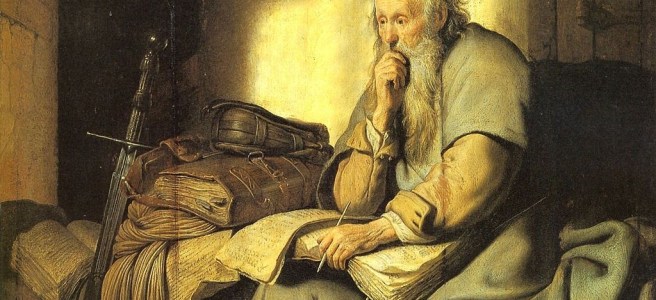
In his letter to the Romans, the Apostle Paul takes note of a strange situation Christians will find themselves in from time to time. We continue to sin despite feeling deep revulsion afterward.

Before finding salvation, we sinned in ignorance. After our conversions, we should know better, and yet we ignore what the Holy Spirit whispers to our hearts.

 “I do not understand my own actions,” Paul writes in the seventh chapter of Romans. “For I do not do what I want, but I do the very thing I hate.”

His ensuing meditation, using terms like “sinful flesh” and life “according to the Spirit,” can be a bit confusing to interpret and understand. Think of his argument this way: There is the way the world without Christ worked, and there is the way a world redeemed and restored by Christ works now.

Unfortunately, the old world still creeps in, largely because our not-yet-resurrected bodies still carry within them a brokenness that Christ will one day completely drive out. If we’re not careful, we find ourselves conflicted, doing what we know is wrong, even doing what we hate.

I think most of us instinctively relate to what Paul is saying. For each person, the sin may be different, but its commission inevitably brings a sense of physical sickness, shame, and the question, “Why on earth did I just do that?”

The sin could be as simple as haughtiness or sudden flashes of anger, or as elaborate and dangerously progressive as greed or lust.

Here’s the interesting twist in Paul’s letter: He doesn’t offer some elaborate plan to escape this problem. Instead, he shows us a simple two-step solution.

First, we have to admit our brokenness, in the process giving up what is perhaps one of the great sins of American culture, extreme self-reliance.

“Wretched man that I am!” Paul writes. “Who will rescue me from this body of death?”

Second, remember the one who has saved you, the one who continues to mold you and change you and make you a little more holy each day, if only you will let him.

“Thanks be to God through Jesus Christ our Lord!” Paul writes.

I note in particular that Paul’s statement is celebratory, a reminder that Christ already has defeated Satan and the eternal death he otherwise would impose on us.

We simply have to accept the spoils of a battle already won, the power God grants us through the Holy Spirit to resist sin. Those spoils are there for the taking, stored in Scripture and the direct access we have to God through prayer.

Dear Lord, move us toward consistent and conclusive victory over sin, and let times of temptation be when we turn toward you, not away. Amen.

Lower than the Angels, for a Little While

Hebrews 2:5-9 (NRSV)

Now God did not subject the coming world, about which we are speaking, to angels. But someone has testified somewhere,

“What are human beings that you are mindful of them,
    or mortals, that you care for them?
You have made them for a little while lower than the angels;
    you have crowned them with glory and honor,
    subjecting all things under their feet.”

Now in subjecting all things to them, God left nothing outside their control. As it is, we do not yet see everything in subjection to them, but we do see Jesus, who for a little while was made lower than the angels, now crowned with glory and honor because of the suffering of death, so that by the grace of God he might taste death for everyone.

By John Grimm

Angels are cool.  They are literally the messengers of God, for that is what the Greek word means.  Though angels are higher than humans, they are not the ones to rule humanity.  Angels have some authority, yet they do not have the ability to give me salvation.  They can tell me what God has in store for me.  They cannot deliver me from my sins.

It is Jesus Christ who delivers me from my sins.  He is the one who became for a while lower than the angels.  It is Jesus who is crowned with glory and honor.  How did this happen?  Jesus has been crowned with glory and honor because of his suffering, death and resurrection.  Therefore, I can praise Jesus and I can honor Jesus.

The woman who anointed Jesus’ feet before his crucifixion is known now because she gave glory and honor to Jesus.  Now I have the time and means to give glory and honor to Jesus.  I started to give praise to Jesus when I first believed in Jesus as the Son of God.  I continue to heap praise upon Jesus for all the times he has been with me in my life.  Once God’s reign is established on the new earth, I will continue to give honor to Jesus. 

Praise you, Jesus, for coming to earth, to be a little lower than the angels.  Thank you for suffering so that we may live for all time with God.  This day is a day that we choose to praise you!  You are due all honor because of the great work you have finished for humanity.  We praise you.  Amen.

Up (Ascension Day 2021)

Acts 1:1-11 (NRSV)

In the first book, Theophilus, I wrote about all that Jesus did and taught from the beginning until the day when he was taken up to heaven, after giving instructions through the Holy Spirit to the apostles whom he had chosen. After his suffering he presented himself alive to them by many convincing proofs, appearing to them during forty days and speaking about the kingdom of God. While staying with them, he ordered them not to leave Jerusalem, but to wait there for the promise of the Father. “This,” he said, “is what you have heard from me; for John baptized with water, but you will be baptized with the Holy Spirit not many days from now.”

So when they had come together, they asked him, “Lord, is this the time when you will restore the kingdom to Israel?” He replied, “It is not for you to know the times or periods that the Father has set by his own authority. But you will receive power when the Holy Spirit has come upon you; and you will be my witnesses in Jerusalem, in all Judea and Samaria, and to the ends of the earth.” When he had said this, as they were watching, he was lifted up, and a cloud took him out of their sight. While he was going and they were gazing up toward heaven, suddenly two men in white robes stood by them. They said, “Men of Galilee, why do you stand looking up toward heaven? This Jesus, who has been taken up from you into heaven, will come in the same way as you saw him go into heaven.”


By Chuck Griffin

Today is Ascension Day, an important moment in the Christian year.

When we think of what Jesus accomplished for our benefit, the concept of his ascension into heaven often vanishes behind the darkness of his crucifixion or the brilliant life-giving light of his resurrection.

The ascension is a critically important part of God’s plan of salvation, however. In many ways, it completes the work done by God in the crucifixion and resurrection.

The key to understanding the ascension is to comprehend what is carried up.

Luke, a companion of the Apostle Paul, gives us accounts of the ascension in the end of the gospel of Luke and the beginning of the book of Acts. After appearing repeatedly to his followers in his resurrected form, Jesus led them about two miles outside Jerusalem to Bethany.

He then did several important things: He opened their minds to understand the Jewish Scriptures, in particular how they predicted Jesus’ life, death and resurrection. He told his followers they would spread throughout the world the good news that salvation is available. He promised them the Holy Spirit would come to empower and support them.

And then the ascension happened. It’s described a bit mysteriously; in Luke, Jesus “withdrew from them and was carried up into heaven.” In Acts, we get a little more detail, where we learn “he was lifted up, and a cloud took him out of their sight.”

The point is that Jesus physically left this world and entered the realm of the holy, God’s abode, the place where only things unstained by sin can go.

So, why does it matter that Jesus went up? Well, it matters because of what Jesus took with him—his resurrected human body. Human flesh now exists as part of God’s trinitarian nature, a strange change in the nature of heaven. What was unacceptable anywhere near the throne is now on the throne.

And that is why salvation is now so easy for us, if we will only believe that Jesus died to free us from punishment for our sins. When we appeal to God, we look up and appeal to the one who loves us so much that he made himself like us in order to save us.

Lord, on this special day, we again are grateful for the tremendous measures you have taken to restore us to you despite our sins. Amen.

Clean and Unclean

Acts 10 (NLT)

By Chuck Griffin

Today’s reading is an extended narrative from Acts. I would encourage you to spend a few minutes reading the story of Cornelius, Peter and a rooftop vision, either by using the link above or finding it in your personal Bible.

From there, let me simply provide you with a guide to meditating on this important story.

Most of you raised in church likely have at least a rough understanding of what Jews meant by “clean” and “unclean.” As a people set apart by God, it was the Jews’ role to demonstrate ritually their separateness by avoiding activities and objects the non-Jewish world might find normal. Certain actions unique to Jews at the time—circumcision, for example—also were required to set them apart.

This story in Acts is critically important because it demonstrates that the Jewish messiah’s death on the cross has made it possible for all people to be restored to God. A common theme of the New Testament is how difficult it was for Jewish Christians, Peter included, to let go of this separateness in order to spread the Good News. Many were reluctant to go among Gentiles, and some demanded the Gentiles adopt Jewish behaviors in order to follow Jesus Christ. A council of Christian leaders finally had to settle the matter.

We who are of non-Jewish descent should be particularly thankful for the expansive nature of God’s grace. “For God so loved the world ….”

This story also should challenge us now, just as the Jewish Christians were then challenged.

  • How do we let our own ideas about cleanliness and uncleanliness impact where we tell the Good News?
  • Can people be so different from us that we ignore their need to hear about Jesus Christ?
  • To be Christian, people need to reject sin and accept Jesus Christ as Savior. But do we sometimes try to impose additional burdens?

Let’s always be watching for a good-hearted Cornelius who awaits word of salvation.

Lord, thank you for your ever-expanding grace, which is capable of penetrating all cultures and all individual circumstances. Amen. 

Restore Us, O God

Psalm 80:1-3 (NRSV)

Give ear, O Shepherd of Israel,
    you who lead Joseph like a flock!
You who are enthroned upon the cherubim, shine forth
    before Ephraim and Benjamin and Manasseh.
Stir up your might,
    and come to save us!

Restore us, O God;
    let your face shine, that we may be saved.

By Chuck Griffin

What we now call the Old Testament is full of oscillation, the relationship between God and his chosen people moving in and out of harmony.

God’s abundant love and astonishing holiness never change, of course. It is people, then and now, who draw near to God in works of mercy and piety or run away from God as they sin. Sometimes we run so far that God seems to have slumbered or even poured out wrath.

For the fallen—and we all have been among the fallen—that plea, “Restore us, O God,” is an excellent starting point. Of course, we cannot say “restore us” as we continue to run away. We have to at least turn toward God, like the prodigal son climbing out of the pig sty and taking his first step on the walk home. We have to repent.

While sin deeply offends God’s holiness, God’s love keeps our creator alert to our return. Through his chosen people, he has even made the return easy, ready to embrace us with outstretched arms. He came among us while we were deep in sin, living among us and ultimately paying for those sins on the cross.

“Stir up your might, and come to save us!” the people prayed in Psalm 80. And God did, in ways with far greater global impact than they likely imagined.

Can we lift up the same cry, in our own lives and on behalf of our own people, whomever they may be?

Lord, let us see a turning toward you, moving us into a time when your grace abundantly flows, bringing healing and salvation to all. Amen.

Confident Hope

Rejoice in our confident hope. Be patient in trouble, and keep on praying.

—Romans 12:12 (NLT)


By Chuck Griffin

If we are able to understand what our confident hope is, this becomes a simple verse to live by.

Paul wrote these words in a chapter of Romans where he also talked about making our bodies a living and holy sacrifice. Paul regularly spoke of Christ’s sacrifice on the cross as the central message of Christianity, and it is clear he wants us completely “sold out” on the idea, committed to its meaning in good times and bad.

The cross, of course, means freedom for us. Think of your sins for a moment; briefly experience them as the crushing weight they should be. (I feel a slight shudder when I do this.) Now remember, that weight has been lifted by Jesus’ sacrifice on the cross! Sin should lead to death, but both have been defeated by Christ.

Thus, the resurrection, the Easter event. It is our proof the cross is effective, and a promise of what is in store for us.

The cross also is the source of our confidence. We certainly will experience negative and even frightening moments in this life, but the fear they are somehow terminal, a full-stop end, is unjustified. We will pass through—life goes on, even after our bodily deaths.

This great truth of Christianity should shape every moment of our lives. Even in sorrow, joy lingers nearby because the truth of our salvation is constant.

Romans 12:12 is a simple Bible verse worth memorizing.

Lord, keep the cross before us in all circumstances. Amen.

That Terrible Step to Come

We continue to walk with Jesus this Holy Week toward Good Friday and the cross.

John 12:20-36 (NRSV)

Now among those who went up to worship at the festival were some Greeks. They came to Philip, who was from Bethsaida in Galilee, and said to him, “Sir, we wish to see Jesus.” Philip went and told Andrew; then Andrew and Philip went and told Jesus. Jesus answered them, “The hour has come for the Son of Man to be glorified. Very truly, I tell you, unless a grain of wheat falls into the earth and dies, it remains just a single grain; but if it dies, it bears much fruit. Those who love their life lose it, and those who hate their life in this world will keep it for eternal life. Whoever serves me must follow me, and where I am, there will my servant be also. Whoever serves me, the Father will honor.

“Now my soul is troubled. And what should I say—‘Father, save me from this hour’? No, it is for this reason that I have come to this hour. Father, glorify your name.” Then a voice came from heaven, “I have glorified it, and I will glorify it again.” The crowd standing there heard it and said that it was thunder. Others said, “An angel has spoken to him.” Jesus answered, “This voice has come for your sake, not for mine. Now is the judgment of this world; now the ruler of this world will be driven out. And I, when I am lifted up from the earth, will draw all people to myself.” He said this to indicate the kind of death he was to die. The crowd answered him, “We have heard from the law that the Messiah remains forever. How can you say that the Son of Man must be lifted up? Who is this Son of Man?” Jesus said to them, “The light is with you for a little longer. Walk while you have the light, so that the darkness may not overtake you. If you walk in the darkness, you do not know where you are going. While you have the light, believe in the light, so that you may become children of light.”

After Jesus had said this, he departed and hid from them.


By Chuck Griffin

During the week that culminated in Jesus’ crucifixion, signs of what was about to happen were everywhere. At the time, only Jesus could see them.

Note how oddly Jesus acted when Greeks arrived seeking him. Rather than welcoming them, he began to speak of obedience, service and death. Eventually, he hid from the crowds for a while.

Jesus knew that while his earthly ministry was designed to bring salvation to the whole world, it mostly was to occur among his own Jewish people. It would be the role of the post-resurrection, Holy Spirit-empowered church to reach the world beyond Judaism. The arrival of Gentiles from a distant place made it clear crucifixion was unavoidably near. 

Jesus’ cryptic talk of being “lifted up” also triggered questions among the common people, who were expecting an invulnerable warrior king to take charge.

How could one anointed and glorified by God, the one we now understand to be God in flesh, die such a horrible, humiliating death? Over time, Christians have gotten used to the idea of the bloodied Jesus hanging on a cross, but we have to admit the image is strange, particularly to people not raised in the faith.

To answer the question raised by the crowd, it is necessary to explore the design of salvation, and that means we delve into a mystery too complex for us to understand in full, at least in this life. Jesus’ answer, rooted in “light” and “darkness,” gives us insight, however.

For all practical purposes, the Son of Man mounted a rescue mission. Because of our sins, we were trapped in darkness—a place that the Holy God, who is light, had every right to disregard. Out of love, however, he chose not to forget us or destroy us.

Instead, the light entered the darkness to find us, taking on flesh. The title “Son of God” reminds us of his divinity; the title “Son of Man” reminds us of his blessed humanity.

To break the grip sin and death had on us, Jesus had to bear our punishment for sin. Or we might say he had to ransom us from sin. Or we might say he carried our shame. Or we might say he became the one perfect sacrifice for sin, simultaneously priest and slain lamb. These and other descriptions of how atonement works mark the point where the mystery becomes almost unfathomable. We use metaphors to understand what can be grasped in full only by the mind of God.

What’s important is that we believe Christ’s death on the cross is effective, that the divine machinery works even if we cannot comprehend all its cogs and pulleys.

Lord, on this Holy Tuesday we reaffirm our belief that the Son of Man died on the cross, knowing our belief is enough to pull us from darkness into light.

Ongoing Concern

By Chuck Griffin

Philippians 2:12-18 (NRSV)

Therefore, my beloved, just as you have always obeyed me, not only in my presence, but much more now in my absence, work out your own salvation with fear and trembling; for it is God who is at work in you, enabling you both to will and to work for his good pleasure.

Do all things without murmuring and arguing, so that you may be blameless and innocent, children of God without blemish in the midst of a crooked and perverse generation, in which you shine like stars in the world. It is by your holding fast to the word of life that I can boast on the day of Christ that I did not run in vain or labor in vain. But even if I am being poured out as a libation over the sacrifice and the offering of your faith, I am glad and rejoice with all of you—and in the same way you also must be glad and rejoice with me.


Few pastors in our Western culture have been chained in prison like Paul, but I suspect most of us who have left a beloved church understand the poignancy of his message to the Christians at Philippi.

Even as we move on to new ministry settings, we want so much for those we led before. We pray their spiritual lives were on an upward trajectory as we left, and we pray they have continued in such a direction.

Paul was still able to advise the Philippians, if only in a letter dictated from his cell. In this part of the letter, Paul encouraged them to maintain that constant tension all Christians need to feel. Yes, it is God who does the work of salvation, and it is God who is at work in us to bring us toward holiness. But simultaneously, we also have work to do, reaching out toward God and each other to accept the grace so freely poured out through Jesus Christ.

As John Wesley wrote, “First, God works; therefore you can work. Secondly, God works; therefore you must work.”

Because of the value of the gift, eternal life, we are to take our very mild share of the responsibility quite seriously, enough so that we trigger both an emotional and a physical response.

Much of our work is rooted in the avoidance of evil and the pursuit of good. Paul described the dangerous people in the world as “crooked and perverse,” at this point feeling no need to define the specifics of crookedness and perversity.

With the Holy Spirit working through the gracious revelation of Scripture and within us, it should not be difficult for a committed Christian to spot what is crooked and what is perverse. That remains true today, even as the world tries to make up new definitions to suit itching ears.

Heavenly Father, as we move into the weekend and toward Palm Sunday, help us to work on our salvation to the point where we do experience fear and trembling. We know your Holy Spirit will comfort us quickly enough, giving us loving assurance we are your children. Amen.

Not Much Has Changed

Daniel 9:1-14

In the first year of Darius son of Ahasuerus, by birth a Mede, who became king over the realm of the Chaldeans— in the first year of his reign, I, Daniel, perceived in the books the number of years that, according to the word of the Lord to the prophet Jeremiah, must be fulfilled for the devastation of Jerusalem, namely, seventy years.

Then I turned to the Lord God, to seek an answer by prayer and supplication with fasting and sackcloth and ashes. I prayed to the Lord my God and made confession, saying,

“Ah, Lord, great and awesome God, keeping covenant and steadfast love with those who love you and keep your commandments, we have sinned and done wrong, acted wickedly and rebelled, turning aside from your commandments and ordinances. We have not listened to your servants the prophets, who spoke in your name to our kings, our princes, and our ancestors, and to all the people of the land.

“Righteousness is on your side, O Lord, but open shame, as at this day, falls on us, the people of Judah, the inhabitants of Jerusalem, and all Israel, those who are near and those who are far away, in all the lands to which you have driven them, because of the treachery that they have committed against you. Open shame, O Lord, falls on us, our kings, our officials, and our ancestors, because we have sinned against you. To the Lord our God belong mercy and forgiveness, for we have rebelled against him, and have not obeyed the voice of the Lord our God by following his laws, which he set before us by his servants the prophets.

“All Israel has transgressed your law and turned aside, refusing to obey your voice. So the curse and the oath written in the law of Moses, the servant of God, have been poured out upon us, because we have sinned against you. He has confirmed his words, which he spoke against us and against our rulers, by bringing upon us a calamity so great that what has been done against Jerusalem has never before been done under the whole heaven. Just as it is written in the law of Moses, all this calamity has come upon us. We did not entreat the favor of the Lord our God, turning from our iniquities and reflecting on his fidelity. So the Lord kept watch over this calamity until he brought it upon us. Indeed, the Lord our God is right in all that he has done; for we have disobeyed his voice.”


It was a different time and a different nation.  Yet, the prayer that Daniel prayed is one that can be prayed by each generation and each nation. 

Daniel’s prayer is called a prayer of confession.  We can have shame upon our nation for we have sinned against God.  From our rulers to even the ones reading this devotion, we all have sinned.  Paul will even remind us in Romans that we are all sinners and fall short of the glory of God.

As Methodist Christians, we realize the importance of repentance.  For when we repent, we are responding to God’s prevenient grace. 

Our confession of our sins, iniquities, and wickedness allows God to give us new birth through faith in Jesus Christ.  It is hard to realize that we have brought calamity upon ourselves.  Yet, thankfully, turning to God in faith we find the forgiveness that he has already prepared for us.

God, we are sinners here in America.  We have not listened to you.  Now, we are listening to you.  We admit we have done wrong by you and our neighbors.  Let us know your forgiveness through Jesus Christ.  Amen.

Even the Worst

1 Timothy 1:12-20 (NLT)

I thank Christ Jesus our Lord, who has given me strength to do his work. He considered me trustworthy and appointed me to serve him, even though I used to blaspheme the name of Christ. In my insolence, I persecuted his people. But God had mercy on me because I did it in ignorance and unbelief. Oh, how generous and gracious our Lord was! He filled me with the faith and love that come from Christ Jesus.

This is a trustworthy saying, and everyone should accept it: “Christ Jesus came into the world to save sinners”—and I am the worst of them all. But God had mercy on me so that Christ Jesus could use me as a prime example of his great patience with even the worst sinners. Then others will realize that they, too, can believe in him and receive eternal life. All honor and glory to God forever and ever! He is the eternal King, the unseen one who never dies; he alone is God. Amen.

Timothy, my son, here are my instructions for you, based on the prophetic words spoken about you earlier. May they help you fight well in the Lord’s battles. Cling to your faith in Christ, and keep your conscience clear. For some people have deliberately violated their consciences; as a result, their faith has been shipwrecked. Hymenaeus and Alexander are two examples. I threw them out and handed them over to Satan so they might learn not to blaspheme God.


If you’ve spent much time trying to lead people to Jesus Christ, you may have encountered an unexpected problem.

A lot of lost people reflect on their worst sins, and they think Christianity simply sounds too easy. “How could God ever forgive that,” they ask, referencing the sin. Others consider the sins of infamous evil people and then struggle with the simplicity of salvation.

All we have to do is confess and turn away from our sins and believe? Really? Regardless of who we are or what we’ve done?

Yep. Believe that Christ’s work on the cross is effective and you’re saved from eternal death, the appropriate result of sin. Instead, receive eternal life, a gift so joyous it benefits this life now.

Over time, all who take this initial step do need to understand the proper response to this great gift of salvation, a response driven by the ongoing gift of the Holy Spirit in believers’ lives. They should find themselves moving into full alignment with God, which is mostly about allowing God to go to work.

But salvation itself really is that simple.

Once saved—to use the Methodist term, “justified”—that ongoing alignment is important because it keeps us from backsliding. Paul made it clear that a believer’s faith can be “shipwrecked.” Having escaped the power of sin, we don’t want to steer toward the rocks and end up in the clutches of Satan once again.

Believers, simply keep in mind that God is always close. Open your Bible. Open your hearts to your savior in prayer. Take time to worship. Satan will flee.

Lord, thank you for how easy you have made salvation. Help us to communicate the simplicity of your plan to those who have yet to accept it for themselves. Amen.