What a Savior!

Isaiah 50:4-9 (NRSV)

By John Grimm

Wednesday of Holy Week means we are one day closer to Jesus’ arrest, flogging, trial, crucifixion and death.  Centuries before Holy Week, Isaiah tells us about the servant of God who will be humiliated and vindicated.  Now, almost two millennia after Holy Week, we continue to realize all the servant of God went through.  This prophecy shows how the servant of God did not turn back.

We know this servant of the Lord to be Jesus the Christ.  Yes, he was a teacher.  But he is so much more than that!  Yes, he was obedient to the Lord God.  But he did not turn back when he was abused.  Yes, he had his face set like flint.  But no one could contend with him.

The determination of Jesus the Christ leads us onward.  His willingness to suffer for us is forgotten when we fail to receive the Lord’s Supper.  We can not do any better than our Savior, Jesus the Christ! 

Will we contend with Jesus?  Will we confront Jesus?  Will we declare Jesus guilty?  We are not capable of doing these tasks.  Our life is but a breath.  We will wear out.  The truth about Jesus the Christ will contend with us.  The truth about Jesus will confront us.  The truth about our guilt is known by Jesus the Christ.  When we decide for Jesus in our lives, then there is no condemnation for us! 

What a Savior!  Jesus withstands much abuse (50:6).  Yet, he willingly does so.  Why?  First, because the Lord God vindicates him.  Second, because we need a savior.  We will find as we believe and follow the Savior that God will stand by us as well. 

Holy Spirit, aid us in setting our faces like flint so we may see the goodness of our Savior.  Strengthen our resolve to cling to the Lord God through Jesus the Christ.  As we find the shame of our sin removed through Jesus’ blood, may we have life with Jesus eternally.  In the powerful name of Jesus the Christ, we pray.  Amen.

A Sermon: “Headed Home”

Here’s a Monday Extra for Methodist Life readers. As some of you are aware, this blog began as part of outreach efforts by the Holston Wesleyan Covenant Association. The link below will take you to the manuscript of a sermon I preached last Saturday during worship, before our Holston chapter’s annual business meeting.

Headed Home”

From There

Philippians 3:17-20

By John Grimm

“I am not good enough to be in heaven.” 

Did that sound humble?  For that is the truth.  Admitting that I need a savior to come from heaven is a humbling statement.  It is to admit that I have been an enemy of Jesus, an enemy of God! When we turn from our belly (which has become our god), and escape our shame (which we used to brag about), we also turn to heaven (before, our minds were focused on what is below our feet). 

Turning to heaven is to turn where Jesus Christ is located now.  We humble ourselves because we were not focused on his glory.  Now that we have turned to heaven, we see that Jesus transforms us!  As we continue to look to Jesus, he works so that we match up to his glorious body.  Jesus does this work in us.

Jesus came the first time to die for our sins.  Jesus will come the second time on this planet so that we may be fitted to live with him for all time.  Between Jesus’ first and second arrivals on Earth, we decide.  We choose either to humble ourselves or to not humble ourselves.  The apostle Paul and numerous other Christians have given us examples to live.  What will be our decision?

Father Almighty, we are getting to the point in which we know we need a savior.  We are sinners.  As we find healthy Christians in our midst, may we see how to stop living as enemies of the cross.  Prepare us for Jesus’ second arrival on earth.  Allow Jesus to use his power so we may match up with his glorious body when he returns.  In the name of Jesus Christ, we pray.  Amen.

Starting Point

By Chuck Griffin

Yesterday was Ash Wednesday, the beginning of our season of Lent. If you attended a traditional Ash Wednesday service, you may have had the opportunity to recite Psalm 51, which is clearly a psalm of repentance.

Whatever you might be planning to do during Lent to draw closer to God, repentance is the place to begin. Through repentance, we open ourselves to God. Through repentance, we relieve ourselves of all sorts of burdens.

So, here is our prayer for today:

Psalm 51 (ESV)

To the choirmaster. A Psalm of David, when Nathan the prophet went to him, after he had gone in to Bathsheba.

Have mercy on me, O God,
    according to your steadfast love;
according to your abundant mercy
    blot out my transgressions.
Wash me thoroughly from my iniquity,
    and cleanse me from my sin!

For I know my transgressions,
    and my sin is ever before me.
Against you, you only, have I sinned
    and done what is evil in your sight,
so that you may be justified in your words
    and blameless in your judgment.
Behold, I was brought forth in iniquity,
    and in sin did my mother conceive me.
Behold, you delight in truth in the inward being,
    and you teach me wisdom in the secret heart.

Purge me with hyssop, and I shall be clean;
    wash me, and I shall be whiter than snow.
Let me hear joy and gladness;
    let the bones that you have broken rejoice.
Hide your face from my sins,
    and blot out all my iniquities.
Create in me a clean heart, O God,
    and renew a right spirit within me.
Cast me not away from your presence,
    and take not your Holy Spirit from me.
Restore to me the joy of your salvation,
    and uphold me with a willing spirit.

Then I will teach transgressors your ways,
    and sinners will return to you.
Deliver me from bloodguiltiness, O God,
    O God of my salvation,
    and my tongue will sing aloud of your righteousness.
O Lord, open my lips,
    and my mouth will declare your praise.
For you will not delight in sacrifice, or I would give it;
    you will not be pleased with a burnt offering.
The sacrifices of God are a broken spirit;
    a broken and contrite heart, O God, you will not despise.

Do good to Zion in your good pleasure;
    build up the walls of Jerusalem;
then will you delight in right sacrifices,
    in burnt offerings and whole burnt offerings;
    then bulls will be offered on your altar.

Church Math

Malachi 3:8-12

Will man rob God? Yet you are robbing me. But you say, “How have we robbed you?” In your tithes and contributions. You are cursed with a curse, for you are robbing me, the whole nation of you. Bring the full tithe into the storehouse, that there may be food in my house. And thereby put me to the test, says the Lord of hosts, if I will not open the windows of heaven for you and pour down for you a blessing until there is no more need. I will rebuke the devourer for you, so that it will not destroy the fruits of your soil, and your vine in the field shall not fail to bear, says the Lord of hosts. Then all nations will call you blessed, for you will be a land of delight, says the Lord of hosts.

By Chuck Griffin

I should begin with a big word of thanks to all of you who have supported a church financially in any way. Those of us who lead churches don’t say thanks enough to those of you who support Christ’s mission with your dollars.

So, thanks be to God for you; thanks, whether you gave a dollar or a thousand dollars or twenty thousand dollars. When you give, you are part of the solution the church offers to the world.

I wanted to start out with words of thanks because today’s verses, read without much context, sound like a mixture of threats and promises tied to whether you tithe and give other offerings. Don’t tithe, and you are robbing God and faced with a curse. Do tithe, and you will receive an overflowing blessing. And I know that preachers often imitate this text, making threats and promises where church giving is concerned.

I will note that Malachi is the last book of the Old Testament in our Christian Bible, so we should expect more legalistic formulas for relating to God. Jesus Christ, the ultimate expression of God’s forgiving grace, is not yet visibly in the picture.

I don’t, however, want to simply write off Malachi’s words about tithes and offerings as somehow irrelevant. In fact, this minor prophet makes a major connection between what he says about tithes and offerings and the reasons for Christ’s entry into the world.

Malachi’s straightforward question, “Will anyone rob God?” comes in the midst of other, more mysterious and far-reaching words. Just before he speaks of tithes and offerings, the prophet has been speaking of a coming messenger, to be followed by the arrival of the Lord. These words long have been associated with the ministry of John the Baptist—the Messiah’s herald—and the coming of Jesus Christ.

After Malachi speaks of tithes and offerings, he raises a new subject, how God will respond to the faithful. That leads ultimately to prophecies about “the great and terrible day of the Lord,” a time when the wicked and righteous are finally sorted, with the righteous entering a glorious new life. These images remind me of Jesus’ more detailed words in Matthew 25:31-46, where he makes clear that he will be the one to do the sorting.

All of that Messiah and End Days imagery, with talk of tithes and offerings sandwiched in between, causes me to reconsider my understanding of tithing. In fact, that big-picture perspective is what should convince us to tithe.

Certainly, tithing was part of the Mosaic law, the code the Jews tried to live by to remain in relationship with God. It’s important to note, however, that tithing predated the law.

Tithing also didn’t just go away after God’s grace more clearly entered the picture through Christ. Consider this: How did the early church, made up largely of Jews used to tithing, respond to the resurrected Jesus? Rather than shrinking their giving, they gave everything they had. (See Acts 2:43-47.)

If we could interview them, I think we would be hard pressed to find an early Christian who would describe tithing as anything more than a starting point in support of God’s redemptive work.

Scripturally, tithing for thousands of years has served as the baseline for how we participate in God’s effort to move us toward a time when evil is vanquished for good. In the world we live in now, a world where money is the primary driver behind how everything works, we still have to talk frankly about how money gets into church coffers. It gets there because people like you make commitments that the money will be there, and I think the tithe remains the appropriate beginning point for Christian giving.

Here’s a little church math to consider. As best I can tell, United Methodist households in churches I have served give about 4 percent of their income toward the work of their churches. That’s an average covering every active household, whether a household gave nothing or thousands of dollars.

If we could raise that average by one percentage point, incredible things would happen. A percentage point doesn’t sound like much, but if churches would move from an average of 4 percent per household to an average of 5 percent, our funds for ministry would jump by 25 percent.

I dive into this church math for one reason. I want you to see there is increasing power as we move toward tithing in a community, the kind of power that helps change the world.

With more finances available, we could tell more people about Jesus. We could feed more people and clothe more people in Jesus’ name.  We could do more for our children and youth and our homebound elderly. We could start ministries we have yet to imagine.

Maybe we would minister with more programs and facilities to serve the people we’re trying to reach. Maybe we would reach out to the community with more paid ministry staff to lead the way. However our churches might minister, lives would be changed, even more so than they are being changed now.

Here’s what I want you to walk away with today: You are not required under some sort of law to tithe, or to give at any level. As grateful recipients of God’s eternal grace, however, you are invited to participate in God’s restorative work, using the financial resources God has given you.

Lord, speak to our hearts directly about how we use our resources to benefit your kingdom. Amen.

A Lost Generation

First of all, I apologize that this is the first devotion to run this week. I’ve been with a family member who needed surgery. (All is well.) Today and tomorrow, we will look at Nehemiah, continuing an exploration of books of the Bible this blog has yet to consider.

The Book of Nehemiah

By Chuck Griffin

Go looking for God, and you may get an unexpected result. There’s a good chance you will find your real identity.

The conquered, beaten-down Jews of Nehemiah’s day certainly had lost all sense of who they were. Their once-great city of Jerusalem lay in ruins, abandoned with no wall to protect it. Nehemiah had been living in exile as cupbearer to the conquering king.

It was a role of trust, a role that eventually allowed him to gain permission from the king to rebuild Jerusalem and restore some sense of belonging for the scattered people of God. The best of the Jews had been carried away to distant capitals; the rest had been left defenseless among their enemies, people who despised and abused them.

To get the full story, I would suggest you read all of the book of Nehemiah. Suffice it to say his task was a difficult one. Over time, he managed to organize the Jews there, overcoming intimidation, murder plots, and the constant threat of attack by surrounding tribes who hated the Jews of old and did not want to see them re-establish a foothold in Jerusalem.

As Nehemiah and those who rallied around him rebuilt Jerusalem’s destroyed wall and its gates, they often had to work with swords strapped to sides or a weapon in one hand. And yet, they rebuilt the wall in 52 days, an accomplishment even their enemies considered miraculous. Nearly 50,000 Jews and their livestock poured into the city.

It was not too much later that the process of discovery began. The people gathered to hear the word of God, and they were distraught at what had been forgotten over the long captivity. That moment of discovery is recorded in Nehemiah 8:1-10. Over a day, it is likely they heard the story of creation; they once again learned of the fall. They heard how God established them as a separate, chosen, holy people through Abraham.

They heard what God had done for their ancestors through Moses after the Israelites had fallen into captivity in Egypt. There were stories of miracles, all evidence of God’s great love. And there were detailed explanations of God’s covenant with them and God’s law for them, and they realized how far they had strayed, how godless they had become. Exploring God’s word that day proved to be a life-changing journey for them.

From God’s word, they remembered how to worship, and began to do so again, celebrating forgotten festivals and re-telling forgotten stories. They confessed their sins to God and sought mercy.

As different as we are today, it is a pattern we can follow. It can be a bit of a shock to discover how far we’ve strayed from God, but as we become Bible-exploring people, we find our true selves. Like Nehemiah’s Jews, one of the first lessons we learn in Genesis is that we are made in our creator’s image, meaning we were designed to reflect God’s nature and God’s will. Know God and we know what should come natural for us.

Knowing God and consequently knowing ourselves seems difficult for one reason alone. Sin remains in the world and in us. Upon hearing what God’s word had to say about God’s expectations of them, Nehemiah’s Jews realized they had suffered mightily because they had stopped acting as God would have them act. They had fallen into sin, and they wept. A sense of brokenness and loss always precedes redemption.

The priestly interpreters of the word, knowing God’s word, had an interesting response, however. They told the people not to weep. The Jews of Jerusalem once again saw God for who God is, and they were in worship! The priest Ezra and the Levites knew that God’s grace would once again shine through their darkness, and joy would be restored.

We see them understanding and experiencing the same kind of forgiving, loving grace ultimately expressed in Jesus Christ, God among us in flesh. Christ came to bring us face-to-face with our need for God.

When we look to Christ, we sometimes don’t like what we see in ourselves. But I tell you today, do not weep, but rejoice—in turning to Christ, we find eternal life and take important steps toward holiness in this life. In Christ God offers us new hope and a new identity.

Dear Lord, help us to become the people we would have been had sin never entered the world.

Trajectory

Paul’s Letter to Philemon

By Chuck Griffin

A few years ago on television, there was a show where a fictional senator and president discussed their discomfort with Christianity. The senator, played by Alan Alda, said, “I couldn’t believe there was a God who had no penalty for slavery. The Bible has no problem with slavery at all.”

Like all good fiction, this show dealt with ideas that trouble real people. Why doesn’t God say in the Bible, “Followers of Christ, it is wrong to own another person!”

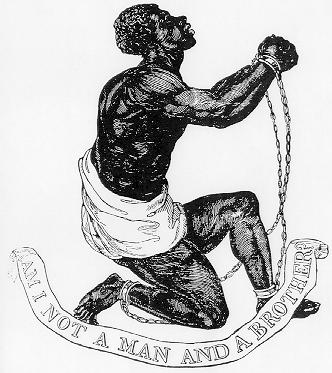
The Apostle Paul’s words to an early Christian named Philemon are worth examining if we’re concerned about how effectively the Bible influences society. Philemon was a slave owner. Onesimus, his slave, had run away to Paul, converting to Christianity in the process. Paul then sent Onesimus back to Philemon. 

Paul’s decision to send a slave back to his master hardly seems to condemn slavery. But Paul also gave Onesimus a letter to take to Philemon. And the content of that subtle letter is so powerful that we now call it a book of the Bible.

The official medallion of the British Anti-Slavery Society, 1795, Josiah Wedgwood.

Nowhere in the letter will you find Paul saying, “End slavery now!” There’s one obvious reason. Such a direct attack on a central feature of the society in which early Christians lived would have invited terrible punishment.

Instead, Paul uses gentle coercion to change the situation. First, he speaks lovingly of the slave owner’s faith, found under Paul’s pastoral guidance.

Then Paul speaks of the slave’s faith, calling him “my child” and asking the master to receive the slave as a brother. The implication is obvious—how do you enslave and punish a beloved brother or sister?

As the television senator noted, there is no outright rejection of slavery in the letter to Philemon or anywhere else in the Bible. But we must learn to think of the Bible as more than a rule book from ancient history. It often works like a launching pad for ideas, ideas that God has shot like rockets through time so people are changed.

Now, we do have to be careful; some people would take a concept like scriptural trajectory and use it to argue that the Bible says whatever they want it to say. We have to be certain that we go in the direction God first sent us. Otherwise, we will spin north, south, east and west until we finally hit the ground like an experimental missile.

God used Paul and his little letter to change the world dramatically over several centuries. Certainly, Paul wanted to free Onesimus from slavery. But more importantly, he wanted to free Philemon from any anger he might have been feeling toward his escaped slave and the wrongheaded notions that allowed the enslavement to occur.

If Paul had simply issued a rule for Philemon to follow, he never would have gotten to the heart of the matter. Was the Holy Spirit really changing Philemon? Could this slave owner find himself capable of loving Onesimus as a Christian brother?

And that brings us to the deepest lesson from the letter to Philemon. Christians change the world by changing hearts, not by rigorous rule making. Once hearts are changed, the rules for living become obvious and begin to fall in place.

Dear Lord, help us see the true trajectory of your great plan so we may conform ourselves to the holiness you offer your creation. Amen.

Checking In

My apologies for the lack of devotions these last couple of mornings. Pastoral duties sometimes become demanding, making it difficult to find time to write something thoughtful.

Now is a good time to mention that Methodist Life welcomes submissions from new writers and artists. We tend to work from the daily lectionary readings, but I personally deviate from those texts from time to time, and submissions do not have to be built around them. As editor, all I ask is that you represent traditional Christianity well while not minding some editing when necessary. If you want to submit something, send it to chuck@methodist.life.

For your consideration today, I offer you an article I wrote for the Jonesborough Herald and Tribune while pastor of Fairview United Methodist Church more than a decade ago.


Heart Wide Open

By Chuck Griffin

How open are you to God’s influence?

Most of us who call ourselves Christian would like to think we are very open. And indeed, a lot of Christians allow God to influence them in ways that change their lives dramatically.

Often, you run into Christians who have given up careers and financial security to serve God.

Occasionally, you meet people who for long periods of time give up the comfort and familiarity of home to serve others in far-away places. For example, I once met a missionary who had gone to Papua New Guinea as a young woman in the early 1970s. She had felt God calling her to translate the New Testament for a tribe of people who speak an obscure language.

By 2005, she had finished the work. I met her while she was in Kentucky, a much older woman saying a last good-bye to her relatives. She loved the tribal people so much that she had decided to live with them the rest of her life.

Rarely, you meet people who face death to follow God’s lead. Mary, mother of Jesus Christ, falls in this category.

Stoning was the punishment of the day for a poor, unwed pregnant girl, which is how her neighbors would have viewed Mary. To follow God while facing such dire circumstances required a heart wide open to God’s influence.

God chose Mary, it seems, because she had the right soul for the job. She was young, perhaps as young as 14, but Scripture records in the first chapter of Luke her remarkable understanding of the meaning of Christ’s coming.

“My soul magnifies the Lord, and my spirit rejoices in God my Savior, for he has looked with favor on the lowliness of his servant,” Mary said. She was rejoicing with her much older cousin Elizabeth, who carried in her womb John the Baptist, the prophet who would announce the coming of Jesus’ ministry in adulthood.

As Mary continued in her rejoicing, she laid out the radical mission of Christ. He brings mercy to those who believe and follow God. He scatters the proud. He brings down the powerful. He lifts up the lowly and the hungry. He does all of this as a fulfillment of a promise made to the world through Abraham long ago.

And of course, we now understand that Jesus grew up to accomplish this radical realignment of power through his death on the cross, a sacrifice designed to break the grip of sin.

Governments and armies still seem to have power, but none can help you establish a relationship with God. At best, they can keep the relationship freely available.

If you believe, really believe, in the saving work of Christ, it becomes more difficult each day to see your place in the world in secular ways. How open are you to God’s influence?

The answer has a lot to do with how much of this world you’re willing to risk while knowing a better world is guaranteed.

Confusing to Satan

Philippians 1:12-19 (NRSV)

I want you to know, beloved, that what has happened to me has actually helped to spread the gospel, so that it has become known throughout the whole imperial guard and to everyone else that my imprisonment is for Christ; and most of the brothers and sisters, having been made confident in the Lord by my imprisonment, dare to speak the word with greater boldness and without fear.

Some proclaim Christ from envy and rivalry, but others from goodwill. These proclaim Christ out of love, knowing that I have been put here for the defense of the gospel; the others proclaim Christ out of selfish ambition, not sincerely but intending to increase my suffering in my imprisonment. What does it matter? Just this, that Christ is proclaimed in every way, whether out of false motives or true; and in that I rejoice.

Yes, and I will continue to rejoice, for I know that through your prayers and the help of the Spirit of Jesus Christ this will turn out for my deliverance.

By Chuck Griffin

The words of Paul we find in Romans 8:28, “All things work together for good for those who love God,” were more than just an idea to the apostle. He saw them come true in his own tribulations.

Paul suffered mightily during his service to the Lord, and by the time he was writing to the church at Philippi, he was in prison. And yet, he was able to observe the effect his faithfulness continued to have on those around him, even those charged with keeping him imprisoned.

It’s a story repeated throughout the history of the church. Some who are against Christ attack those who stand for Christ, and the faith exhibited by those brave, Spirit-filled Christians makes strong disciples out of weak ones and believers out of skeptics. Somewhere in their minds, these witnesses to the suffering look at those under attack and think to themselves, “I want what they have.”

These moments surely send Satan into a frenzy. Just when he thinks he has those Christians where he wants them—just when they should be in despair—the Holy Spirit works through them, and he loses more of his minions to the dawning Kingdom of Heaven.

Even those who preach Christ with wrongheaded motives can end up doing good. The growing presence of the kingdom is inexorable. It will not be stopped, and it continues to creep into the world in the oddest ways.

Well, Jesus did tell us the kingdom would be like yeast, eventually permeating the whole loaf.

Lord and Savior, work your way more deeply into our lives so we may withstand any time of trial and draw others to you. Amen.

Living a Lie

Revelation 22:12-16 (NRSV)

“See, I am coming soon; my reward is with me, to repay according to everyone’s work. I am the Alpha and the Omega, the first and the last, the beginning and the end.”

Blessed are those who wash their robes, so that they will have the right to the tree of life and may enter the city by the gates. Outside are the dogs and sorcerers and fornicators and murderers and idolaters, and everyone who loves and practices falsehood.

“It is I, Jesus, who sent my angel to you with this testimony for the churches. I am the root and the descendant of David, the bright morning star.”


By Chuck Griffin

If you were in church last Sunday, you probably picked up on the fact that we are now in the season of Advent, which begins a new church year. With our minds on Christmas, Advent can seem like an odd church season.

For one thing, we begin the church year like people who read the last few pages of a novel before starting the first chapter. Advent is about the end of a great story, one we will spend the rest of the church year hearing and exploring through its cycle of readings.

The ending is pretty straightforward: Jesus Christ will return. Justice will become a visible reality, and the Messiah who died for all will reward those who stand with him and reject those who rejected him.

Today’s text from Revelation references “everyone who loves and practices falsehood,” saying they will be excluded from God’s presence, where the gift of eternal life awaits. Another translation, the New Living Translation, describes these people as those “who love to live a lie.”

Christians do occasionally stray from living as true disciples. We forget what Jesus Christ did to restore us as children of God. We live as if there is no truth to the story.

Usually, we snap back to reality as defined by God, the maker of all that is real. We resume that effort to live as he would have us live. We conform our lives to God’s will out of gratitude for the great gift we have been given.

Like Lent, the church season preceding Easter, Advent is a good time to ask ourselves what lies we might be living and how we can return to the truth. Recognizing our errors and turning from them amount to what we call repentance; growing in truth and love then becomes a powerful work God’s Spirit can perform in us.

Eventually, we may be so blessed that we can show the truth to those who have never known anything but life as a lie.

Lord, reveal where we lie to ourselves, and show us how the truth really does set us and others free. Amen.