God in Art: Last Words

Sunday’s sermon at Holston View United Methodist Church will be “Last Words,” based on 2 Samuel 23:1-7. We also will be acknowledging Thanksgiving, and yes, the two concepts will tie together.

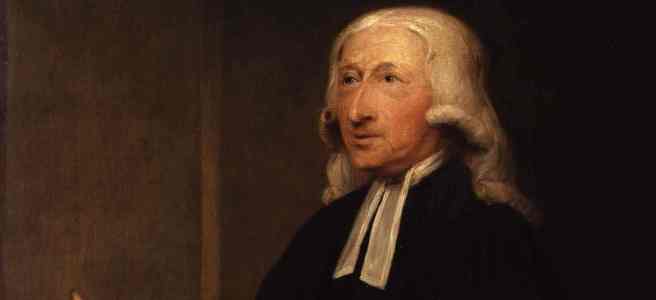
The founder of Methodism, John Wesley, is remembered in part for his last words, “The best of all is, God is with us.” He actually said the phrase twice before dying. The second time, we are told, he raised his hand and waved it in triumph. Below is a book engraving of his passing, artist unknown. (If you can help me find a proper attribution, please pass it along.)

Lord, may we always sense that you are with us. Amen.

Children of the Aramean

Deuteronomy 26:1-11

By Chuck Griffin

When we think of Old Testament texts on giving, our minds often go to the tithe, the giving of 10 percent of the harvest or income to support what would eventually become the work of the temple, work that included care for the poor. Today’s Deuteronomy text really doesn’t take us into the concept of the tithe, however.

What we hear is a recitation, a declaration of what God had done to help his chosen people. From a practical perspective, the offering brought to the altar was a mere token, but theologically it was huge. The head of a family was acknowledging that all he had truly came from God.

I believe in hard work. I believe in the idea that if we are to succeed in life, there is a need to use our bodies and minds to the best of our abilities.

But at the same time, as people who acknowledge we were made by God and saved from sinful brokenness by God, we have to be the first to say we are dependent on God.

If we think about it, we do owe everything to God, even if we’ve done all we can to succeed. If we’re intelligent enough to make the right choices, it’s because God made us so. If we have been able to succeed through hard physical labor, it is because God at some point graced us with healthy bodies.

And we can never forget that there is at least some randomness in how well we do or don’t do in life. If we’re not careful, we will simply stumble into success and then start thinking we are brilliant.

A good Jew acknowledged these truths with his recitation and offering. We do much the same when we declare ourselves followers of Christ—for example, if we recite the Apostles’ Creed in worship. We declare God Creator. We then retell the story of Christ’s life, sacrifice and resurrection, following that with the story of God continuing to work in the world up to this very day through the Holy Spirit.

That true understanding—that perspective regarding who God is and who we are—should shape every nook and cranny of our lives. For many, that deepest, hardest to reach cranny is where we store our attitude about income and possessions.

As I said before, this text isn’t really about tithing. Tithing was a powerful Old Testament concept, of course, but a text like we have today shows us that tithing was just a beginning point, a rule designed to lead a person to a right way of relating to God through our income and possessions.

John Wesley preached that God provides for the roof over our heads, food, and other basic needs, allowing us to ensure the well-being of our families and even a business we may operate. Beyond those provisions, everything we are given counts as riches, and they have been given to us to use “to the glory of God.” Often, this means using our riches to help those who are less blessed materially, playing a role in God’s provision for people’s basic needs.

Even for a tither, this is a concept that requires thought. It forces a reassessment of every decision we make regarding how we handle our income and possessions, simply because we learn to say, “It’s not really mine, anyway.”

If you find this idea a little daunting, be encouraged. Look back to today’s verses; notice how our little scene at the altar closes. There is celebration in the house of God, the kind of joy to be shared even with the dependent and disenfranchised people among us.

I wonder what we miss when we fail to embrace such a powerful attitude about income and possessions.

Lord, give us the spiritual strength to turn every aspect of our lives over to you, and may the celebration that follows be most rewarding. Amen.

Risky Business

This Sunday at Holston View United Methodist Church, the sermon will draw from Mark 12:38-44, where Jesus again causes us to think about our spiritual relationship with money. If you cannot join us in person, join us online at 11 a.m., or watch a recording later.

Today’s Preparatory Text:  1 John 3:16-24 (NLT)


By Chuck Griffin

When preaching, I occasionally reference the biblical concept of hospitality. As we prepare for this Sunday’s sermon, I want us to further explore this tame-sounding idea that actually is quite radical.

In the letter of 1 John, we hear what real love is, our eyes drawn to the death of Jesus on the cross. This is the same author who wrote in the Gospel of John, “For God so loved the world that he gave his only Son, so that everyone who believes in him may not perish but may have eternal life.” Later in the Gospel of John, in the 15th chapter, he also quoted Jesus as saying this: “No one has greater love than this, to lay down one’s life for one’s friends.”

With the idea in mind that we might need to die for each other, it’s no stretch to say that living the Christian life requires us to take risks. We should never be foolish with our lives, but it’s possible our lives could be endangered as we work on behalf of our savior and the world around us. It takes spiritual courage not to pull away when such risks arise.

In my opinion, American Christians can be a little short on this kind of courage, in part because we are so affluent compared to the rest of the world. When you have stuff, you get used to guarding your stuff from others who might want it.

Our concern for our stuff makes our tolerance for risky interactions with others low. I’m generalizing, of course, but I feel comfortable that I just described our group average, and I acknowledge I often am more a part of the problem than the solution. A risk-averse people have difficulty solving many of the social problems around them simply because they cannot, as a group, step up and do the hard work that has to be done.

For an example, let’s look at helping the homeless. This kind of hospitality ministry invites us to make sacrifices in our own lives so we can dramatically impact the lives of others. Individually, some Christians go so far as to maintain “Elisha rooms,” creating simple spaces for people in need. (The Bible story behind the name is in 2 Kings 4:8-17.)

Again, there is risk, particularly when we engage with people we don’t know that well, and with risk comes fear. But when we dwell in a Holy Spirit-inspired community, we can help each other with hospitality, reducing risk and fear.

Sometimes the solution is as simple as modifying our church spaces with hospitality in mind. At my first appointment out of seminary, the church was expanding its facilities. The church leaders plopped the blueprints down in front of me one day and asked if I had any input.

“Just one,” I said. “Maybe a shower somewhere? Then if people in the community have an emergency, we could use the building for short-term housing.”

The church members liked the idea so much they put in two shower facilities. They now regularly house and feed homeless guests through a program providing temporary help to displaced families.

Sadly, not enough American churches have a hospitable mindset. Many churches, perhaps most churches, have yet to embrace this very scriptural work. They even are willing to pass that responsibility on to the government, distancing themselves from the powerful call God places upon us in Scripture.

Where do we get the spiritual strength to take radical risks as we make ourselves more hospitable? Well, we begin with small, communally shared risks, and we grow in strength over time.

It is my prayer that one day the American church, regardless of its denominational lines, will fully be the hospitable church described in the Bible. When that happens, the government’s intractable problems will prove to be no problem for God and his people.

Lord, take us down paths requiring courage, filling us with your Holy Spirit as we go. Amen.

Justice Is a Holy Word

This Sunday’s sermon at Holston View United Methodist Church, “Justice in the Gate,” will explore Amos 5:6-15. If you cannot be with us in the sanctuary Sunday, you are welcome to join us online at 11 a.m., or view a recording later.

Today’s focus text: Matthew 5:38-42 (NRSV)

“You have heard that it was said, ‘An eye for an eye and a tooth for a tooth.’ But I say to you, Do not resist an evildoer. But if anyone strikes you on the right cheek, turn the other also; and if anyone wants to sue you and take your coat, give your cloak as well; and if anyone forces you to go one mile, go also the second mile. Give to everyone who begs from you, and do not refuse anyone who wants to borrow from you.”


By Chuck Griffin

“Justice” fits into all sorts of slogans: Justice is blind. Justice will prevail. No justice, no peace.

Here’s what I and a lot of other Bible-focused people might add. Justice is about relationships; perfect justice requires holy relationships. From a Christian perspective, God’s justice is constantly trying to expand its influence in our sin-wracked societies as we better learn to relate to one another as children of God.

Thousands of years ago, “an eye for an eye and a tooth for a tooth” was a radical expansion of justice. Before that concept developed, only the rich and powerful had anything resembling justice. The weak and poor just lost a lot of teeth and eyes. What sounds like Old Testament vitriol to us now was in fact an attempt to guarantee everyone would be treated the same.

Sure, there often was a gap between intent and implementation, and we still see unequal applications of justice today. Dear Lord in heaven, did I even need to say that after these last few years? We harden our hearts against one another because of race or economic status, and we fail to offer a holy relationship to someone we think of as “other.”

And by the way, no, I did not just offer a wholesale restatement of the progressive left’s justice message. We are all guilty as we peer at each other from our various vantage points in the public square. When it comes to ensuring justice for all, most of us remain in the stage where we shout across the pavement, “You go first.”

Jesus’ difficult-to-accept description of kingdom justice is largely about deciding to go first, and it is hard to embrace because he asserts that change can happen when a victim begins the process. The great hope is that when people turn the other cheek, give the litigious more than they sought, and freely help beggars and borrowers, they trigger life-changing responses from these recipients of unexpected grace.

I know, I know. It’s so hard to follow Jesus’ teachings consistently. These recipients of grace often take advantage of the giver. They don’t seem to change, and we find ourselves constantly compromising when it comes to reaching out to really difficult people.

Let’s remember that it took centuries for most of humanity to be able to agree that “an eye for an eye and a tooth for a tooth” sounds primitive—that there might be a better way. It may be a little longer before Christ’s vision of justice fully prevails. I suspect Christ will have to return to make his work complete.

That doesn’t mean we stop striving for justice now, though, establishing new, holy relationships wherever we can.

Lord, where we see injustice, give us the words and actions you would use if standing in our place, and then fill us with your courage. Amen.

A Bunch of Do-Gooders

By Chuck Griffin

As we enter the last quarter of the year and what we typically think of as the “holiday season,” I’m sure many of you feel as frustrated as I do. This pandemic is still with us, despite many of us thinking in the middle of the year that the situation would be more normal by now.

Worship attendance is down, and despite having had what seemed like some very powerful worship experiences recently, I long for the weekly church participation we used to see. At the same time, I understand where most people are. Within my own family, we have a lot of concerns regarding what could be carried to the unvaccinated and vaccinated-but-vulnerable people among us.

Galatians 6:8-10 offers us a straightforward strategy to bear us through these tiresome times: “If you sow to your own flesh, you will reap corruption from the flesh; but if you sow to the Spirit, you will reap eternal life from the Spirit. So let us not grow weary in doing what is right, for we will reap at harvest time, if we do not give up. So then, whenever we have an opportunity, let us work for the good of all, and especially for those of the family of faith.”

How can we continue to do good in the world, focusing in particular on the good of our fellow church members? Or perhaps I should pose the question in the singular: How can I do good … how can you do good? This isn’t a new concept for Christians, of course. Each of us needs to arise in the morning and think, “I want to do something that counts as good today, something that makes a difference.”

Thinking such thoughts raises our level of alertness, which is critical if we are to get our timing right. Some of you know I have practiced karate for years, and we who do so have these pithy little sayings that are translations from what is known as the “Karate Code.” One of my favorites is, “The time to strike is when opportunity presents itself.”

We strike at evil whenever we do good. But we have to keep our eyes open for those limited windows of opportunity. And then we have to be bold enough to move quickly.

We may be more constrained in how we move about the world right now, but as we move about, let’s keep our eyes open for those places where a kind word, a prayer or our resources can go to work right away.

Even a pandemic isn’t powerful enough to keep us from consciously doing good. And never forget that as we do good, we are planting for the future. God promises we will reap mightily for the kingdom.

Lord, we ask that you do more than just bring us through this difficult time. May we make good use of the time we are in now. Amen.

Continuing

John 8:31-38 (NRSV)

Then Jesus said to the Jews who had believed in him, “If you continue in my word, you are truly my disciples; and you will know the truth, and the truth will make you free.” They answered him, “We are descendants of Abraham and have never been slaves to anyone. What do you mean by saying, ‘You will be made free’?”

Jesus answered them, “Very truly, I tell you, everyone who commits sin is a slave to sin.  The slave does not have a permanent place in the household; the son has a place there forever. So, if the Son makes you free, you will be free indeed. I know that you are descendants of Abraham; yet you look for an opportunity to kill me, because there is no place in you for my word.  I declare what I have seen in the Father’s presence; as for you, you should do what you have heard from the Father.”


By John Grimm

As of right this moment, as we are reading this devotion, we are continuing in Jesus’ word.  It takes our time to read the Bible.  It takes our effort to study the words so we can know how free we are in Jesus. 

Over the span of our lifetime, as we continue in Jesus’ word, we can live lives free from sin.

Continuing in Jesus’ word is not only a reference to making time to study the Bible.  Verse 38 points to the fact that our doing what we have heard from the Father is included in the method of continuing in Jesus’ word.  When we know Jesus’ word, we are free from sin and free to obey the Father. This obedience to the Father means we can live as disciples of Jesus Christ.

Heavenly Father, thank you for Jesus’ word.  Through Jesus, you have given us freedom from sin.  Show us in Jesus’ word how we can do what we have heard from you.  Guide our steps as Jesus’ disciples so we can know and live the truth that sets us free.  In the name of Jesus, we can be obedient to you.  Amen.

For My Welfare?

Isaiah 38:10-20

By John Grimm

For my welfare?  We think we know what is best for ourselves.  We plan, we maneuver, and we make connections so that we can have the best life possible.  Then troubles come our way and we are at a loss.  Getting through the troubles strains us.

We then ask ourselves, is the trouble because of my own sins?  Are we the ones who caused our own souls to be bitter?  Or is the truth that someone else caused our misfortune and our problems?  Is it not that since we live godly lives, we can escape such bitterness?

When we know that we have caused our own bitterness, then we repent of our ways.  We confess our sin to God and he restores us.  We may even eventually see that God had been protecting us, despite our willful rebellion against him.  As soon as we recognize the good God was keeping us for, we thank him that he did not allow us to be punished for all time because of our rebellion. 

When we do not know the source of the bitterness in our life, we should keep turning to God.  It is through Jesus that we find salvation, even in the midst of bitterness.  It is during these times that we catch a glimpse of how much evil that God has kept from us.  Yes, going through the bitterness was for our welfare!

It is by living through bitterness brought on by our own sin or someone else’s sin that we can praise God!  Then we get to be in the sanctuary with other believers to sing and praise God for his work in our lives.  What a witness we have when those around us know of the bitterness of our souls and they get to hear us praise God.  Maybe it is during this pandemic that the bitterness of our souls is for our welfare.  It seems like a good time to praise God for getting us through these days.  What better way to shrug off bitterness than to be in the house of the Lord, thanking God for our deliverance?

God, we know who and what has caused bitterness in our souls.  It was not you.  We allowed that bitterness to grow.  Yet, you are using the state of our souls so that we may see how you are working to deliver us.  As we become content in your faithfulness, may we see the bitterness washing away and hear chords of praise coming from our lungs.  It is in Jesus’ name that we thank you for making a way for our welfare even when we could not grasp what was happening.  Amen.  And Amen!

Open Up!

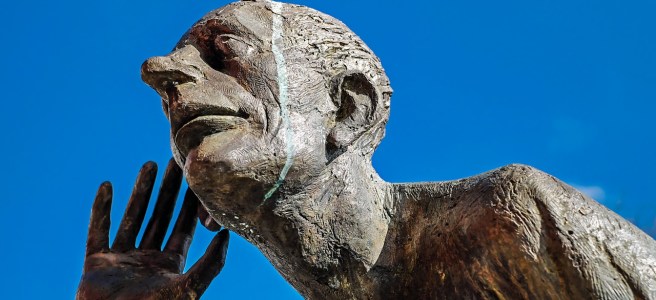
This Sunday’s sermon at Holston View UMC in Weber City, Va., will be “Demons and Deafness.” It will be based on Mark 7:24-37. If you want to view the sermon but cannot be present, the entire worship service will be available through Holston View UMC’s web page.

Today’s preparatory text: Mark 7:32-35 (NRSV)

A deaf man with a speech impediment was brought to him, and the people begged Jesus to lay his hands on the man to heal him.

Jesus led him away from the crowd so they could be alone. He put his fingers into the man’s ears. Then, spitting on his own fingers, he touched the man’s tongue. Looking up to heaven, he sighed and said, “Ephphatha,” which means, “Be opened!” Instantly the man could hear perfectly, and his tongue was freed so he could speak plainly!


By Chuck Griffin

You’re most likely reading this on the internet in some fashion, through Facebook, email or directly on the Methodist Life site. If you’re like me, this is not always the most conducive environment for slowing down and spending time with God.

A computer or smartphone can buzz with activity. Other windows, apps or browser tabs may be open, streaming music or television. Little pop-ups may be appearing and disappearing, telling you “important email” or alerting you to an incoming text or instant message.

Try something before you read any further. What you’ll experience is really important as we look at today’s text. Find a way to sit in silence, even if just briefly—say, five minutes. It helps to take some deep breaths.

Go ahead. I’ll wait.

My premise today is a simple one. We are like the deaf man in our story in Mark. We’re just deaf for a different reason. He had a physical problem. We have an environmental problem that causes spiritual deafness.

Something had stopped up his ears. Perhaps it was a disease. Perhaps it was a head injury. He began to speak as soon as he was healed, so he apparently remembered sound and speech. But at some point in his life, the sound had no longer come in and intelligible words had stopped coming out.

The cure was not a simple one, not even for Jesus the miracle worker. This was no time for a spectacle. Jesus pulled the man aside to a private place. (It strikes me that the deaf man must have had little understanding of what was going on; he had to trust Jesus.)

Put your pandemic-induced anxieties aside for a moment and imagine what it would feel like to have Jesus stick his fingers in your ears. Imagine what it would be like to have him take his spit and put it on your tongue.

Imagine what it would be like to have Jesus pray for you in the common Aramaic his very common followers spoke, a prayer so deep that it comes out in a groaning command: Ephphatha. Open up!

When it comes to hearing Jesus, to really hearing what God has to say to us, we’re stopped up, too. The world is in our ears. We’re clogged with work, sport and school schedules, with plans, with worries, with diversions like television and video games. We’re so stopped up that we’re in danger of remaining deaf to God’s continuing call on our lives until the day we die.

This deafness also makes us spiritually mute. How can we declare what we have not recently heard?

May we go to private places with Jesus long enough that our ears be unstopped. May we hear his message well. And may we declare the message of Jesus Christ as Lord and Savior with great excitement.

Dear Lord, give us the same healing command: Ephphatha!

The Wise and Foolish Builders, Pt. 2

Luke 6:46-49 (HCSB)

46 “Why do you call Me ‘Lord, Lord,’ and don’t do the things I say? 47 I will show you what someone is like who comes to Me, hears My words, and acts on them: 48 He is like a man building a house, who dug deep and laid the foundation on the rock. When the flood came, the river crashed against that house and couldn’t shake it, because it was well built. 49 But the one who hears and does not act is like a man who built a house on the ground without a foundation. The river crashed against it, and immediately it collapsed. And the destruction of that house was great!”


By ‘Debo Onabanjo

In last Tuesday’s devotional, we learned that the difference between the wise and foolish builders is not what they know, but how they act based on what they know. The wise builder builds on a solid foundation, which represents the teaching of Jesus. The foolish builder serves as a metaphor for ignoring the teaching of Jesus, building his house on sand.

In our focus text for today, we find a slight variation on this teaching of Jesus, although he once again underscores the importance of people coming to him, listening to his teaching and then following through on the instruction they receive.

I have a hard time believing someone would build a house without a foundation, but we do have many people around us who have either chosen to build their lives with no foundation or at best a sandy foundation. Some people have built their lives on their personal careers, their wealth, their position in society, their kids or their fame.  Such lives are in constant danger of collapsing.   

As John Wesley, the founder of Methodism, was prone to remind us, not all who profess to be followers of Jesus Christ are doing the will of God.

We can deceive others about our faith journey, but we cannot deceive Jesus.  Christ makes it clear that just as a tree is known by its fruit, people will be known by their actions. (Matthew 7:15-23.) Christ warns us that he will shock people when he tells them he never knew them.  People who talk about heaven or appear pious don’t necessarily belong to the Kingdom of God.  Other humans see what we display outwardly, but God sees every heart, and nothing is hidden from God’s all-seeing eyes. 

While there may not be immediate noticeable differences in our lives when we follow Christ, if we are truly building on the right foundation, the genuineness of our faith will be revealed with time.  

Help us heavenly Father to build on Jesus Christ the Solid Rock. Holy Spirit, teach us to build on Jesus the foundation of our faith with the right materials that will withstand the test of time and the challenges that will come along our journey. May we be fruitful and faithful to the end so that when our time here on earth comes to an end, we can hear you say to us, well done good and faithful servant, enter into the joy of your Master. We pray with confident assurance in the name of Jesus the Christ. Amen. 

A Shocking Assertion

This Sunday’s sermon at Holston View UMC in Weber City, Va., will be “Investing In the Future.” It will be based on Jeremiah 32:6-9. If you want to view the sermon but cannot be present, the entire worship service will be available through Holston View UMC’s web page.

Today’s preparatory text: 1 Timothy 6:9 (NRSV)

But those who want to be rich fall into temptation and are trapped by many senseless and harmful desires that plunge people into ruin and destruction.


By Chuck Griffin

A couple of times before on Methodist Life, I have referenced a John Wesley sermon, “The Danger of Riches.” As we look toward Sunday’s Jeremiah text and consider how to live boldly, I thought it would be useful to consider what the sermon has to say.

Bold behavior for the kingdom doesn’t have to involve money, of course. But let’s be realistic. Money does make the modern world go around. When we are bold for the kingdom, we likely run into one of two scenarios. We either give from our abundance or we make life decisions that reduce our opportunity for abundance.

As we make these choices, we need to fix in our minds a question, one along the lines of what I wrote for Wednesday. Do we live as if this life is the only one that counts? Or do we live as people who believe something greater is happening—that God’s kingdom is truly arriving, and that the kingdom is where we store our true treasures and live out eternity!

Once we choose the latter option, we’re ready to hear what Wesley said as he expanded on 1 Timothy 6:9.

In the sermon, Wesley asserted that God provides for the roof over our heads, food, and other basic needs, allowing us to ensure the well-being of our families and even businesses we may own. What we own beyond those basic provisions count as riches, and they have been given to us to use “to the glory of God.”

Often, this means using our riches to help those who are less blessed materially, playing a role in God’s provision for people’s basic needs.

Wesley offered us an interpretation that might even surprise a tither. I have no doubt someone accused the founder of Methodism of having “gone to meddling.”

His very correct interpretation of Scripture should force a reassessment of every decision we make regarding how we handle our income and possessions. When we learn to make such decisions in the light of God’s dawning kingdom, we not only trust God daily, we begin to participate actively in the kingdom’s growth.

In other words, we become quite bold.

Lord, the world needs people who look to you as the source of all that matters and then act accordingly. Raise up a bold generation so that your Holy Spirit may rush through them, making your Kingdom work complete. Amen.