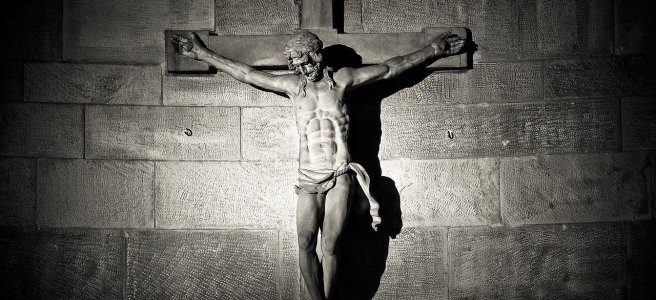
Give Thanks! Exercise 1

Psalm 100

First, meditate for a bit on the NIV translation of Psalm 100, linked above.

Our first exercise in giving thanks is designed for Friday, Saturday and Sunday. The way some of us are restricted in our movements, it may take about three days to find an opportunity.

Having received eternal hope, let’s see if we can use little acts of kindness to inspire hope in others. Regular readers may remember something I wrote recently about how important little acts of kindness can be toward those who serve us in some way.

First, find a note card or piece of paper and an envelope. Write, “This Thanksgiving, I thank God for you!” Then, start watching for an opportunity.

You don’t have to go crazy with the next part—do what you can afford—but inside the note, put what would amount to an exorbitant tip. Maybe a $20 bill? Simply give it to a service provider: the girl at the drive-through window, the guy who puts your groceries in the trunk, etc.

After you have done so, say a prayer of thanks for that person.

How Shall We Give Thanks?

By Chuck Griffin
LifeTalk Editor

Psalm 100

A psalm of thanksgiving.

Shout with joy to the Lord, all the earth!
    Worship the Lord with gladness.
    Come before him, singing with joy.
Acknowledge that the Lord is God!
    He made us, and we are his.
    We are his people, the sheep of his pasture.
Enter his gates with thanksgiving;
    go into his courts with praise.
    Give thanks to him and praise his name.
For the Lord is good.
    His unfailing love continues forever,
    and his faithfulness continues to each generation.

Our national day of Thanksgiving is a week away. Many of us won’t have our usual experiences, particularly where family gatherings are concerned.

We still need to give thanks, however—powerfully! Even in these less-than-ideal times, we remain a blessed people. I believe the freedom and hope we experience here flows from God.

Today’s psalm, which we will continue to meditate upon until next Thursday, reminds us of the deepest meaning of Thanksgiving. Thankfulness has to be directed somewhere, and God is the most appropriate recipient.

God is, after all, the source of life. God holds the blueprint of the universe, and it is drawn in the color of love.

God saves us despite our turning away from our creator. Lift up praises each day for Jesus Christ, his death on the cross, and the hope we receive in the resurrection!

During the days leading up to Thanksgiving, I’m going to offer us a short exercise in thankfulness to try each day. Check back here, or subscribe by entering your email in the subscription box found on any page of Methodist Life.

Lord, may a new sense of thankfulness overwhelm us this day and all the remaining days we have. Amen.

Death of the Son

By Chuck Griffin
LifeTalk Editor

Psalm 9:1-14

So, right up front, I might as well tell you what I’m doing wrong. I’m taking an obscure, hard-to-translate heading on a psalm and likely stretching it into far more than was intended.

The least controversial way to translate Psalm 9’s heading is, “To the chief musician upon Muth-labben,” which avoids all problems in translating the Hebrew phrase “Muth-labben.”

I studied a little Hebrew in seminary, but let’s just say I never wanted to make a living working in biblical languages. I have enormous respect for those who choose this path. But as best as I can tell, even the experts have trouble agreeing on the translation of this particular psalm title.

I will not bore you with all the possibilities, but my favorite, the one chosen by the New Living Translation, is, “To be sung to the tune, ‘Death of the Son.’ “

That translation begs other questions. Whose son? Being considered a psalm of David, Absalom, perhaps? Again, it’s impossible to answer for sure.

Just for the fun of it, let’s stick with “Death of the Son” as the title and then really Christianize the psalm. We will look at it like people who believe Jesus Christ is somehow present in every page of the Bible, Old Testament or New Testament.

What follows Psalm 9’s heading is unrestrained praise for God. This is the God who fills us with joy!

We also hear of the God who restores us at the judgment, sending our sin-aligned enemies staggering away mortally wounded.

The nations are all rebuked for unholiness. All is set right, and God is understood to be astonishingly loving, the one who shelters and restores the oppressed and hopeless.

Regardless of the psalmist’s intent, I think of the God who came among us in flesh and died for our sins, making resurrection and restoration possible. I think of Jesus Christ, the cross, and a stone rolled away from a tomb.

It’s enough to make me wonder if “Death of the Son” was a joyous tune.

Lord, help us begin our week immersed in the idea that Jesus Christ died for our sins, and in the hope that death brings. Amen.

On Brevity and Eternity

By Chuck Griffin
LifeTalk Editor

Psalm 90:12: “Teach us to realize the brevity of life, so that we may grow in wisdom.”


The psalter reading for today is actually much longer, but sometimes one verse really leaps out.

This one little verse also brings to mind other Bible verses about how short life can seem. For example, James 4:14: “How do you know what your life will be like tomorrow? Your life is like the morning fog—it’s here a little while, then it’s gone.”

Or 1 Peter 1:24: “As the Scriptures say, ‘People are like grass; their beauty is like a flower in the field. The grass withers and the flower fades.'”

Having passed the age of 50 a few years ago, I’ve noticed how these verses become more poignant and pointed. Not that there are guarantees at any age—as a young reporter covering crime and disasters, I learned that life can be surprisingly fragile. We are blessed with each new day we receive.

It’s just that for me, anyway, crossing 50 made me more mindful of how quickly life goes by. Awareness of life’s brevity does bring a certain focus to the mind, and with focus there is the possibility of new wisdom.

Regarding that 1 Peter quote above: Pulled out like that, it lacks context. Peter is being much more hopeful than we might initially think.

Yes, earthly life seems to fly by, but Peter talks about the shortness of life in the context of being “born again.” He notes that the Christian life is rooted in the word of God—the divinely given message that declares Jesus Christ to be Lord and Savior—and in doing so, he also uses the word “eternal.”

Through simple belief in the work of Christ on the cross, we who are fleeting fog or wilting flowers become something that can last forever.

Lord, thank you for the miracle of life, and for the great miracle of life extended into eternity. Amen.

Bedtime Meditation

By Chuck Griffin
LifeTalk Editor

Psalm 63:6-8
I lie awake thinking of you,
    meditating on you through the night.
Because you are my helper,
    I sing for joy in the shadow of your wings.
I cling to you;
    your strong right hand holds me securely.

Let’s continue with our meditation on Psalm 63, along the lines of what we did yesterday.

Where do we find our minds going as we drift toward sleep, or even as we sleep? There has been a lot of talk about difficulty sleeping and about “Covid-19 dreams,” those nighttime expressions of our heightened anxiety.

I’ve had my struggles at night. In the midst of the pandemic, I moved from one church appointment to another. As you might expect, I couldn’t say goodbye to the former church people the way I wanted, and I have not been able to say hello to the new church people the way I want.

I’ve had this recurring dream where I’m in the sanctuary at my new appointment. As I walk into the narthex, I see a set of stairs that don’t exist in real life, and I go up them. Upstairs, I find I’m in the sanctuary of my former church.

You don’t have to be a psychologist to figure that one out. It’s not a scary dream, just startlingly vivid, but clearly I’m lacking a sense of complete transition.

That dream is nothing compared with what a lot of you are experiencing. Maybe you have illness in your immediate family, or perhaps your ability to make a living has been impaired. The situation is enough to keep you awake at night.

Try this—I will try it too. Read just a little Scripture before falling asleep. Read something positive, like one of the resurrection stories in the gospels, or something else that gives you joy.

As you fall asleep, think about the goodness of God. Think of the great gift of salvation we have been given.

God is our helper. God does give us joy. And God will carry us through the night.

Lord, as we sleep, may we encounter you and grow in our understanding of your love. Amen.

Wilderness Meditation

By Chuck Griffin
LifeTalk Editor

Psalm 63:1-5 (NLT)

A psalm of David, regarding a time
when David was in the wilderness of Judah.

O God, you are my God;
    I earnestly search for you.
My soul thirsts for you;
    my whole body longs for you
in this parched and weary land
    where there is no water.
I have seen you in your sanctuary
    and gazed upon your power and glory.
Your unfailing love is better than life itself;
    how I praise you!
I will praise you as long as I live,
    lifting up my hands to you in prayer.
You satisfy me more than the richest feast.
    I will praise you with songs of joy.

There are different kinds of wilderness, but they all have a few things in common.

While starkly beautiful, they can be unnerving, being so different from our daily experience. They even can be life-threatening if we don’t know how to navigate them. 

Some of us might feel we’re in a metaphorical wilderness right now. With a pandemic and a shift in political climate both underway, life can seem unpredictable and maybe even a little scary.

Here’s a positive thought, though. The heightened awareness the wilderness demands can bring us in touch with God.

Let’s take time to look at the first part of Psalm 63 today. I’ll raise the questions, and you consider your particular answers.

Do you still actively search for God?

Are you emotionally engaged in that search? Is the search more than theoretical—are you praying a need will be filled?

Can you say you’ve recently worshiped in a way where you have sensed God’s power and glory?

If you’ve not said “yes” so far, you may have identified why you sometimes feel as spiritually dry as a Levantine desert.

You also may have the beginnings of a strategy to move toward praise and deep satisfaction, regardless of your environment.

Lord, grow us in our awareness of your presence and our appreciation of your power and overwhelming love. Amen.

Hope!

By Chuck Griffin
LifeTalk Editor

Psalm 78:1-7

O my people, listen to my instructions.
    Open your ears to what I am saying,
    for I will speak to you in a parable.
I will teach you hidden lessons from our past—
    stories we have heard and known,
    stories our ancestors handed down to us.
We will not hide these truths from our children;
    we will tell the next generation
about the glorious deeds of the Lord,
    about his power and his mighty wonders.
For he issued his laws to Jacob;
    he gave his instructions to Israel.
He commanded our ancestors
    to teach them to their children,
so the next generation might know them—
    even the children not yet born—
    and they in turn will teach their own children.
So each generation should set its hope anew on God,
    not forgetting his glorious miracles
    and obeying his commands.

As I write this, election results remain unclear in several states, and I suspect this uncertainty will be ongoing as you read this. Several people have expressed to me how anxious they feel.

It helps, I think, to stay on task, to control what is actually within our sphere of influence. Regardless of the political climate, a particular responsibility remains for those of us who follow God. Having experienced hope, we pass along hope to others, something a lot of people seem to be lacking lately.

Hope in God’s plan, as expressed in Psalm 78, also is an effective sedative for those overly elated with a moment of worldly victory, and a boost for those who hang their heads, thinking political defeat spells looming disaster.

People of God carry within them big-picture hope, but we simultaneously are called to a daily kind of work. Back when Barack Obama was running for his second term, a panicked church member cornered me one day, tugging at my sleeve and saying something that made his political views obvious: “Pastor Chuck, what are we going to do if Obama wins the election?”

“Well,” I said, “I plan to do what I will do if he loses. I’m going to preach Jesus.”

Christians, more than anything else, we share the Good News. Day in and day out, we need to find ways to tell others about Jesus Christ as Lord and Savior.

Politics may have consumed our thoughts recently, but we need to focus on our most pressing, immediate problem. A new generation is failing to learn the critically important story found in Scripture, mostly because those of us who know it are not telling it deliberately and well.

This story should excite any generation. It is ancient; the psalms are ancient to us, and our psalm for today speaks of lessons from what its author considers a distant past. We work from millenia to millenia, not term to term.

Our story describes who God is: The one who has always been and always will be, holy from before time to beyond the end of time. It also explains why we are the way we are—broken, sinful and often full of regret.

Our story declares a mysterious, fundamental truth. God loves us despite our sins. He loves us so much that he came among us in flesh to redeem us from our deliberate decisions to reject our creator’s will. Believing this story draws God directly into our midst, changing how we see every aspect of our lives.

Wherever you stand politically, do all you can to inject hope into the lives of others in these coming days, weeks, months and years.

Lord, as your followers, we commit ourselves to the truth that we are yours first. Help us to tell your story of hope to people who are on edge. Amen.


Dark Nights

By Chuck Griffin
LifeTalk Editor

Psalm 90:13-17 (NLT)

O Lord, come back to us!
    How long will you delay?
    Take pity on your servants!
Satisfy us each morning with your unfailing love,
    so we may sing for joy to the end of our lives.
Give us gladness in proportion to our former misery!
    Replace the evil years with good.
Let us, your servants, see you work again;
    let our children see your glory.
And may the Lord our God show us his approval
    and make our efforts successful.
    Yes, make our efforts successful!

If you’ve ever felt overwhelmed by doubt or abandoned by God, take heart. The best of Christ’s followers have such experiences.

The Israelites, including today’s psalmist, regularly expressed the sense that God was no longer with them. And God did sometimes abandon them for periods of time in response to their forgetting who is Creator and Rescuer.

Just before Moses’ death, God explained to Moses and his replacement, Joshua, the pattern the Israelites would find themselves experiencing over the centuries.

“After you are gone, these people will begin to worship foreign gods, the gods of the land where they are going. They will abandon me and break my covenant that I have made with them. Then my anger will blaze forth against them,” God told the two. “I will abandon them, hiding my face from them, and they will be devoured. Terrible trouble will come down on them, and on that day they will say, ‘These disasters have come down on us because God is no longer among us!’ At that time I will hide my face from them on account of all the evil they commit by worshiping other gods.” (Deuteronomy 31:16b-18)

God did give Moses and Joshua a song to teach the people for such times. While lengthy, its elements are obvious: Declare who God is, confess the sins of idolatry and forgetfulness, and recognize God’s goodness and desire to restore his people.

Sin obviously separates us from God, taking us to the dangerous point where we might question God’s love or even his existence. Christian mystics have also recognized through the centuries that Christ’s closest followers can experience similar feelings, what a 16th-century poet called St. John of the Cross described as the “dark night,” sometimes now referred to as “the dark night of the soul.”

The mystics see these moments as a time of spiritual purging. This includes a simultaneous acknowledgment that God is unknowable in full but also worth pursuing.

Regardless of the cause of why we may feel abandoned by God or filled with doubt, the appropriate response remains the same. Never stop acknowledging who God is. Root out sins, confess them to God, and take the necessary time to grow in understanding of what God is doing in the world through Christ’s sacrifice.

Fear not, the morning does come.

Dear Lord, pour out new grace on those who struggle with their dark nights. Return them to a sense of assurance and keep within them a deep desire to serve your kingdom. Amen.

Shout to the Lord

By Chuck Griffin
LifeTalk Editor

Psalm 98:4-9

Shout to the Lord, all the earth;
    break out in praise and sing for joy!
Sing your praise to the Lord with the harp,
    with the harp and melodious song,
with trumpets and the sound of the ram’s horn.
    Make a joyful symphony before the Lord, the King!

Let the sea and everything in it shout his praise!
    Let the earth and all living things join in.
Let the rivers clap their hands in glee!
    Let the hills sing out their songs of joy
before the Lord,
    for he is coming to judge the earth.
He will judge the world with justice,
    and the nations with fairness.

I am not a musical person. You don’t want me to lead the singing; my year of piano lessons was at best inauspicious. Whenever I was supposed to be practicing, the weather outside always seemed so nice.

But dear Lord, how I do love the music during worship. I particularly love the singing, as it is the one place I can comfortably join in, hiding my off-key efforts among the better voices near me. (It helps to be standing near the choir.)

And dear Lord, how I miss the singing in unison right now. I understand the science behind how Covid-19 spreads, and I know why we should not be projecting our voices on those Sundays we are able to gather. We so want to shout to you, though!

I’m reminded of a story a friend of mine in the Czech Republic told me. She was brought up secretly in a church considered illegal under Soviet rule. Throughout her childhood and into her early adult years, she and her fellow church members gathered in a room, shutters closed, and whispered their hymns.

What a glorious day it was when the Iron Curtain fell, and they were able to throw open the shutters and sing out loud!

We aren’t nearly as oppressed, but I expect we will experience a similar joy and sense of renewal when we can burst forth in the hymns, the Gloria Patri, and the Doxology.

We will shout to the Lord, and I promise, I’ll try not to throw those around me off key.

Lord, in this odd time when we have to choose our love for one another over shouting to you, may we continue to worship you well in our hearts. May our love for you be evident. May our quiet praise be enhanced by your Holy Spirit. Amen.

What We Desire

By Chuck Griffin
LifeTalk Editor

Psalm 63:1-8

A psalm of David, regarding a time 
when David was in the wilderness of Judah.

O God, you are my God;
    I earnestly search for you.
My soul thirsts for you;
    my whole body longs for you
in this parched and weary land
    where there is no water.
I have seen you in your sanctuary
    and gazed upon your power and glory.
Your unfailing love is better than life itself;
    how I praise you!
I will praise you as long as I live,
    lifting up my hands to you in prayer.
You satisfy me more than the richest feast.
    I will praise you with songs of joy.

I lie awake thinking of you,
    meditating on you through the night.
Because you are my helper,
    I sing for joy in the shadow of your wings.
I cling to you;
    your strong right hand holds me securely.

The word “desire” may evoke a powerful feeling in you, one likely tied to some important event in your life.

Maybe someone close to you had a strong desire for alcohol, ruining relationships. Or maybe it’s a positive association, your lifelong desire for someone else making you a better person.

It is easy to see that desire is neither good nor bad in and of itself. What matters is what we desire.

The psalmist here demonstrates a deep desire for God. From the psalm’s introductory heading, we know it is by or about David, the valiant shepherd and eventual king of Israel.

Despite the passion for God expressed here, we also know David had moments where he could forget about God and make terrible decisions, his baser desires overwhelming what should have been, on a rational level, easy choices.

David has been famous for thousands of years, but he’s also much like us, isn’t he? Where we choose to aim our desire can turn our lives in one direction or another very quickly. 

There is another danger where desire is concerned, too. If we suffer from a general lack of desire, we may find ourselves twirling aimlessly, like a sailboat with no wind.

It is good to be passionate in holy ways. Many Christians remember that initial passion for God and God’s word after coming to a belief in Jesus Christ. If desire has faded, it can be restored by a deliberate effort to spend time with God in his word and in prayer.

Desire propels us. We just need to be sure we are moving toward God.

Lord, where our desire is wrongly aimed, pull us back toward you, and where the flame for you has died down, fan it to new heights. Amen.