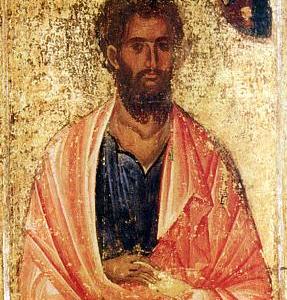
James: Single Mindedness

By Chuck Griffin
LifeTalk Editor

James 3:13-4:8

You’ve seen images of an angel on one shoulder and a devil on the other, each whispering in a person’s ear what to do. Often, these pictures are meant to be funny, but they also portray a very real internal battle we each face every day.

We fully engage in this battle when we accept Jesus Christ as Savior.  In doing so, we commit ourselves to join Christ in his ongoing work, pushing back against sin wherever we can.

Once we’ve made that leap of faith—once we’ve chosen to call ourselves Christian and really own the vision—the battle between God’s goodness and the evil within us is on. That most immediate expression of God, the Holy Spirit, begins to work inside of us, contending with the world to make us into what God would have us be.

God is going to win, so long as we allow God to win. God’s desire for us to be free beings is the only possible impediment to swift victory. He lets us choose to keep him out, but will rush in whenever we allow. The more we let God work, the more complete the victory within us becomes.

In time, we actually begin to experience another world, the one Christ represents, the kingdom that ultimately will consume and replace the broken world so obviously surrounding us right now.

James lays out a simple plan so we can better allow God to go to work. James says:

Humble yourselves before God. That’s fairly simple to understand. Know who you are relative to God. Know that God knows better. A lot of people find this hard to do, however. Their pride is so intense that they cannot imagine submitting to anything.

Resist the Devil. Don’t panic; we don’t have to do this alone. We could never win on our own, anyway. But God calls us to participate in the fight against evil, knowing God is with us throughout, strengthening us for the task.

Wash your hands, sinners. While it sounds like COVID-19 advice, James is calling us to set right, as much as humanly possible, the wrong we have done. Again, we have to trust God to make the ultimate, great fixes to the universe, but he wants us to involve ourselves in the process.

Purify your hearts. Don’t be what is sometimes translated as “double-minded,” agreeing with worldliness one minute and Christ the next. We have to stop reserving places in our emotions or our intellect for ideas or impulses that are not of God.

As God is more and more present in every aspect of our lives—as we become single-minded—the devil will flee. What is unholy cannot stand a strong dose of what is aligned with God.

Tomorrow, we’ll draw on James’ exhortation as we consider what it means to seek healing, believing we can see God’s dawning kingdom undeniably among us.

Lord, help us flick the demons away and listen only to your guidance. Amen.

James: Stung by the Tongue

By Chuck Griffin
LifeTalk Editor

James 3:1-12

We are called today to consider how we speak to others. As James notes, “We all make many mistakes,” and we’re all familiar with what we sometimes call a slip of the lip.

For the preacher, the advantage of these verses lies in their ability to make everyone squirm. The disadvantage is the preacher has reason to squirm, too. The problem of unholy speech is universal.

Our tongues reveal much about where we are in our walk with Christ. Unless we have reached a state of true holiness, our words will reveal our flaws. And yet, James isn’t saying, “Oh, well, nobody’s perfect.” Instead, he’s making it clear we need to develop a Christian way of speaking to each other and to a hurting world.

A lot of what James says about speech is very practical. Earlier, in the first chapter of James, we are advised to be quick to listen, slow to speak, and slow to anger, “for your anger does not produce God’s righteousness.” In many ways, James simply repeats advice that had been circulating for centuries before his day.

When I worked for a corporation, I had a boss who taught me these principles in regard to email. Thanks to email, texting, Facebook, and such, we can now lash out at someone while typing, making our fingers as dangerous as our tongues.

A short-tempered project manager had used email to attack me for something I had not done. I was furious, of course. My wise boss’s advice: Ignore it for 24 hours. “Write the response if you want,” he said, “but don’t hit ‘send’ until you’ve waited a day and considered it.”

I wrote it, and the next day I read my words again. In a calmer frame of mind, I actually deleted my response rather than hitting “send.” I suppose it was the Christian thing to do.

It also was a lot of fun because the project manager figured out on his own he had made a mistake, and for months I could see he was very nervous every time he was around me.

I wondered what he was thinking: “Did Chuck get the email? Does he know something I don’t? Is he friends with someone higher up the company ladder? WHAT’S ABOUT TO HAPPEN TO ME?”

Okay, maybe I enjoyed that last part in ways that weren’t so Christian.

A lot of this has to do with self-control. Be the calm one. Be the one who speaks softly when others are angry. Control yourself, and you’ll control the situation.

These lessons go beyond day-to-day practicality, however. James raises the issue of how we speak, and other issues of behavior, so that we can look at ourselves critically and grow in our ability to love others as Christ loves us. Our tongues act like litmus strips, telling us if we’re out of balance with Christ.

Biting our tongues does help, but it’s not a long-term solution. Remember, we cannot work our way into salvation. We could gnaw our tongues off trying to achieve holiness through our own strength. As I mentioned on Monday, we begin with faith that Jesus saves us, and works proceed from there.

We do those things that grow our faith. We pray. We study the Bible. We seek to be true disciples of Christ, and not just people who occasionally walk through the church door on a Sunday morning.

As we open ourselves to God, the Holy Spirit takes greater control of our lives. At some point, he finally gets hold of our tongues, and we then have taken great steps toward holiness. Over time, our words even can bring holiness to places where discouragement and despair once ruled.

Tomorrow, we’ll be a bit mystical and talk about double-mindedness. I pray we will begin to see how holiness can work its way into the depths of our souls.

Lord, may our speech today, and then each following day, demonstrate that we walk with you. Amen.

James: Surprisingly Equal

By Chuck Griffin
LifeTalk Editor

James 2:1-17

James discouraged favoring the rich over the poor in church. More positively, we might say he encouraged equality in the body of Christ.

We don’t know exactly why James felt the need to offer this warning, but it seems obvious his audience or audiences were struggling with the idea that poor people were as worthy of a place in the congregation as rich people.

It is not surprising early Christians would have struggled with notions of equality. Rigid class distinctions were the norm; the idea that God or any god could care equally for rich and poor was radical.

And James went even further, speaking of the poor as if God actually has a preference for them. “Hasn’t God chosen the poor in this world to be rich in faith? Aren’t they the ones who will inherit the Kingdom he promised to those who love him?”

In other words, the poor have something special to offer us—a closer connection to God, one rooted, we can presume, in their deep day-to-day dependence on God. Jesus spent a lot of time talking about the tremendous value of people the world treats as worthless.

When I think of gems hidden among the poor, I think of one encounter I had as a young journalist in Atlanta. It happened while I volunteered with a program for student journalists who produced an independent newspaper for distribution among high schoolers. I was assigned to mentor 16-year-old Lamesha, who lived with her two-year-old daughter and mother in public housing.

I was paired with Lamesha primarily because I had a child about the same age, and could use the car seat already installed in my Plymouth Acclaim to transport the two to the program’s newsroom or training events.

Lamesha, despite all of her difficult circumstances, proved to be an incredibly gifted writer. I still remember vividly one first-person piece she wrote about a drive-by shooting that happened in front of her apartment, a horrific event that left a boy dead on the sidewalk. She captured the facts, emotions and impact on her world with skills far beyond her age and training. I had high hopes for her, imagining her in college and the world of great writers.

And then I went to pick her up one day, and she was gone. I knocked on the door, and there was no answer; I peered through the window, and the apartment looked vacant. I finally found a neighbor who was home.

“They just packed up and moved last night,” she said. She didn’t know why or where. To this day, I don’t know what happened. I pray the skills God put in Lamesha continued to develop somewhere. I fear the instability of her life squashed them.

That is simply a story about what poverty costs society in general. In a Christian community, James is telling us, we also lose much when we fail to recognize the value of the faithful poor among us. They are God’s new chosen people. And while we want to help them lift themselves out of poverty, there is much to learn from the poor.

For example, they know what it means to pray, “Give us this day our daily bread” in a sincere way. We who have resources take this prayer less seriously when our only concern is to replace a moldy loaf with a new one.

As they talk about their daily dependence on God, the Christian poor also serve as a corrective for those of us who begin to think our wealth, power or perceived security is a result of our own doing.

Every person has value in a community of faith. Every person. I would like to think the church will learn this lesson so well that the Lameshas of the world one day will no longer be at risk of falling through the cracks.

Lord, may we see the value of every human life, particularly as the poor enter the realm of the church! Amen.

The James Series

By Chuck Griffin
LifeTalk Editor

With James 3:13-18 serving as today’s lectionary epistle reading, I feel inspired to launch into a series of devotionals based on this early New Testament letter.

Here’s the basic problem I hope to resolve today: We’re going to spend a lot of time hearing from James about how to behave. The danger is that you will process all of this as a lesson in what you have to do to get into heaven.

Please do not hear this series that way. In fact, this first devotional mostly is about how not to hear the other devotionals.

We are saved by grace and grace alone. In other words, when Jesus Christ went to the cross and died for our sins, he gave us a gift, the gift of eternity. All we have to do to gain eternity is believe and accept the gift.

When we begin talking about Christian behavior, we’re always talking about it as a proper response to grace. God acts first, loving us and saving us, and we respond joyously and thankfully. That response often is delivered in the form of righteous living and good works.

James talks about righteousness this way in what we number as Chapter 1, verses 19-24 of his letter:

Understand this, my dear brothers and sisters: You must all be quick to listen, slow to speak, and slow to get angry. Human anger does not produce the righteousness God desires. So get rid of all the filth and evil in your lives, and humbly accept the word God has planted in your hearts, for it has the power to save your souls.

But don’t just listen to God’s word. You must do what it says. Otherwise, you are only fooling yourselves. For if you listen to the word and don’t obey, it is like glancing at your face in a mirror. You see yourself, walk away, and forget what you look like.

The author of James was the leader of the church in Jerusalem. He also likely was the brother of Jesus, coming to a belief in Jesus as the Christ after the resurrection.

His one letter that made it into the Christian canon has long been controversial. Some church leaders—the 16th century Protestant reformer Martin Luther, for example—wondered if it should be in the Bible at all, concerned that its emphasis on works caused too much confusion in a grace-based religion.

I personally don’t find James’ words as perplexing as Luther found them. I find them challenging, but they don’t trouble me. We simply have to keep events in their proper order.

Remember, the branches follow the vine’s lead and have a job to do. In John 15:5, Jesus said, “Yes, I am the vine; you are the branches. Those who remain in me, and I in them, will produce much fruit. For apart from me you can do nothing.”

Our faith in Christ makes us his branches, but there is no point to being his branches in this metaphor unless we bear fruit, the good works that demonstrate the presence of the kingdom.

Doesn’t a new life in Christ imply new ways of acting? James is telling us that if our new life in Christ doesn’t result in new ways of thinking and relating to others, then we may be mistaken about our relationship with Christ.

The next few days will be about seeing what change is possible, trusting that even miraculous healing of the body and soul can occur.

Lord, may this prove to be a week where we discover our beliefs and our actions to be better aligned. Amen.

A Sprig Held High

By Chuck Griffin
LifeTalk Editor
Ezekiel 17:22-24 (NRSV)

Thus says the Lord God:

I myself will take a sprig
   from the lofty top of a cedar;
   I will set it out.
I will break off a tender one
   from the topmost of its young twigs;
I myself will plant it
   on a high and lofty mountain.
On the mountain height of Israel
   I will plant it,
in order that it may produce boughs and bear fruit,
   and become a noble cedar.
Under it every kind of bird will live;
   in the shade of its branches will nest
   winged creatures of every kind.
All the trees of the field shall know
   that I am the Lord.
I bring low the high tree,
   I make high the low tree;
I dry up the green tree
   and make the dry tree flourish.
I the Lord have spoken;
   I will accomplish it.

As you may have noticed reading the Bible, prophets can be strange folk. Ezekiel is one of the strangest, but his story should encourage us when we seek renewal. I don’t know about the rest of you, but I would really like to see some renewal in this world.

Born a little over six centuries before the birth of Christ, Ezekiel spent much of his time helping the people of Israel understand why their world had fallen apart. In short, they had turned on God, falling into idolatry, and God had given them up to their enemies. Ezekiel eventually was dragged off to captivity in Babylon, along with most of the brightest of God’s people.

Here are some of the odder things Ezekiel did to communicate God’s wrath to a very stubborn people:

  • He lay on his left side for 390 days, one day for each year the kingdom of Israel had existed in sin. He then lay on his right side for 40 days, one day for each year the kingdom of Judah had sinned.
  • During this time on one side or the other, he ate bread cooked over cow dung, to show how the people of Israel would be forced to eat in an unclean way as captives. He also ate very sparingly, to show how the people of Jerusalem would suffer from famine during the occupation.
  • Later, whenever he ate he had to tremble and shake with fear to show the people what they would feel when their towns were attacked and stripped of possessions.
  • He was not allowed by God to publicly mourn the death of his wife, as a sign of how the people would lose all they treasured with no recourse or way to complain.

It’s depressing stuff. But again, there is this powerful message of hope in the midst of so much suffering. We see that hope in our Scripture today, the prophecy of the sprig.

For the people of Israel, the prophecy is about the restoration of the line of David, the great king of their history. A cedar tree was the sign of royalty.

Clearly, the tree had become twisted and corrupt, having moved its roots away from God as the source of life, but God was promising the people through Ezekiel that he still planned to fulfill the great promises he had made. God was in control; God is in control.

We have this image of a tiny sprig at the top of the tree, new life being plucked from the old and being moved to a high and lofty place. A new king would come, one who would fulfill the promise from God that all the world would be blessed by the people of Israel, the line descended from Abraham.

This fulfillment has already happened. As Christians, we live to celebrate the great event. Jesus Christ is the sprig broken off Israel, establishing a new kingdom as he was held high on the cross.

And if God is transforming the world through Christ—if he is making all things new, as we know he is—then we can find new life, too.

Perhaps our habits are not what God would have them be; like the ancient Israelites, we can find ourselves living in defiance of God. Perhaps our families or others important to us are corrupted in some way, suffering under the influence of the world rather than seeking God’s will, and we find ourselves pulled down with them.

Know this: Through belief in Jesus as Lord and Savior, we allow God to pluck off what is fresh and good in us and replant our lives in fertile soil. I’m talking about a life rooted in God’s holy word and refreshed daily by God’s Holy Spirit.

The first step is to offer ourselves, branches held high.

Lord, take from within us what still has the potential for holiness and eternal life, and use that to grow us into what you would have us be. Amen.

Means of Grace, Day 5

By Chuck Griffin
Editor, LifeTalk

Acts 2:42-47 (NLT)

All the believers devoted themselves to the apostles’ teaching, and to fellowship, and to sharing in meals (including the Lord’s Supper), and to prayer.

A deep sense of awe came over them all, and the apostles performed many miraculous signs and wonders. And all the believers met together in one place and shared everything they had. They sold their property and possessions and shared the money with those in need. They worshiped together at the Temple each day, met in homes for the Lord’s Supper, and shared their meals with great joy and generosity—all the while praising God and enjoying the goodwill of all the people. And each day the Lord added to their fellowship those who were being saved.


Let’s take a little time today to think about the grace received while living in the Christian community called “church.”

In church, our individual experiences of grace intertwine. Working together, we find ourselves empowered in ways not possible when working alone.

That is, of course, an ideal description of the church. We tend to fall short; compare your church experiences with the above description of the early church in Acts.

I suppose we shouldn’t feel too bad. As we continue to read in Acts, we witness how the incredibly dynamic early church began to look more human as very old sins—pride, greed, ethnocentrism and deception, for example—crept in.

The church will not be heaven on earth until heaven and earth are rejoined. We are part of the “church militant,” the collection of Christians hoping to shove Satan backward, doing all we can to sustain ourselves and each other with God’s ever-flowing grace.

Even in a COVID-19 era, group worship remains deeply important to our mission. It is my prayer that once the United States exits this pandemic, we will better appreciate what it means to gather as part of a community and give glory to God. I would like to see Sunday morning restored as a uniquely holy time, not by legislation but by a genuine change in the hearts of people who call themselves Christian.

I’m not praying for a return to what we call normal. I’m praying that we will be astonished by what happens next. In a healthy local church, the number of people attending worship should exceed the number of members. This actually happens in other parts of the world. The members desperately want to be present, and the power of God is so evident that very-welcome newbies are looking in, wanting to know what’s going on.

If you have criticized your church because you think worship isn’t exciting enough, do something about it. Worship is not a show for an audience, it is a participatory group event directed toward God. Who knows, worship may not be exciting because you’re not involving your prayers, your presence, your gifts, your service and your witness.

We should involve ourselves in church life in other ways, too. We should find our place in the body of Christ, understanding how the Holy Spirit seeks to change lives through us.

I am a big advocate of finding our place through participation in small groups, online or in person. Methodism originally was built around small groups, which offer opportunities for Christians to grow in trust and love for each other, study God’s word, reach out to the lost and do good works. We need to get back to the basics, knowing each other’s hearts.

Such meaningful fellowship used to give people a relationship with the church that they could find in no other institution or group. It is no wonder. Done correctly, fellowship with Christians invites the presence of the Holy, Eternal God.

As Jesus said in Matthew 18:20, “For where two or three gather together as my followers, I am there among them.”

Lord, speak to us today as we take time to consider what it means to be part of a local church and your larger, global church. Give us a deep sense of our need to work alongside others, knowing we also will be working alongside you. Amen.

Means of Grace, Day 4

By Chuck Griffin
Editor, LifeTalk

Matthew 26:26-29 (NLT): As they were eating, Jesus took some bread and blessed it. Then he broke it in pieces and gave it to the disciples, saying, “Take this and eat it, for this is my body.” And he took a cup of wine and gave thanks to God for it. He gave it to them and said, “Each of you drink from it, for this is my blood, which confirms the covenant between God and his people. It is poured out as a sacrifice to forgive the sins of many.”


The taking of Holy Communion, also called the Lord’s Supper or the Eucharist, seems like a tame worship event to experienced Christians. Every now and then, though, I’ve gotten a reminder of how mysterious it is for the uninitiated.

While serving as an associate pastor in Lexington, Ky., I helped with communion on a regular basis. One Sunday, I carried the juice, trailing another pastor who offered the bread as people lined up at the prayer rail.

A lady was there with twin 4-year-old granddaughters, who apparently were new to church. She had dressed them in identical purple velvet dresses, the kind of dresses grandmothers tend to pick out for their granddaughters when showing them off to friends for the first time.

When the pastor ahead of me offered them the bread, saying, “The body of Christ, broken for you,” they looked startled and a bit perplexed. They could see it was bread, though, and took it.

Then I came along with cups of a red liquid, saying, “The blood of Christ, shed for you.” Twin Girl Number 1 took a step back. Twin Girl Number 2 formed a perfect “O” with her mouth as she inhaled to scream.

I quickly dropped to my knees, saying, “No, no, it’s okay, it’s just grape juice. See?” Number 2 didn’t scream, but both girls maintained their looks of horror as they walked away. I’ve since learned an alternate set of words to use with children.

I was reminded that encountering Christ’s sacrifice in the Lord’s Supper is a powerful moment, one not to be taken lightly. As adults, should our response be at least a little more like those girls? After all, communion should make us very mindful of a broken, bleeding body and our deep dependence on that suffering. It’s grape juice, but it’s not just grape juice.

I also took communion to residents of nursing homes in Kentucky, and had two thought-provoking experiences in those settings.

I had been an associate pastor for only a few weeks when the first moment of enlightenment occurred. I dutifully set out on my mission, my portable communion kit loaded with juice, thimble-sized cups, tiny squares of bread and a miniature plate.

All went smoothly until I reached one elderly lady whose mind had been described to me as “pretty far gone.” She was sitting up in her wheelchair, her head slumped to her chest. I spoke to her. No response. I set communion up on a table in front of her. No response.

I went through a simple liturgy, one employing words familiar to anyone raised Methodist. I then touched the bread and juice to her lips, which she slowly tried to taste with her tongue.

I packed up my kit, thinking, “Well, I guess that was a waste of time.”

Just as I turned to leave, her hand shot out, grabbing my forearm with surprising strength. I jumped like I had been bitten.

She looked up at me and slowly said three clear words: “I appreciate this.” She then slumped back into her previous position and remained unresponsive. I learned a lesson about sacraments; never assume nothing happened simply because I did not see anything happen.

Another key communion experience occurred late in my ministry in Kentucky. I took communion to Arthur and Edna, a husband and wife, both suffering from dementia. Edna had contracted the disease first. Arthur developed his disorder about a year later but declined more quickly.

By the time of my last visit, the two shared a nursing home room, but couldn’t say each other’s names, sleeping on separate mats. I went to Edna’s mat first. She seemed uninterested in my presence until I brought out the same little communion kit. She took communion eagerly.

When I went to Arthur’s mat, Edna sat up, her eyes following everything. Arthur also clearly wanted communion. I went through the brief liturgy again, giving him the juice and bread.

As I did so, I heard Edna’s voice saying softly, again and again, “Hallelujah. Hallelujah.” She was still saying it when I left in tears.

God’s grace, particularly as it is expressed in the bread-body and juice-blood of communion, has the power to sustain us in all the phases of our lives. Take what is offered so freely whenever you can, knowing God’s grace will remain with you even when all else of value has fled.

Lord, give us serious, life-long encounters with you. Amen.

Means of Grace, Day 3

By Chuck Griffin
Editor, LifeTalk

“And when you fast, don’t make it obvious, as the hypocrites do, for they try to look miserable and disheveled so people will admire them for their fasting. I tell you the truth, that is the only reward they will ever get. But when you fast, comb your hair and wash your face. Then no one will notice that you are fasting, except your Father, who knows what you do in private. And your Father, who sees everything, will reward you.”—Jesus, speaking in Matthew 6:16-8 (NLT).

I mentioned yesterday that Scripture and prayer work together in the life of the serious Christian. The same can be said of fasting. From a spiritual perspective, fasting is meaningless if not combined with Scripture and prayer.

Think of fasting as a catalyst. Spiritual disciplines performed while fasting should be more focused and effective.

Fasting is not a popular topic in a culture where Taco Bell once advertised, “Welcome to Fourth Meal.” As Americans, we tend to have easy access to what we want when we want it, be it food or other needs and wants. When we discover people among us going hungry, particularly children, we rightly see their plight as a travesty in a nation of relative abundance.

It perhaps is a little easier to talk about fasting now because so many people fast for nonspiritual reasons, to lose weight or improve blood work. Variations on the “intermittent fast” abound. At least the idea is now less-foreign in what can be a gluttonous culture.

The spiritual idea behind such self-denial is to remind ourselves of our fragility, and therefore, our dependence on God. As a Christian, it is important to be sure those hungry moments are filled with something other than food. In the right frame of mind, Scripture should leap to life and the prayer experience should become more vivid as we fast.

As Jesus said, “I have a kind of food you know nothing about. … My nourishment comes from doing the will of God, who sent me, and from finishing his work.” (John 4:32-24.) As followers of Christ, we similarly should focus during our fasting on aligning ourselves with the will of God and doing the work of the kingdom.

Fasting for spiritual reasons looks externally like fasting for physical reasons. The only real difference is intent. The first time I read about one version of intermittent fasting, where a person doesn’t eat after dinner until about mid-afternoon the next day, I thought to myself, “That’s just John Wesley’s 18th-century way of fasting.”

Some people have physical reasons they cannot fast from food. In such cases, it’s perfectly appropriate to abstain from other activities so as to spend more time in prayer or the Bible. Deliberately leaving the television off for an extended time would be one example.

What’s important is that we learn to put aside distractions and live in the Kingdom of God. As we fast or abstain, the contrast between this hungering world and the eternal abundance of where we are headed can be remarkable.

Lord, give us the courage to try spiritual practices that may be new to us, and please speak to us clearly as we attempt them. Amen.

Means of Grace, Day 2

By Chuck Griffin
Editor, LifeTalk

Philippians 4:6 (NLT): Don’t worry about anything; instead, pray about everything. Tell God what you need, and thank him for all he has done.

Like Scripture, prayer is an extremely broad subject. Again, we are talking about a many-layered discipline, one with more depth to it than we can hope to explore in a lifetime.

Prayer takes time, and that causes us to shy away from a deep commitment to it. And yet, prayer also seems to interact with time in mysterious ways, making other moments more fruitful.

In one of his great sermons, “Degrees of Power Attending the Gospel,” C.H. Spurgeon spoke in 1865  of how important the “spirit of prayerfulness” was in his church, Metropolitan Tabernacle in London.

“Let me entreat you never to lose it,” he said. Later in the sermon, Spurgeon exhorted his congregation this way: “Let us increase our praying as we increase our doing. I like that of Martin Luther, when he says, ‘I have so much business to do today, that I shall not be able to get through it with less than three hours’ prayer.’ Now most people would say, ‘I have so much business to do today, that I must only have three minutes’ prayer—I cannot afford the time.’ But Luther thought that the more he had to do the more he must pray, or else he could not get through it. That is a blessed kind of logic—may we understand it!”

Like so many spiritual activities, the only way we can understand prayer is to actually pray. If we over-intellectualize the process, seeking to understand everything before we begin, we will never give this work of piety the time it deserves.

Prayer is very much about submitting ourselves to the will of God. Too often, we see prayer as our effort to get God to do what we want, when instead we first need to be sure we are aligned with what God wants. For me, anyway, it has been important to get to a place where I’m allowing the Spirit to enter.

I am far from being an expert on prayer. All I can do is offer what has helped me as a person who has struggled with sustained prayer through the years. I certainly make sure to praise God in prayer and lift up petitions, but I have become more comfortable with prayer as I’ve combined it with Christian meditation, a deliberate effort to set my shallow desires aside so God can shape me.

I will not go into great detail about this meditative aspect of prayer—your details may differ from mine. I will say that location, posture and breathing are important. The place of prayer must be quiet and feel connected to God. The posture needs to be reverent and submissive, but also comfortable enough to not be distracting. The breathing needs to be slow, deep and deliberate.

If you feel the need to be led through prayer, there are all sorts of guides, ancient and modern, and many of them build in time for meditation or reflection. “A Guide to Prayer for All Who Seek God,” by Norman Shawchuck and Rueben P. Job, is one of my favorites. Combining prayer with Scripture, which go together like ice cream and hot fudge, this particular guide keeps me in the flow of the lectionary, used in particular by some preachers as they work their way through the church season.

As you commit to a deeper prayer life, promise me this: Expect something big to happen. You may find yourself shaken into a bold new life—for an example, see Acts 4:23-31.

That’s the kind of prayer experience that changes not just us, but the world around us.

Lord, bless us with a deep desire to pray, and bless us continually as we pray. Amen.

Means of Grace, Day 1

By Chuck Griffin
Editor, LifeTalk

Acts 1:8 (NLT): “You will receive power when the Holy Spirit comes upon you.”

In my Sunday sermon at Holston View United Methodist Church, I mentioned what are sometimes called the “means of grace.” That’s a very Methodist phrase for spiritual practices that create an encounter with God.

An encounter with God should bring about very positive change, of course. I would compare the offer God is making us to a rich man saying, “Any time you come to the corner of Church and Clonce streets, I will give you a bag of cash.” We likely would go to that obscure intersection quite often.

God is offering us much more, saying, “Meet me in these spiritual practices, and I will mold you for eternal life, letting you experience its joy now.” All the cash on the planet cannot match the value of eternal life! If we can better grasp what is being offered, we will regularly engage in these spiritual practices.

John Wesley talked about many different ways we can encounter God, but I’m going to focus the rest of the week on what he called “works of piety.” We will begin with the tremendous impact Scripture can have on our lives.

Paul told a young pastor in 2 Timothy 3:16, “All Scripture is inspired by God and is useful to teach us what is true and to make us realize what is wrong in our lives. It corrects us when we are wrong and teaches us to do what is right.” And Paul was referencing just the Old Testament—remember, as he wrote this letter, he was creating an early piece of what would become the New Testament.

Bibles used to be hard to come by, but that’s no longer true in our digital culture. We can carry multiple translations on our phones, and if you have a little trouble reading—for example, I have friends with dyslexia—there are audio versions.

We also need to be sure we are working from a plain-English translation we can understand. Again, there are many options. I’m particularly fond of the New Living Translation, and Bible Gateway will let you explore a huge list of translations.

With all the resources we have available, encountering God in Scripture mostly is about taking time out of our too-busy lives.

The Bible is a library, meaning you cannot read it the way you would read a novel, but if you’ve never read it from start to finish, I would encourage you to do so. It helps to start with the big picture, understanding the library and its broad themes. Read just three chapters a day, and you’ll finish in a little more than a year. Don’t get bogged down on the lists, like the census data in the Book of Numbers. Where necessary, skim!

You will walk away with a deeper understanding of some basic truths. God is our creator. Creation rebelled by sinning, rejecting God’s will. God loves his creation so much, however, that he began to work to restore us, despite our sins. Through a particular people, the Israelites, a savior eventually came into the world, God among us in flesh. He died to free us from sin, and then rose from the dead to prove his victory. The Spirit of God sustains us now, until such time as God completes his work and we are restored to him in full.

Once you have those concepts in mind, you can dive into the individual books and letters, developing a deeper understanding of these life-changing truths. We are talking about a lifetime of study—you just keep going deeper and deeper.

It does take a little work to learn to process Scripture. The chapter numbers and verse numbers, which are not in the original manuscripts, make the Bible look like a book full of rules to be cited, but don’t be misled. There are powerful stories and mysteries to meditate upon. God wants to use all of Scripture to reach deep within our souls, helping us understand there’s so much more to life than what we simply have experienced.

It also is good to come alongside more experienced Christians. Find a small group of people committed to continuing the great traditions of the church as they delve into the gift God has given us all.

The other means of grace we will consider this week are prayer, fasting, the Lord’s Supper, and participation in the life of the church. Stay with me this week. I pray we will see how all of this comes together to give us a much fuller experience of God.

Lord, may your word work in us in new ways, making us better equipped to be citizens of your eternal kingdom. Amen.